
Last updated on August 25th, 2026 at 01:05 pm
The Powertrain Control Module (PCM) in the 1991 Mercury Grand Marquis 5.0L is the central computer that manages fuel delivery, ignition timing, and emission controls. When it fails, the engine may crank without starting, stall unexpectedly, or trigger multiple diagnostic trouble codes.
The 1991 Mercury Grand Marquis 5.0L relies on a Powertrain Control Module (PCM) to orchestrate every critical engine function. When that module begins to fail, the symptoms can range from an illuminated check-engine light to a complete no-start condition that leaves you stranded. Because the PCM is the brain behind fuel metering, spark timing, and idle control, even intermittent internal faults can create driveability problems that are difficult to trace without the right diagnostic approach. This article explains what the PCM does in your Grand Marquis, where it is located, how to recognize common failure signs, and what the replacement process involves. You will also learn how a pre-programmed unit can simplify the repair by arriving ready to install with your vehicle’s VIN and calibration data already loaded, so you can avoid a trip to the dealership for programming.
The Powertrain Control Module in the 1991 Mercury Grand Marquis 5.0L is a ruggedized computer that continuously reads data from sensors such as the throttle position sensor, engine coolant temperature sensor, manifold absolute pressure sensor, and oxygen sensors. Using that real-time information, the PCM calculates the precise amount of fuel to deliver through the injectors and the optimal ignition timing to fire each spark plug. It also manages the idle air control valve to maintain a steady idle speed under varying loads, from air conditioning engagement to power steering demands. On this model, the PCM communicates with the electronic instrument cluster to relay vehicle speed and odometer information, a link that becomes important when internal module trouble codes appear. Over decades of heat cycling and vibration, the circuit board inside the PCM can develop cracked solder joints, capacitor leakage, or corrupted memory. When that happens, the engine may exhibit hard starting, rough running, or a total loss of communication with a scan tool. Replacing the module with a properly refurbished and tested unit restores the precise control that the 5.0L engine was designed to have. For owners seeking a straightforward solution, replacement engine control modules for the Grand Marquis are available that come pre-loaded with the correct factory calibration, so the new computer is ready to work the moment it is plugged in.
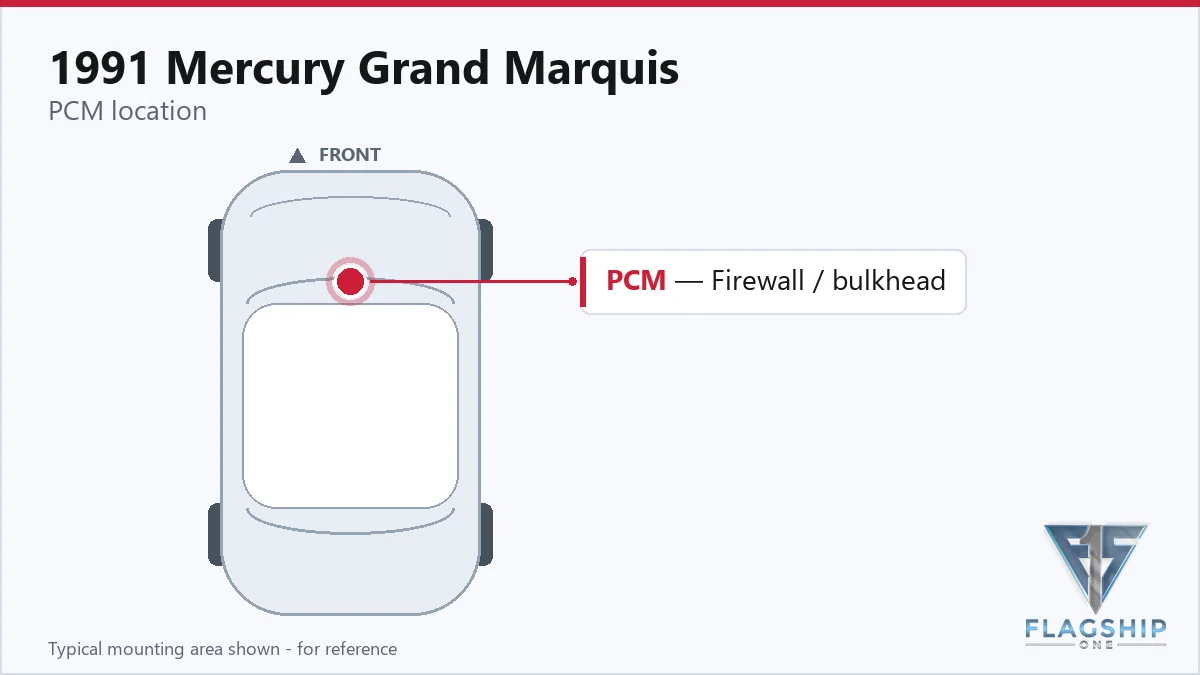
The PCM is located in the engine compartment, attached to the firewall on the driver’s side, directly adjacent to the brake master cylinder. To access it, you will need to disconnect the negative battery cable first. The module is secured by a bracket or retaining bolts, and the large electrical connector is released by a locking tab. Book time for the removal and installation of the engine control module is 1.0 hour. Additionally, the factory service information allows 0.5 hours for powertrain control system diagnosis and testing, which covers verifying the fault, checking power and ground circuits, and confirming that the replacement module resolves the concern. When installing the new PCM, ensure the connector is fully seated and the locking tab engages securely to prevent intermittent contact. The mounting location near the master cylinder means you should take care not to damage brake lines or wiring harnesses during the swap.
| Operation | Configuration | Book Time |
|---|---|---|
| Engine Control Module R&R | All configurations | 1.0 hr |
| Powertrain Control System Diagnosis & Testing | All configurations | 0.5 hr |
1991 Mercury Grand Marquis 5.0L
OEM programmed ECM for your 1991 Mercury Grand Marquis 5.0L — plug & play, no dealer visit.
Free shipping · Lifetime warranty
On a 1991 Mercury Grand Marquis, the original PCM was typically a service-replaceable unit that did not require on-vehicle flash programming; however, the odometer and speedometer functions are tied to a programmable speedometer/odometer module that must be configured with the correct vehicle mileage when replaced, as outlined in Ford TSB 93-12-09. A dealership would need to perform this mileage programming using specialized equipment. When you order a VIN-programmed replacement PCM, the module arrives with your vehicle’s specific calibration, VIN, and security parameters already loaded. This means the unit is truly plug-and-play — you install it, reconnect the battery, and the engine management system is ready to operate without any additional dealer-level programming. The odometer reading is preserved in the instrument cluster, so no mileage reprogramming is required unless the cluster itself has been replaced.
A failing PCM in the 1991 Mercury Grand Marquis often produces symptoms that mimic other engine problems, making diagnosis challenging. The engine may crank strongly but refuse to start because the computer is not triggering the fuel pump relay or firing the injectors. Intermittent stalling, especially when the engine reaches operating temperature, is a classic sign of heat-related circuit board failure. You may notice rough idle, hesitation on acceleration, or a sudden drop in fuel economy as the PCM delivers incorrect air-fuel ratios. In some cases, the transmission may exhibit harsh or erratic shifting because the PCM also controls torque converter lockup and shift timing on this model. A scan tool may fail to communicate with the module entirely, or you might retrieve multiple unrelated diagnostic trouble codes that do not correspond to actual sensor faults. One common internal fault code is internal control module memory checksum error, which indicates that the PCM’s self-test has detected corrupted data and the module must be replaced. Other symptoms include inoperative instrument cluster functions, such as a blank odometer display, which can be linked to the speedometer module issues described in TSB 93-12-09.
The following diagnostic trouble codes are documented for the 1991 Mercury Grand Marquis when the powertrain control module or its internal speedometer module experiences a fault. These codes typically indicate an internal processor or memory failure that cannot be repaired by replacing external sensors.
Ford Technical Service Bulletin 93-12-09 addresses digital electronic odometers and electronic instrument clusters on this model. The bulletin outlines the procedure for service replacement of programmable speedometer/odometer modules and notes that replacement units must be pre-set with the vehicle’s accumulated mileage. This TSB is relevant when a PCM or instrument cluster replacement is performed, as the odometer value must be transferred to maintain accurate mileage records.
| Bulletin | Subject | What It Addresses |
|---|---|---|
| 93-12-09 | DIGITAL ELECTRONIC ODOMETERS – ELECTRONIC INSTRUMENT CLUSTERS, PROGRAMMABLE SPEEDOMETER/ODOMETE | — |
Common indicators include a no-start condition with spark and fuel pressure present, a scan tool that cannot establish communication with the module, or multiple sensor fault codes that return immediately after clearing. Internal failures often set P0600-series codes, which point directly to a processor or memory fault. If you have ruled out wiring and power supply issues, the PCM is the likely culprit.
A used or off-the-shelf PCM will require programming to match your vehicle’s VIN, security parameters, and calibration. However, a pre-programmed replacement unit arrives with all of that data already loaded, so you can install it and start the engine without a trip to the dealership or any special tools.
In this era of Ford vehicles, the terms are often used interchangeably. The module controls both the engine and the transmission, so it is technically a Powertrain Control Module. It manages fuel, spark, idle speed, and the AOD transmission’s torque converter lockup, making it a full powertrain computer.
Yes. The PCM controls the torque converter clutch lockup and receives input from the vehicle speed sensor to determine shift timing. A failing module can send incorrect signals, resulting in harsh or erratic shifts, a torque converter that does not lock, or the transmission staying in limp mode.
The factory book time for engine control module removal and installation is 1.0 hour. An additional 0.5 hours is listed for powertrain control system diagnosis and testing, which includes verifying the repair. The module is accessible on the driver-side firewall, so the job is straightforward for a DIY mechanic with basic hand tools.
When the original PCM in a 1991 Mercury Grand Marquis fails, you have two paths: source a used module that may carry the same age-related risks, or choose a refurbished unit that has been tested and updated. A quality remanufactured PCM replaces failure-prone components and is loaded with your exact calibration, so the engine runs as it did when new. This approach avoids the uncertainty of a junkyard part and the expense of dealer programming, making it a practical choice for keeping your Grand Marquis on the road.
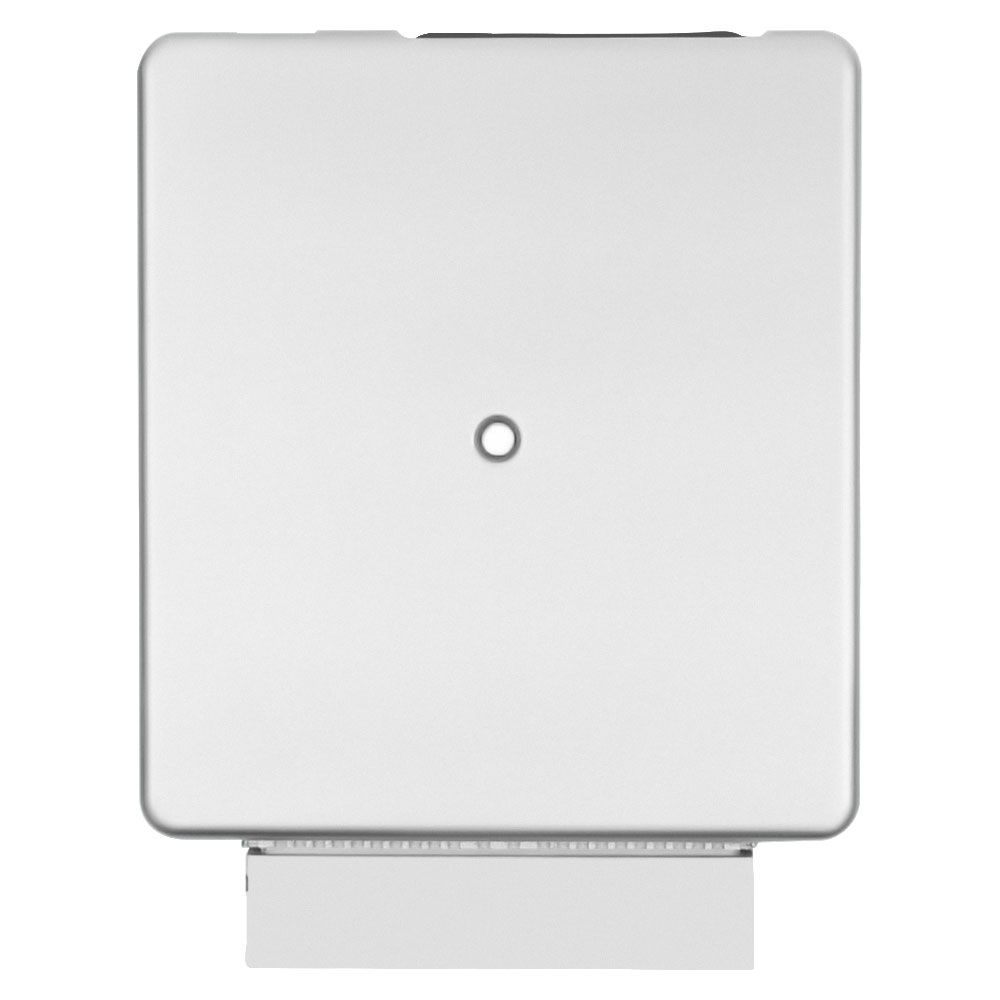
Flagship One stocks a refurbished, VIN-programmed PCM for the 1991 Mercury Grand Marquis with a lifetime warranty, free shipping and no core charge. The full Mercury Grand Marquis module lineup covers other engine configurations as well.