
Last updated on August 25th, 2026 at 02:00 pm
The Powertrain Control Module (PCM) in your 2000 Mazda B3000 3.0L manages fuel injection, ignition timing, and emissions. When it fails, you may experience no-start, stalling, or check-engine lights. Replacement requires programming to your vehicle’s VIN.
If your 2000 Mazda B3000 with the 3.0L engine is acting up—maybe it won’t start, stalls unpredictably, or the check-engine light stays on—the Powertrain Control Module (PCM) could be the culprit. This computer is the brain of your truck’s engine management system, controlling fuel delivery, spark timing, and emissions components. When it fails, the symptoms can mimic other problems, making diagnosis tricky. In this guide, you’ll learn exactly what the PCM does in your B3000, where it’s located, how replacement works, and what the factory says about common issues. We’ll also cover the labor times involved and explain why a pre-programmed replacement unit can save you time and hassle. Whether you’re a DIY owner or a shop technician, understanding the PCM’s role and failure modes will help you get your Mazda back on the road reliably. The information here is based on factory service data and bulletins specific to the 2000 model year B3000, so you can trust it applies directly to your vehicle.
The Powertrain Control Module (PCM) in your 2000 Mazda B3000 3.0L is a sealed electronic unit that interprets sensor inputs—like engine temperature, throttle position, and oxygen levels—to adjust fuel injector pulse width, ignition timing, and idle speed. It also controls the EGR system, including the EGR valve position sensor and the EGR vacuum regulator (Egrvr). Because the PCM directly manages emissions components, a fault can trigger the MIL and store diagnostic trouble codes. In the B3000, the PCM is part of a family of modules used across the B-Series trucks; replacement PCMs for the B3000 are shared with the B2500 and B4000 models, though each has its own calibration. The factory cautions that terminal voltages at the PCM vary with measuring conditions and vehicle state, so a thorough inspection of input and output circuits is necessary before condemning the module. A failed PCM often results in no communication with a scan tool, erratic engine behavior, or a no-start condition. Understanding what this module does and how it interacts with the rest of the engine system is key to diagnosing problems correctly and avoiding unnecessary parts replacement.
2000 Mazda B3000
OEM programmed ECM for your 2000 Mazda B3000 — plug & play, no dealer visit.
Free shipping · Lifetime warranty
The PCM on your 2000 Mazda B3000 3.0L is mounted under the hood, typically on the driver-side inner fender or near the firewall. Access is straightforward: you may need to remove a cover or bracket, then unplug the two large wiring harness connectors and unbolt the module. According to factory labor guides, the removal and replacement (R&R) of the PCM for the B3000 takes 0.5 hours. The same time applies to the B2500 and B4000 models. After installing the new module, a PCM relearn procedure is required, also listed at 0.5 hours. This relearn allows the module to adapt to the vehicle’s specific sensors and driving habits. No special tools are needed beyond basic hand tools, but care must be taken to avoid damaging the connector pins or the module housing. The factory does not specify a torque value for the mounting bolts, so snug them securely without over-tightening. Always disconnect the battery negative terminal before starting work to prevent electrical shorts or accidental airbag deployment.
Work with the ignition off, and treat the module as static-sensitive: avoid touching the connector pins at any point.
| Operation | Configuration | Book Time |
|---|---|---|
| Powertrain Control Module R&R | B2500 | 0.5 hr |
| Powertrain Control Module R&R | B3000 | 0.5 hr |
| Powertrain Control Module R&R | B4000 | 0.5 hr |
| Powertrain Control Module Relearn | B2500 | 0.5 hr |
| Powertrain Control Module Relearn | B3000 | 0.5 hr |
| Powertrain Control Module Relearn | B4000 | 0.5 hr |
| Engine Control Module R&R | B2500 | 0.5 hr |
| Engine Control Module R&R | B3000 | 0.5 hr |
Once the new PCM is installed in your 2000 Mazda B3000 3.0L, the factory procedure requires a relearn process that takes 0.5 hours. This involves turning the ignition on, allowing the module to initialize, and then performing a specific drive cycle to teach the PCM the idle air control and fuel trim values. However, a critical factory bulletin (Mazda Tips: 3.0 L No Reflash Due To PCM Hardware, 1998-2000) states that the 3.0L PCM hardware cannot be reflashed—meaning if the module is faulty, it must be replaced, not reprogrammed. That’s where a VIN-programmed replacement unit from Flagship One comes in. Your replacement arrives with the correct calibration already loaded for your B3000’s VIN, so the 0.5-hour relearn is still needed, but you avoid the step of having a dealer flash the module. This saves time and ensures the module is ready to communicate with your truck’s systems immediately upon installation.
When the PCM begins to fail in your 2000 Mazda B3000 3.0L, you may notice a range of issues. The engine might crank but not start, or it may start and then stall after a few seconds. Intermittent stalling while driving is common, often accompanied by a sudden loss of power. The check-engine light may illuminate with various codes, but one specific fault covered by a factory bulletin is EGRVR fault code related to the EGR vacuum regulator heater circuit. Other symptoms include rough idle, hesitation during acceleration, poor fuel economy, and the transmission shifting erratically (if equipped with an automatic). A dead PCM can cause a complete lack of communication with a scan tool—the tool will show ‘no communication’ with the ECM/PCM. You might also notice that the cooling fans run constantly or not at all, or that the fuel pump does not prime when the key is turned on. Because the PCM controls so many systems, its failure can mimic a bad sensor, relay, or wiring issue. A systematic diagnosis using a multimeter and scan tool is essential to confirm the module is at fault before replacing it.
Two factory service bulletins apply to the 2000 Mazda B3000 3.0L. The first, ‘Mazda Tips: 3.0 L No Reflash Due To PCM Hardware (1998 2000),’ explains that the PCM hardware in these vehicles cannot be reflashed. If the module is defective or needs updated calibration, replacement is the only option. The second bulletin, ‘Mazda Tips: MIL On, DTC P1409(Egrvr) Heater Hoses And Harness,’ addresses a check-engine light condition with code P1409. This code indicates a problem with the EGR vacuum regulator heater circuit, often caused by damaged heater hoses or wiring harness issues. The bulletin likely provides inspection and repair steps for the harness and hoses before replacing the PCM. These bulletins are specific to the 1998-2000 model years and should be consulted when diagnosing related symptoms.
| Bulletin | Subject | What It Addresses |
|---|---|---|
| — | Mazda Tips: 3.0 L No Reflash Due To PCM Hardware (1998 2000) | — |
| — | Mazda Tips: MIL On, DTC P1409(Egrvr) Heater Hoses And Harness | — |
Common signs include a no-start condition, stalling, rough idle, and a check-engine light. You may also see a ‘no communication’ message on a scan tool. However, these symptoms can also be caused by wiring or sensor issues, so a thorough diagnosis is recommended.
Yes, the PCM is accessible under the hood and replacement takes about 0.5 hours according to factory labor times. You’ll need basic hand tools. After installation, a 0.5-hour relearn procedure is required. If you use a pre-programmed unit, you avoid the need for dealer programming.
The relearn typically involves turning the ignition on for a set time, then performing a specific drive cycle that includes idling, acceleration, and deceleration. This allows the PCM to adapt to the engine’s sensors. The factory lists 0.5 hours for this procedure.
Yes, a factory service bulletin states that the PCM hardware in 1998-2000 3.0L models does not support reflashing. If the module is faulty or needs updated calibration, it must be replaced with a new or remanufactured unit.
P1409 indicates a fault in the EGR vacuum regulator (Egrvr) heater circuit. A factory bulletin addresses this code and suggests inspecting the heater hoses and wiring harness for damage before replacing the PCM. It may be a wiring issue rather than a module failure.
If your 2000 Mazda B3000 3.0L is showing signs of PCM trouble, you have two main options: repair the existing module (if possible) or replace it with a new or remanufactured unit. Given the factory bulletin stating that the 3.0L PCM cannot be reflashed, replacement is often the only path. Flagship One offers VIN-programmed PCMs for the B3000 that arrive ready to install, saving you the time and cost of dealer programming. The 0.5-hour labor for R&R and 0.5-hour relearn are straightforward for most shops or experienced DIYers.
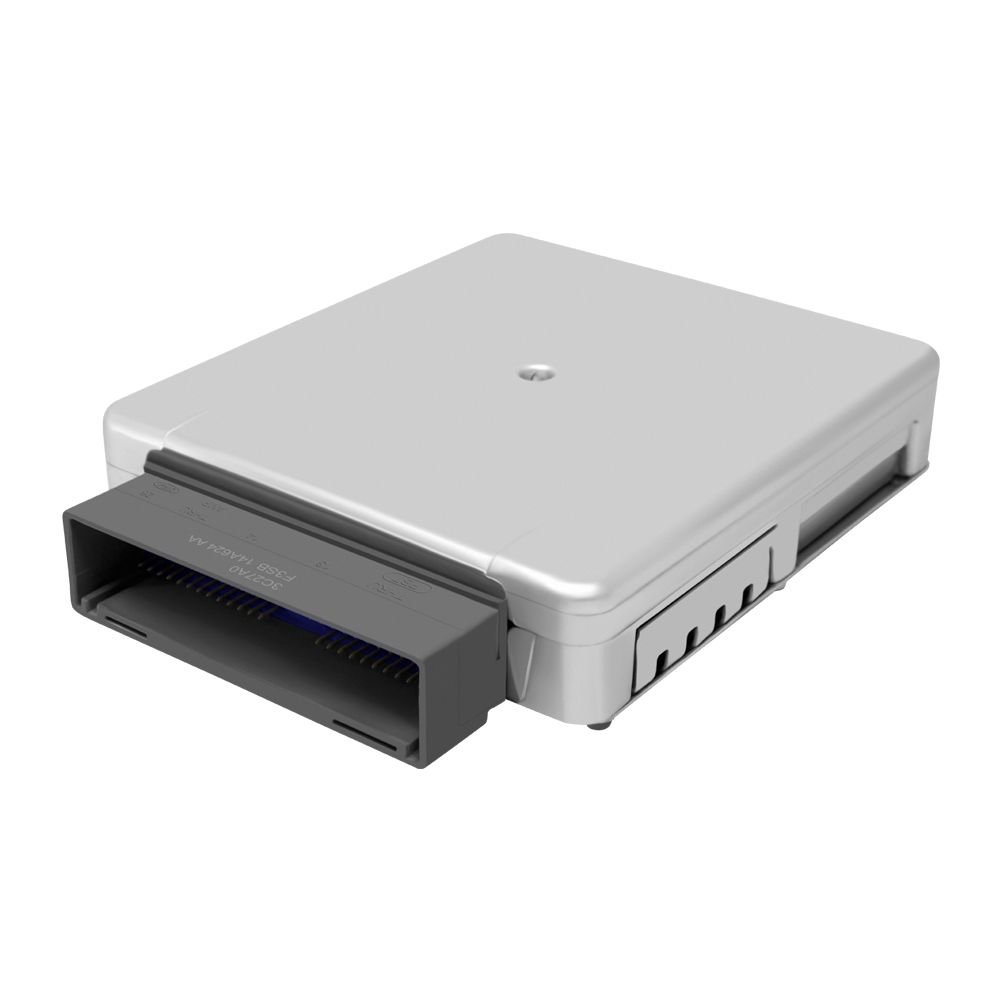
Flagship One stocks a refurbished, VIN-programmed PCM for the 2000 Mazda B3000 with a lifetime warranty, free shipping and no core charge. The full Mazda B3000 module lineup covers other engine configurations as well.
The PCM in your 2000 Mazda B3000 3.0L is a critical component that controls engine performance and emissions. When it fails, symptoms like no-start, stalling, and check-engine lights can be frustrating. With the factory bulletins confirming no reflash capability and a specific P1409 issue, a pre-programmed replacement from Flagship One simplifies the repair. Get your B3000 back on the road with confidence.