
Last updated on August 25th, 2026 at 02:02 pm
The power‑train control module in the 1991 Mazda 323 manages fuel delivery, ignition timing and sensor feedback. A malfunction can disrupt engine operation, cause rough idle, or prevent the engine from starting altogether.
When a 1991 Mazda 323 begins to hesitate, stall or simply refuses to start, the root cause may lie in the power‑train control module. This component acts as the vehicle’s brain, interpreting sensor data and directing fuel and spark. Understanding how the PCM works, where it sits, and what a replacement entails can help you decide whether a repair or a new unit is the best path forward. This guide walks you through the module’s function, typical failure signs, the steps required to install a new unit, and how Flagship One’s VIN‑programmed replacements simplify the process, giving you confidence that the job will be done right.
1991 Mazda 323
OEM programmed ECM for your 1991 Mazda 323 — plug & play, no dealer visit.
Free shipping · Lifetime warranty
In the 1991 Mazda 323 the power‑train control module receives input from the throttle position, coolant temperature, oxygen and other sensors, then calculates the exact fuel amount and ignition timing needed for smooth operation. By constantly adjusting these parameters, the PCM ensures emissions stay within limits and performance remains consistent. A failure inside the module can interrupt this communication, leading to rough running, stalling or a complete no‑start condition. Because the PCM controls critical engine functions, its reliability directly affects drivability and fuel economy. For owners seeking a replacement, exploring options such as replacement engine computers for the 1991 Mazda 323 can provide the necessary compatibility and performance.
The PCM in the 1991 Mazda 323 is mounted beneath the passenger side dash, attached to the firewall with a bracket and secured by a few bolts. Access typically requires removal of the lower dash panel and disconnecting the main power harness. Once the panel is out of the way, the module can be unbolted, unplugged, and taken out for replacement. Installing a new unit follows the reverse order: secure the PCM with the original bolts, reconnect the harness, and reinstall the dash panel. Care should be taken to verify that all connectors seat fully and that any protective covers are replaced to keep moisture out.
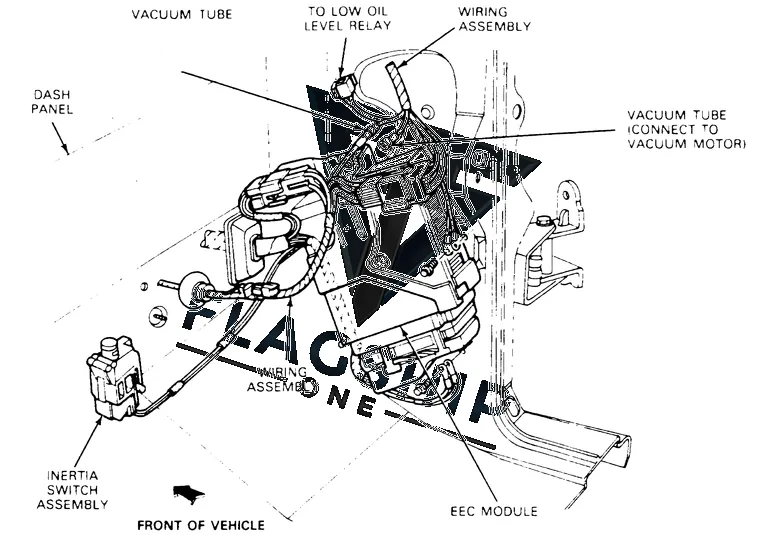
Work with the ignition off, and treat the module as static-sensitive: avoid touching the connector pins at any point.
After a PCM swap in the 1991 Mazda 323, the factory service procedure calls for an initial VIN‑specific calibration to align fuel maps and sensor thresholds with the vehicle’s engine. Flagship One units arrive as a VIN-programmed replacement unit, meaning those calibration steps have already been completed at the factory. This eliminates the need for on‑site programming equipment and reduces the risk of a mismatched configuration, allowing you to focus on the mechanical installation and final verification.
Owners of a 1991 Mazda 323 may notice a range of issues when the PCM begins to fail. Common signs include an engine that cranks but does not start, intermittent stalling at idle, rough acceleration, and occasional misfire patterns that appear without a clear external cause. In some cases, the check engine light may illuminate with generic codes, while the scan tool fails to communicate with the module altogether. These symptoms often point to internal PCM degradation or a loss of proper sensor data handling, prompting a closer inspection of the module and its connections.
Yes, because the PCM controls fuel and spark, an internal fault can interrupt those signals, leading to an unexpected stall.
Basic hand tools are sufficient for removing the dash panel and bolts that secure the module; no specialized programming tools are required if you use a VIN‑programmed unit.
A properly functioning PCM restores the engine’s calibrated fuel map, which can return fuel efficiency to the level it had when the original module was operating correctly.
Jump‑starting can expose the PCM to voltage spikes that may worsen an existing fault, so it’s best to address the underlying issue first.
Inspecting the connectors during regular service intervals, such as oil changes, helps catch corrosion or loosened pins before they cause a failure.
When the PCM in your 1991 Mazda 323 shows signs of failure, you can choose between a rebuilt unit and a brand‑new, VIN‑programmed replacement. Both options restore engine control, but a fresh replacement eliminates any lingering wear and ensures the latest calibration. Evaluate the condition of your current module and decide which path aligns with your budget and long‑term reliability goals.
Flagship One stocks a refurbished, VIN-programmed ECM for the 1991 Mazda 323 with a lifetime warranty, free shipping and no core charge. The full Mazda 323 module lineup covers other engine configurations as well.
A failing PCM can undermine the performance of your 1991 Mazda 323, but a proper replacement brings the engine back to its designed operation. Consider the options carefully and choose a solution that matches your vehicle’s needs.