
Last updated on August 25th, 2026 at 02:02 pm
The PCM/ECM in your 1990 Mazda 323 (1.6L) is the central computer that manages fuel injection and ignition timing. When it fails, your engine may not start, stall unpredictably, or run poorly. A faulty ECM often requires replacement with a properly programmed unit.
If you own a 1990 Mazda 323 with the 1.6L engine, you rely on its engine control module (ECM) to keep the fuel mixture and ignition timing correct. This computer, sometimes called the ECU, is a pre-OBD-II unit that does not generate standard diagnostic trouble codes (P-codes). Instead, it communicates through a diagnostic LED or a flash-code system. When the ECM begins to fail, you may experience a no-start condition, stalling, or poor performance. This article explains what the ECM does in your 323, where it is located, how to replace it, and what programming is required. You will also learn common symptoms of a failing ECM and how a pre-programmed replacement unit from Flagship One can simplify the repair.
1990 Mazda 323 1.6L
OEM programmed ECM for your 1990 Mazda 323 1.6L — plug & play, no dealer visit.
Free shipping · Lifetime warranty
The engine control module (ECM) in your 1990 Mazda 323 (1.6L) is the brain of the fuel and ignition systems. It receives signals from sensors such as the coolant temperature sensor, throttle position sensor, and oxygen sensor (if equipped). Using these inputs, the ECM calculates the correct fuel injector pulse width and ignition timing for efficient combustion. This pre-OBD-II system does not use generic P-codes; instead, it may flash a check engine light in a specific pattern to indicate a fault. The ECM is a sealed unit that is not serviceable. When it fails, the only reliable repair is replacement. Because the ECM is vehicle-specific, you must use a unit programmed for your exact year, make, and model. replacement engine computers for the 1990 Mazda 323 are available from specialty suppliers. A failed ECM can cause a no-start, intermittent stalling, poor fuel economy, or a dead diagnostic connector. Understanding what the ECM controls helps you diagnose whether the computer itself is the problem.
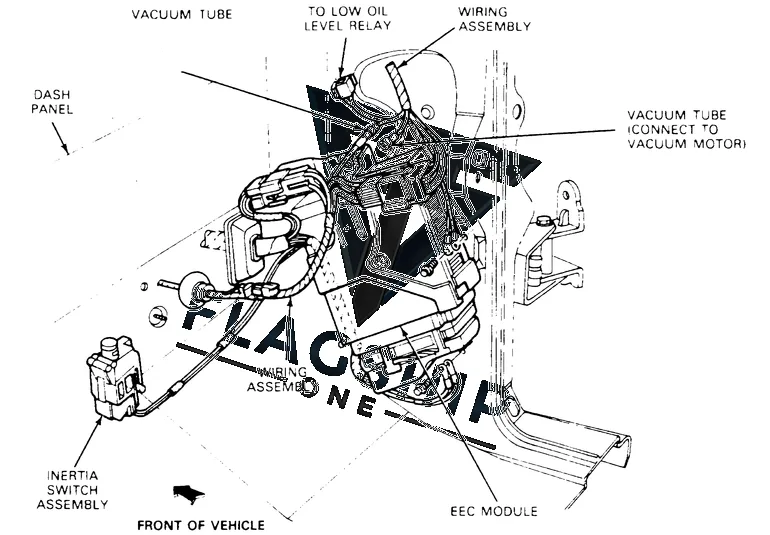
Work with the ignition off, and treat the module as static-sensitive: avoid touching the connector pins at any point.
After replacing the ECM in a 1990 Mazda 323 (1.6L), the factory procedure requires that the new unit be programmed with the vehicle’s VIN and specific calibration data. This programming is typically done using a dealer-level scan tool that communicates with the pre-OBD-II system. Without this step, the ECM may not correctly control fuel delivery or ignition timing, leading to poor performance or a no-start. Flagship One eliminates this step by providing a VIN-programmed replacement unit that arrives ready to install. The unit is pre-loaded with the correct software for your 1990 Mazda 323 1.6L, so you can simply plug it in and start the engine. This saves you the time and expense of a dealer visit for programming.
When the ECM in your 1990 Mazda 323 (1.6L) begins to fail, you may notice several symptoms. The most common is a no-start condition where the engine cranks but does not fire. You might also experience intermittent stalling, especially when the engine is warm. The engine may run rough, hesitate during acceleration, or have poor fuel economy. The check engine light may illuminate, and on this pre-OBD-II system, it will flash a specific code pattern. For example, a code 09 indicates a faulty coolant temperature sensor circuit. 09:coolant temperature sensor fault is one of several diagnostic codes the ECM can generate. Other symptoms include a dead diagnostic connector (no communication with a scan tool), erratic idle, or the engine running rich (black smoke from exhaust). If you experience multiple symptoms together, the ECM is a likely suspect.
Common signs include a no-start condition, stalling, poor fuel economy, and a check engine light that flashes a code. You can also test for power and ground at the ECM connector. If the ECM is not communicating with a scan tool or the diagnostic LED does not flash, it may be faulty.
Yes, the ECM is located under the passenger-side dashboard and can be replaced with basic hand tools. The job typically takes about 30 minutes. Disconnect the battery, remove the glove box, unbolt the ECM, and swap it out. Ensure the replacement unit is programmed for your vehicle.
Yes, the factory procedure requires programming the new ECM with the vehicle’s VIN and calibration data. This is usually done with a dealer-level scan tool. However, a pre-programmed unit from Flagship One arrives ready to install, so no additional programming is needed.
This pre-OBD-II system uses flash codes. Common codes include 09 (coolant temperature sensor), 12 (throttle position sensor), and 15 (oxygen sensor). Codes are read by connecting an LED to the diagnostic connector and counting the flashes.
Flagship One offers VIN-programmed replacement ECMs for the 1990 Mazda 323 1.6L. These units are pre-loaded with the correct software and are ready to install. You can order online with your vehicle’s VIN to ensure compatibility.
If your 1990 Mazda 323 1.6L is experiencing ECM-related issues, you have two main options: repair the original unit or replace it with a refurbished one. Repair is often not feasible because the ECM is a sealed, non-serviceable unit. A refurbished replacement from a trusted supplier like Flagship One is a reliable solution. Their units are tested and pre-programmed for your specific vehicle, so you can get back on the road quickly.
Flagship One stocks a refurbished, VIN-programmed ECM for the 1990 Mazda 323 with a lifetime warranty, free shipping and no core charge. The full Mazda 323 module lineup covers other engine configurations as well.
The ECM in your 1990 Mazda 323 1.6L is a critical component that controls fuel and ignition. When it fails, symptoms like no-start and stalling can leave you stranded. Replacing it with a VIN-programmed unit from Flagship One ensures a proper fit and eliminates the need for dealer programming. Order your replacement today and restore your 323’s performance.