
Last updated on August 25th, 2026 at 02:02 pm
The Engine Control Module (ECM) in your 2020 Lexus RX350L manages fuel injection, ignition timing, and emissions systems. Failures may cause drivability issues, poor performance, or stored trouble codes like P0606.
If your 2020 Lexus RX350L is experiencing unexplained stalling, rough idle, or a no-start condition, the Engine Control Module (ECM) may be the culprit. This small but critical computer manages everything from fuel delivery to ignition timing, ensuring your 3.5L V6 operates smoothly. When it fails, symptoms can range from subtle performance issues to complete engine shutdown. Replacing the ECM isn’t just about swapping a part—it involves precise labor steps, factory-mandated programming, and careful handling to avoid further complications. Understanding what the ECM does, where it’s located, and what to expect during replacement can help you make informed decisions about repairs. Whether you’re diagnosing a persistent trouble code or preparing for a replacement, this guide covers the essentials for your Lexus RX350L.
The Engine Control Module (ECM) in your 2020 Lexus RX350L acts as the brain of the engine, continuously monitoring sensors and adjusting fuel injection, ignition timing, and emissions systems for optimal performance. It ensures the 3.5L V6 delivers the right balance of power and efficiency while meeting emissions standards. When the ECM malfunctions, it may disrupt these processes, leading to poor throttle response, reduced fuel economy, or even a vehicle that won’t start. Unlike generic engine computers, the ECM in your Lexus is calibrated specifically for its drivetrain, meaning replacement engine computers for the RX350L must match the vehicle’s exact specifications. A failed ECM often triggers internal fault codes, such as P0606, which indicate processor or memory issues. Without a functioning ECM, your vehicle may enter a failsafe mode, limiting performance until the module is replaced or reprogrammed.
2020 Lexus RX350L
OEM programmed ECM for your 2020 Lexus RX350L — plug & play, no dealer visit.
Free shipping · Lifetime warranty
The ECM in the 2020 Lexus RX350L is located near the engine bay, but accessing it requires removing a few components. First, the cable from the negative battery terminal must be disconnected to prevent electrical shorts. Next, the cool air intake duct seal is removed to clear the path to the module. These steps ensure safe and unobstructed access to the ECM. Labor estimates for removal and replacement (R&R) are typically 0.6 hours, while an ECM relearn procedure may add another 0.5 hours. If the Powertrain Control Module (PCM) is involved, its R&R time is also 0.6 hours, with a relearn taking 0.5 hours. The factory emphasizes following proper procedures to avoid damage or incorrect calibration during installation.
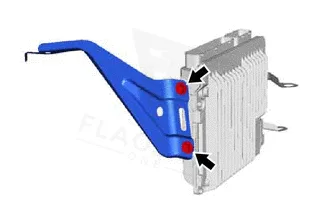
Work with the ignition off, and treat the module as static-sensitive: avoid touching the connector pins at any point.
| Operation | Configuration | Book Time |
|---|---|---|
| Powertrain Control Module Relearn | All configurations | 0.5 hr |
| Powertrain Control Module R&R | All configurations | 0.6 hr |
| Engine Control Module Reset | All configurations | 0.3 hr |
| Engine Control Module R&R | All configurations | 0.6 hr |
| Engine Control Module Relearn | All configurations | 0.5 hr |
After replacing the ECM in your 2020 Lexus RX350L, the factory requires Vehicle Identification Number (VIN) registration to ensure the new module syncs with the vehicle’s systems. This step is critical because the ECM relies on the VIN to access the correct calibration data for fuel, ignition, and emissions controls. Without registration, the vehicle may not start or could run poorly. Additionally, the factory procedure may include an engine control module reset, which typically takes 0.3 hours, followed by a relearn process lasting 0.5 hours. However, if you install a VIN-programmed replacement unit, these steps are already completed, saving time and reducing the risk of programming errors. This ensures your Lexus RX350L is ready to drive without additional dealer visits for initialization.
A failing ECM in your 2020 Lexus RX350L may produce a variety of symptoms, often starting with subtle drivability issues before escalating to more severe problems. Common signs include intermittent stalling, especially at idle or during deceleration, as the ECM struggles to maintain proper fuel and ignition timing. You might also notice rough idling, hesitation under acceleration, or a sudden drop in fuel efficiency. In some cases, the vehicle may enter a failsafe mode, limiting engine power to prevent damage. Another telltale sign is a no-start condition, where the engine cranks but doesn’t fire, as the ECM fails to send the correct signals to the fuel injectors or ignition coils. Internal faults, such as an internal processor error, often trigger the check engine light and can be confirmed with a scan tool. If the ECM loses communication with the scan tool entirely, it may indicate a complete module failure. Shifting issues, particularly with the transmission, can also arise if the ECM isn’t properly coordinating with the transmission control module.
The 2020 Lexus RX350L may store specific trouble codes when the ECM experiences internal faults. These codes help pinpoint the issue and guide repairs. Below is the documented code for this vehicle’s ECM.
| Code | Meaning | Full Guide |
|---|---|---|
| P0606 | Module processor failure | Full P0606 guide → |
The factory service information for the 2020 Lexus RX350L includes a notice emphasizing the importance of performing specific procedures after ECM replacement. This includes VIN registration and other calibration steps to ensure the new module functions correctly. The factory cautions that skipping these steps may result in poor engine performance or a no-start condition. Always refer to the latest service bulletins for updates on ECM-related procedures.
Common signs include stalling, rough idling, a no-start condition, or stored trouble codes like P0606. If the vehicle enters failsafe mode or loses communication with a scan tool, the ECM may be at fault. A professional diagnosis can confirm the issue.
While the physical replacement is straightforward, the factory requires VIN registration and relearn procedures afterward. Without the proper tools and software, you may not be able to complete these steps, leaving the vehicle inoperable. Professional installation is recommended.
The vehicle may not start or could run poorly because the ECM won’t have the correct calibration data. VIN registration ensures the module syncs with the vehicle’s systems, including fuel injection, ignition timing, and emissions controls.
The relearn procedure allows the ECM to recalibrate with the engine’s sensors and systems. This step is necessary to ensure smooth operation, optimal fuel efficiency, and proper emissions compliance. Skipping it may result in poor performance or stored trouble codes.
The physical replacement typically takes 0.6 hours, while the relearn procedure may add another 0.5 hours. If VIN registration is required, it can be completed quickly with the right tools. Using a pre-programmed unit eliminates additional programming time.
If your 2020 Lexus RX350L is showing signs of ECM failure, you have options for repair. A refurbished or new replacement unit can restore proper engine function without the hassle of dealer programming. Flagship One provides VIN-programmed ECMs, ensuring your vehicle is ready to drive immediately after installation. This approach saves time and avoids potential errors during the registration process, making it a practical choice for RX350L owners.
Flagship One stocks a refurbished, VIN-programmed PCM for the 2020 Lexus RX350L with a lifetime warranty, free shipping and no core charge. The full Lexus RX350L module lineup covers other engine configurations as well.
The ECM in your 2020 Lexus RX350L plays a vital role in engine performance, and addressing issues promptly can prevent further complications. Whether you’re dealing with a no-start condition, stalling, or stored trouble codes, understanding the replacement process and factory requirements helps you make informed decisions. With the right replacement unit and proper installation, your RX350L can return to reliable operation without unnecessary delays.