
Last updated on August 25th, 2026 at 02:08 pm
The Engine Control Module (ECM) in your 2000 Lexus LS400 manages fuel delivery, ignition timing, and emissions systems. Failures may cause erratic engine behavior, poor performance, or complete no-start conditions due to corrupted memory or internal circuit faults.
If your 2000 Lexus LS400 has developed unexplained stalling, rough idling, or a refusal to start, the engine computer—or ECM—may be the culprit. This small but critical module acts as the brain of your vehicle’s powertrain, continuously adjusting fuel injection, ignition timing, and emissions controls to keep the 4.0L V8 running smoothly. Over time, heat, vibration, or voltage spikes can degrade its internal circuits, leading to intermittent or permanent failures. Replacing the ECM isn’t just about swapping a part; it involves careful access, proper installation, and often a factory-mandated relearn procedure to ensure the new module syncs with your vehicle’s sensors and systems. Understanding these steps helps you avoid unnecessary delays or dealer markups, especially if you opt for a pre-programmed replacement that skips the reprogramming step entirely. This guide covers what the ECM does, where it’s located, how to recognize failure symptoms, and what to expect during replacement—so you can make an informed decision without the guesswork.
The Engine Control Module (ECM) in your 2000 Lexus LS400 is a specialized computer responsible for managing the engine’s most critical functions. It processes data from sensors monitoring air intake, throttle position, coolant temperature, and oxygen levels to calculate the precise fuel mixture and ignition timing needed for optimal performance. This ensures your 4.0L V8 delivers smooth power while meeting emissions standards. The ECM also monitors for faults, storing trouble codes when it detects irregularities, which mechanics use to diagnose issues. Without a functioning ECM, your Lexus may run poorly, waste fuel, or fail to start altogether. Over time, the module’s internal components can degrade due to heat, moisture, or electrical surges, making replacement necessary. When sourcing a new unit, you’ll encounter options like replacement engine computers for the Lexus LS400, which may come pre-programmed to your vehicle’s VIN, saving time and avoiding dealer reprogramming fees. The ECM’s role is so central that even minor glitches can trigger noticeable symptoms, from rough idling to sudden stalling, making it one of the first components to inspect when engine performance declines.
2000 Lexus LS400
OEM programmed ECM for your 2000 Lexus LS400 — plug & play, no dealer visit.
Free shipping · Lifetime warranty
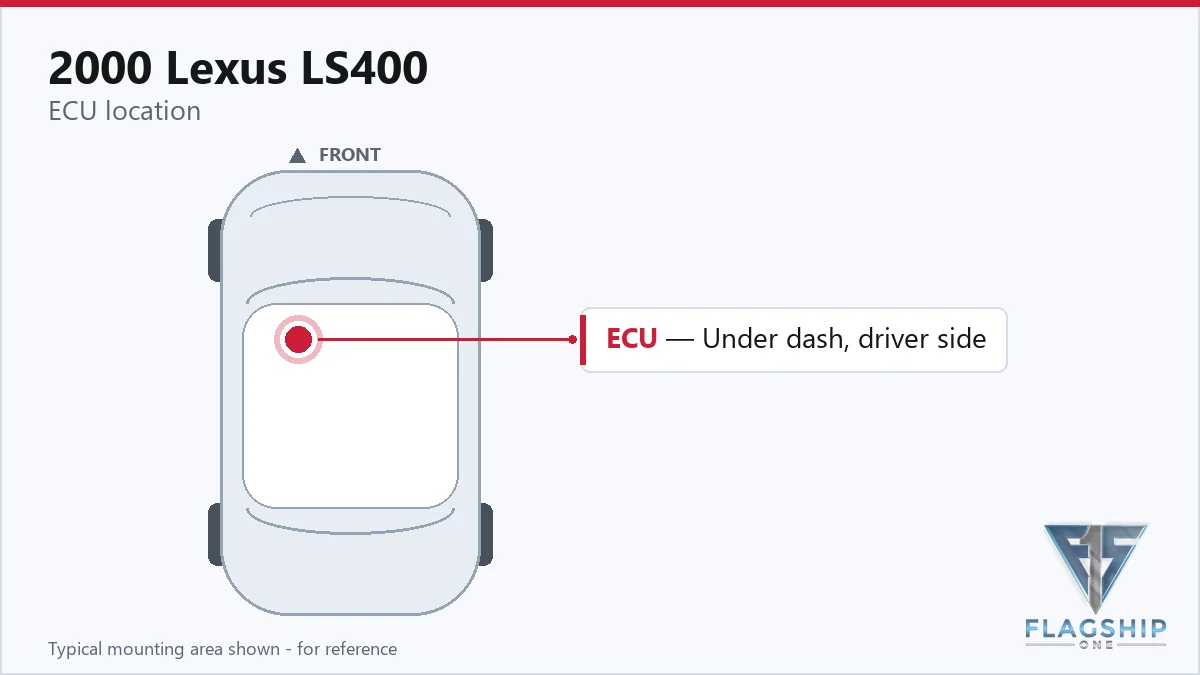
In the 2000 Lexus LS400, the ECM is located behind the instrument panel, which means accessing it requires removing interior trim and possibly the glove box or lower dashboard panels. This placement protects the module from engine bay heat and moisture but adds complexity to replacement. According to factory labor guides, removing and reinstalling the ECM (referred to as Engine Control Module R&R) typically takes 1.1 hours. If you’re replacing the Powertrain Control Module (PCM), which may serve a similar function in some vehicles, the labor time increases slightly to 1.3 hours. The process involves disconnecting the battery, unplugging the module’s wiring harness, and carefully extracting the unit without damaging surrounding components. Torque specifications for mounting bolts or connectors aren’t provided in the available data, but proper seating of the harness is critical to avoid communication errors. Once installed, the new module must be securely fastened to prevent vibration-related issues, which could lead to premature failure or intermittent faults.
| Operation | Configuration | Book Time |
|---|---|---|
| Powertrain Control Module Relearn | All configurations | 0.5 hr |
| Powertrain Control Module R&R | All configurations | 1.3 hr |
| Engine Control Module R&R | All configurations | 1.1 hr |
| Engine Control Module Relearn | All configurations | 0.5 hr |
After installing a new ECM in your 2000 Lexus LS400, the factory procedure requires a 0.5-hour relearn process to synchronize the module with your vehicle’s sensors and systems. This step ensures the ECM adapts to your engine’s unique characteristics, such as fuel trims and idle settings, which can vary slightly even among identical models. The relearn typically involves connecting a scan tool to initiate a series of self-tests, during which the ECM recalibrates its parameters. However, if you opt for a VIN-programmed replacement unit, this step is already completed before the module arrives. Flagship One units are pre-loaded with your vehicle’s specific calibration data, eliminating the need for post-install programming and reducing the risk of errors during the relearn process. This not only saves time but also ensures the ECM is ready to function immediately after installation, provided all other components like sensors and wiring are in good condition. Without pre-programming, the relearn must be performed by a dealer or a shop equipped with the necessary tools, adding to the overall cost and downtime.
When the ECM in your 2000 Lexus LS400 begins to fail, the symptoms can range from subtle to severe, often mimicking other issues like fuel pump or sensor failures. One of the most common signs is a no-start condition, where the engine cranks but refuses to fire, as the ECM may fail to send the correct signals to the fuel injectors or ignition coils. Stalling or rough idling is another frequent complaint, particularly when the module struggles to maintain consistent fuel delivery or ignition timing. You might also notice poor acceleration, hesitation, or surging, as the ECM’s calculations for air-fuel mixture become erratic. Misfires are another red flag, often accompanied by trouble codes like internal control module memory checksum error, which indicates the ECM’s memory has been corrupted. In some cases, the vehicle may enter a “limp mode,” limiting engine power to prevent damage, or the check engine light may illuminate intermittently. Dead scan tool communication is a less common but serious symptom, suggesting the ECM has failed entirely and can no longer communicate with diagnostic equipment. Shifting issues, such as delayed or harsh gear changes, may also occur if the ECM shares data with the transmission control module. Because these symptoms can overlap with other problems, it’s important to rule out simpler issues like faulty sensors or wiring before assuming the ECM is at fault.
Lexus issued a service bulletin (#TC002-03) covering ECM reset procedures for models from 1998 to 2005, including your 2000 LS400. This bulletin outlines the “Reset Memory Function,” which allows technicians to clear learned values from the ECM without replacing the module. The procedure is often used when the ECM has stored incorrect data due to sensor failures, battery disconnects, or other electrical issues. While the bulletin doesn’t specify symptoms, it provides a step-by-step method for resetting the ECM using a scan tool, which may resolve intermittent performance issues or trouble codes. If your vehicle exhibits symptoms like rough idling or poor fuel economy, this reset could be a first step before considering replacement. The bulletin also notes that the reset should be performed after certain repairs, such as sensor replacements, to ensure the ECM recalibrates properly.
| Bulletin | Subject | What It Addresses |
|---|---|---|
| TC002-03 | :TC002-03: ECM Reset Memory Function: 98-05 Applicable Models (Revised) | — |
Random stalling in your LS400 may stem from ECM failure, particularly if the module struggles to maintain consistent fuel delivery or ignition timing. The ECM relies on data from multiple sensors, and if it receives erratic signals or its internal memory is corrupted, it may cut power to the engine as a safety measure. Other potential causes include faulty sensors, wiring issues, or fuel pump problems, so a thorough diagnosis is essential before assuming the ECM is at fault.
A reset may resolve issues if the ECM has stored incorrect data due to a recent battery disconnect or sensor failure. Symptoms like rough idling or poor fuel economy might improve after a reset, which clears learned values and allows the ECM to recalibrate. However, if the module has internal circuit damage or fails to communicate with a scan tool, replacement is likely necessary. Persistent trouble codes, especially those related to ECM memory or communication, often indicate a deeper issue.
Replacing the ECM yourself is possible if you’re comfortable with basic automotive electrical work and have the tools to access the module behind the instrument panel. However, the process requires care to avoid damaging interior trim or wiring harnesses. If you’re unsure about the installation or post-replacement relearn procedure, a shop can complete the job in about 1.1 hours. Opting for a pre-programmed unit simplifies the process, as it eliminates the need for dealer reprogramming.
In your 2000 Lexus LS400, the ECM (Engine Control Module) and PCM (Powertrain Control Module) may refer to the same unit or separate modules, depending on the vehicle’s configuration. The ECM typically manages engine functions like fuel injection and ignition timing, while the PCM may also control transmission operations. Labor times for replacement differ slightly—1.1 hours for the ECM and 1.3 hours for the PCM—suggesting the PCM may be more complex or located in a less accessible area. Always confirm which module your vehicle uses before purchasing a replacement.
A used ECM from another LS400 may physically fit, but it’s unlikely to work without reprogramming. The module must be calibrated to your vehicle’s VIN and engine specifications to function correctly. Even if the donor vehicle is the same model year, differences in sensor data, fuel trims, or transmission settings can cause performance issues or trigger trouble codes. A VIN-programmed replacement unit is the most reliable option, as it arrives ready to install without additional programming.
If your 2000 Lexus LS400 is exhibiting symptoms of ECM failure, you have two main options: repair or replacement. Repairing the module may be possible if the issue is minor, such as a corrupted memory or loose connection, but it often provides only a temporary fix. Replacement is the more reliable solution, especially if the ECM has internal circuit damage or fails to communicate with diagnostic tools. Opting for a VIN-programmed replacement unit saves time and avoids the hassle of dealer reprogramming, ensuring your vehicle is back on the road faster. Given the labor involved in accessing the module, choosing a high-quality replacement upfront can prevent repeat visits to the shop.
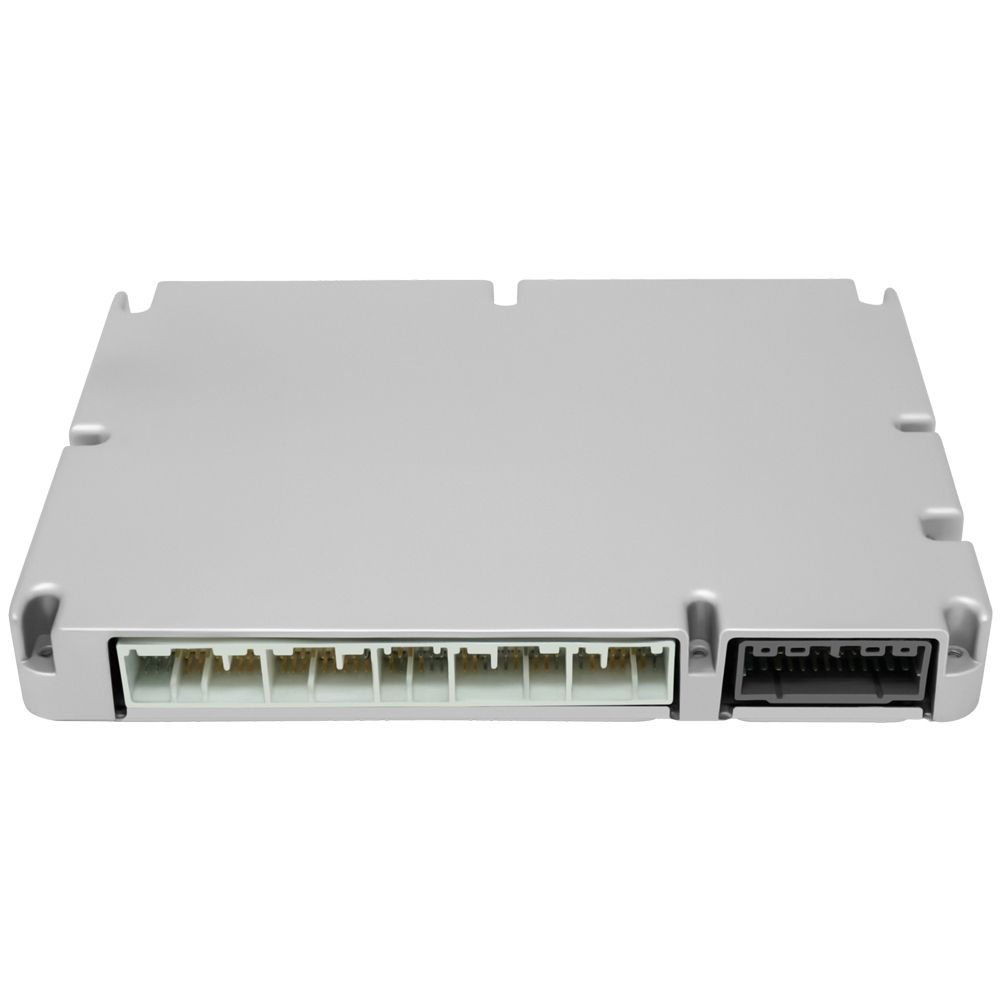
Flagship One stocks a refurbished, VIN-programmed PCM for the 2000 Lexus LS400 with a lifetime warranty, free shipping and no core charge. The full Lexus LS400 module lineup covers other engine configurations as well.
The ECM in your 2000 Lexus LS400 plays a vital role in keeping your 4.0L V8 running smoothly, and its failure can lead to frustrating symptoms like stalling, misfires, or a no-start condition. While replacement involves careful access and potential reprogramming, understanding the process helps you make an informed decision. Whether you opt for a dealer visit or a pre-programmed unit, addressing ECM issues promptly can restore your vehicle’s performance and reliability. If you’re ready to move forward, a VIN-programmed replacement ensures a seamless installation and gets you back on the road with minimal downtime.