
Last updated on August 25th, 2026 at 02:03 pm
The Engine Control Module (ECM) on your 2019 Lexus RC300 is the primary computer managing the 2.0L turbocharged engine’s fuel injection, ignition timing, emissions controls, and turbocharger boost. This module can fail internally, triggering diagnostic trouble codes like P0606.
If your 2019 Lexus RC300 is exhibiting starting issues, running problems, or your scan tool cannot communicate with the Engine Control Module, you may be facing an ECM failure. The ECM serves as the brain of your vehicle’s 2.0L turbocharged engine, coordinating critical systems that affect performance, fuel economy, and emissions. This guide explains what the ECM does in your specific vehicle, common failure symptoms, the replacement procedure, and the programming requirements that must be completed after installing a new module.
The Engine Control Module in your 2019 Lexus RC300 with the 2.0L engine is the central computer responsible for managing the turbocharged four-cylinder’s operational parameters. This replacement engine computers for the Lexus RC300 processes inputs from dozens of sensors throughout the engine bay to calculate optimal fuel delivery, ignition timing, variable valve timing, and turbocharger boost pressure in real time. When the ECM experiences an internal processor fault—often indicated by trouble code P0606—it may lose the ability to communicate with diagnostic tools or properly control engine functions. Because the module continuously monitors and adjusts engine operation to maintain performance within factory specifications, a failing ECM can cause your vehicle to run poorly, stall, or not start at all.
2019 Lexus RC300
OEM programmed ECM for your 2019 Lexus RC300 — plug & play, no dealer visit.
Free shipping · Lifetime warranty
The Engine Control Module on your 2019 Lexus RC300 is typically located behind the driver’s side kick panel or in the engine compartment relay box area, though exact positioning varies by production year. Access requires disconnecting the cable from the negative battery terminal after the prescribed waiting period following engine switch-off—this waiting period is mandatory to prevent voltage spikes and module damage. The replacement procedure for the 2.0L engine carries a book time of 0.8 hours for remove and reinstall, plus an additional 0.5 hours for ECM relearn procedures to allow the new module to adapt to your vehicle’s specific engine characteristics. Always ensure battery ground connections are clean and secure when reassembling.
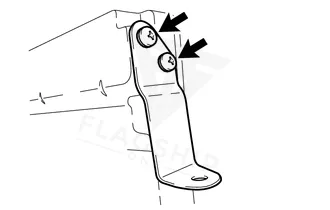
Work with the ignition off, and treat the module as static-sensitive: avoid touching the connector pins at any point.
| Operation | Configuration | Book Time |
|---|---|---|
| Engine Control Module Reset | All configurations | 0.3 hr |
| Engine Control Module R&R | 2.0L | 0.8 hr |
| Engine Control Module R&R | 3.5L | 0.7 hr |
| Engine Control Module Relearn | All configurations | 0.5 hr |
| Powertrain Control Module Relearn | All configurations | 0.5 hr |
| Powertrain Control Module R&R | 2.0L | 0.8 hr |
| Powertrain Control Module R&R | 3.5L | 0.7 hr |
After installing a replacement ECM in your 2019 Lexus RC300, the factory procedure requires performing VIN registration to link the new module to your specific vehicle identification number. This registration step is mandatory per Toyota/Lexus service documentation before the ECM will function properly. Additionally, the engine switch must be in the off position for the specified waiting period before battery disconnection to avoid electrical system damage. When you purchase a VIN-programmed replacement unit from Flagship One, the module arrives pre-programmed with your specific VIN already registered, eliminating the need for manual VIN registration and reducing the post-install procedure to primarily the relearn step.
When the Engine Control Module fails on a 2019 Lexus RC300, several telltale signs typically emerge. The most common symptom is a no-start condition where the engine cranks but will not fire, often accompanied by a dead scan tool connection—the diagnostic scanner cannot establish communication with the ECM. Some vehicles may experience intermittent stalling, rough idle, or hesitation under acceleration as the module loses the ability to properly meter fuel or control ignition timing. Misfire codes may populate across multiple cylinders, and in some cases the check engine light will illuminate with processor fault stored in the module’s internal memory. Transmission shifting may also become erratic because the ECM and TCM share data networks.
The 2019 Lexus RC300 may store module-internal trouble codes that indicate ECM processor or memory failures. These codes differ from standard powertrain codes in that they often point to hardware-level issues within the module itself rather than faults in external sensors or wiring.
| Code | Meaning | Full Guide |
|---|---|---|
| P0606 | Module processor failure | Full P0606 guide → |
The ECM must be matched to your specific vehicle’s engine displacement and model year. The 2.0L RC300 requires a module programmed for the 2.0L turbocharged engine, not the 3.5L V6 variant used in other RC models.
While mechanically skilled DIYers can perform the physical replacement, the VIN registration and relearn procedures typically require dealer-level diagnostic equipment. Purchasing a pre-programmed unit from Flagship One reduces this requirement.
Without VIN registration, the replacement ECM will not communicate properly with the vehicle’s other control modules, and the engine may not start or run correctly. This is a mandatory step per factory service procedures.
Flagship One stocks a refurbished, VIN-programmed PCM for the 2019 Lexus RC300 with a lifetime warranty, free shipping and no core charge. The full Lexus RC300 module lineup covers other engine configurations as well.
The Engine Control Module in your 2019 Lexus RC300 is a critical component that manages your 2.0L turbocharged engine’s operations. When internal faults occur, the resulting driveability issues can leave your vehicle stranded. Understanding the replacement procedure, programming requirements, and VIN registration steps helps you make informed decisions about repair options for your Lexus.