
Last updated on August 25th, 2026 at 02:04 pm
The Engine Control Module serves as the central computer for the NX300h’s 2.5L hybrid powertrain. It processes sensor data to manage fuel delivery, ignition timing, variable valve timing, and emissions systems. Internal processor failures may prevent proper engine management, resulting in stored diagnostic trouble codes and drivability complaints requiring module replacement.
When the Engine Control Module on your 2016 Lexus NX300h develops an internal fault, the vehicle may exhibit a range of drivability symptoms that can leave you stranded. This module serves as the primary computer responsible for managing the 2.5-liter hybrid powertrain’s critical operating parameters. Understanding what this component does, where it installs, and what the replacement process involves can help you make an informed decision if diagnostic testing points toward ECM failure. This guide covers the factory-recommended removal procedure, programming requirements, and common symptoms associated with module failure on this Lexus hybrid. Whether you’re evaluating repair options or preparing for professional service, knowing what to expect simplifies the process considerably.
The Engine Control Module in your 2016 Lexus NX300h functions as the primary computing hub for the hybrid powertrain, continuously processing inputs from dozens of sensors to maintain optimal engine performance and fuel efficiency. This computer manages fuel injection pulse width, ignition timing advance, variable valve timing phases, and emissions control device operation while coordinating with the hybrid system’s power management electronics. The module receives data from the mass airflow sensor, crankshaft position sensor, oxygen sensors, and numerous temperature transducers to calculate real-time operating strategies tailored to driving conditions. Without proper signals from the ECM, the fuel injectors cannot deliver correct fuel quantities and the ignition system cannot fire at the proper moment, resulting in poor drivability or complete engine shutdown. For replacement engine computers for the NX300h, sourcing the correct unit is essential since the module contains vehicle-specific calibration data programmed to your vehicle’s VIN. This calibration information links the replacement module to your specific NX300h’s hybrid system configuration, transmission calibration, and emission control setup.
Flagship One keeps Lexus NX300h replacement engine computers in stock for exactly this failure pattern.
2016 Lexus NX300h
OEM programmed ECM for your 2016 Lexus NX300h — plug & play, no dealer visit.
Free shipping · Lifetime warranty
The Engine Control Module on the 2016 Lexus NX300h installs adjacent to the air cleaner assembly in the engine compartment, requiring access through interior trim components. The factory removal procedure specifies removing the No. 3 deck board sub-assembly, followed by the rear deck floor box and deck floor box on the left side to gain access to the battery compartment. After disconnecting the cable from the negative auxiliary battery terminal, the air cleaner cap and hose must be separated, along with the air cleaner filter element sub-assembly, to create clearance for module removal. The complete removal and reinstallation operation carries a book time of approximately 1.0 hours, with relearn procedures requiring an additional 0.5 hours. A critical caution requires waiting after turning the power switch to OFF before disconnecting the negative battery cable, as specified in factory service documentation. Proper reassembly of all removed components in reverse order ensures reliable operation and maintains factory fitment standards.
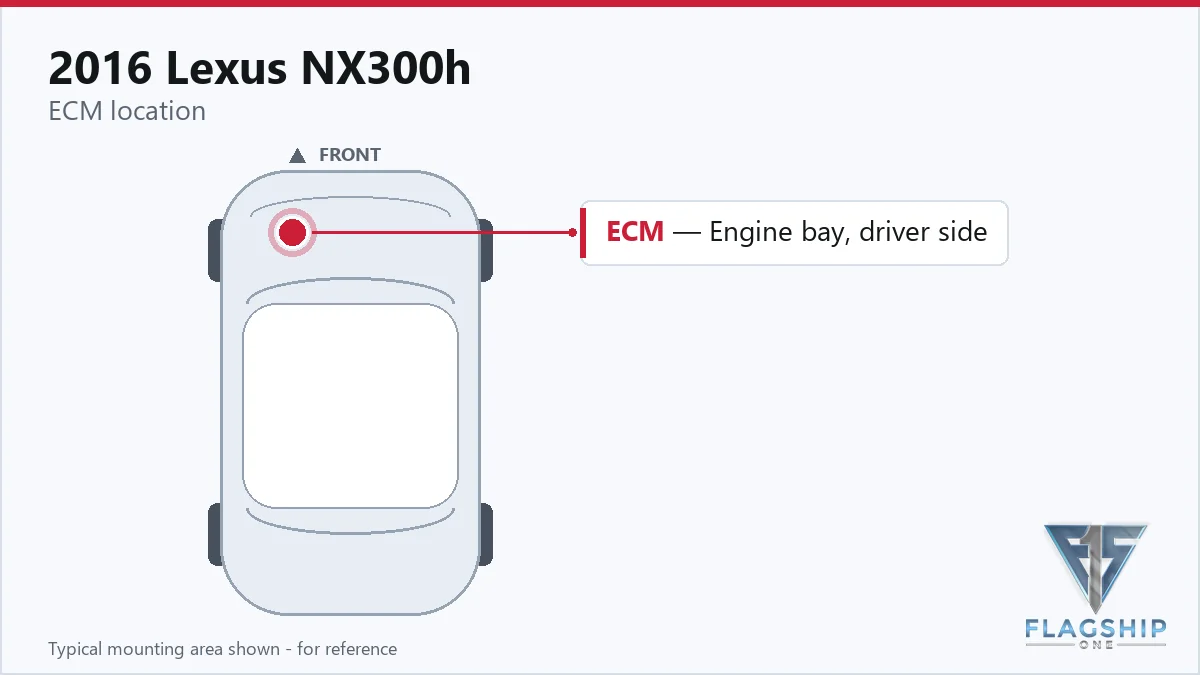
Work with the ignition off, and treat the module as static-sensitive: avoid touching the connector pins at any point.
| Operation | Configuration | Book Time |
|---|---|---|
| Powertrain Control Module Relearn | All configurations | 0.5 hr |
| Powertrain Control Module R&R | All configurations | 1.0 hr |
| Engine Control Module Reset | All configurations | 0.3 hr |
| Engine Control Module R&R | All configurations | 1.0 hr |
| Engine Control Module Relearn | All configurations | 0.5 hr |
The factory service procedure for the 2016 Lexus NX300h requires performing a relearn operation after installing a replacement Engine Control Module. This procedure synchronizes the new module with the vehicle’s existing systems and allows the PCM to adapt to sensor inputs from the 2.5L engine and hybrid components. The powertrain control module relearn typically requires approximately 0.5 hours of additional labor following the 1.0-hour removal and installation operation. However, Flagship One supplies units that arrive with your VIN already programmed, which means the essential programming steps have been completed before the module reaches you. This pre-programming can eliminate the need for separate programming equipment or dealer calibration services during installation, potentially reducing overall labor time compared to aftermarket units requiring on-vehicle programming.
Every VIN-programmed replacement unit from Flagship One arrives with these steps already completed.
When the Engine Control Module fails internally on the 2016 Lexus NX300h, several symptoms may manifest depending on the nature of the malfunction. The check engine light typically illuminates and stored diagnostic trouble codes become retrievable through a scan tool. Many drivers experience hard starting or complete failure to start when the ECM cannot properly sequence fuel injection and ignition events during cranking. Engine stalling, rough idle, hesitation during acceleration, and reduced power output commonly occur when the module cannot maintain correct air-fuel mixture calculations. Some vehicles develop transmission shifting irregularities since the ECM coordinates with the hybrid control system for gear transitions. A scan tool may show no communication with the module or frozen parameter displays. P0606 specifically indicates an internal processor fault within the Engine Control Module itself, signaling that the unit requires replacement rather than repair of external components.
Module-internal diagnostic trouble codes stored in your NX300h’s Engine Control Module indicate faults within the computer hardware or firmware rather than problems with external sensors or actuators. The 2016 Lexus NX300h may store P0606, which points to an internal processor malfunction that prevents the module from executing its operating algorithms correctly. These codes differ from conventional sensor-related trouble codes because they typically cannot be resolved through component replacement elsewhere in the engine management system.
| Code | Meaning | Full Guide |
|---|---|---|
| P0606 | Module processor failure | Full P0606 guide → |
Diagnostic testing revealing module-internal codes like P0606, unresponsive communication with the ECM, or multiple system failures occurring simultaneously typically indicate internal module failure rather than sensor issues. A professional scan tool readout showing processor faults or memory errors generally confirms replacement is necessary.
Yes, the 2016 Lexus NX300h requires VIN-specific programming to link the replacement module to your vehicle’s hybrid system configuration and emission control settings. Flagship One units arrive pre-programmed with your VIN, which may eliminate separate programming steps during installation.
Factory procedure requires removing the No. 3 deck board sub-assembly, rear deck floor box, and left-side floor box, followed by the negative battery cable. The air cleaner assembly components including the cap, hose, and filter element must also be removed to create clearance for module extraction.
Deciding between dealer service and aftermarket replacement for your 2016 Lexus NX300h involves weighing costs, convenience, and turnaround time. Dealership ECM replacement typically includes programming but may carry significant charges for the procedure. Aftermarket suppliers offer alternatives that may reduce overall expense. Consider whether your vehicle has additional damage that warrants professional diagnosis, and evaluate whether pre-programmed replacement units suit your situation. Understanding the complete repair process helps you budget appropriately and set realistic expectations for your NX300h’s return to service.
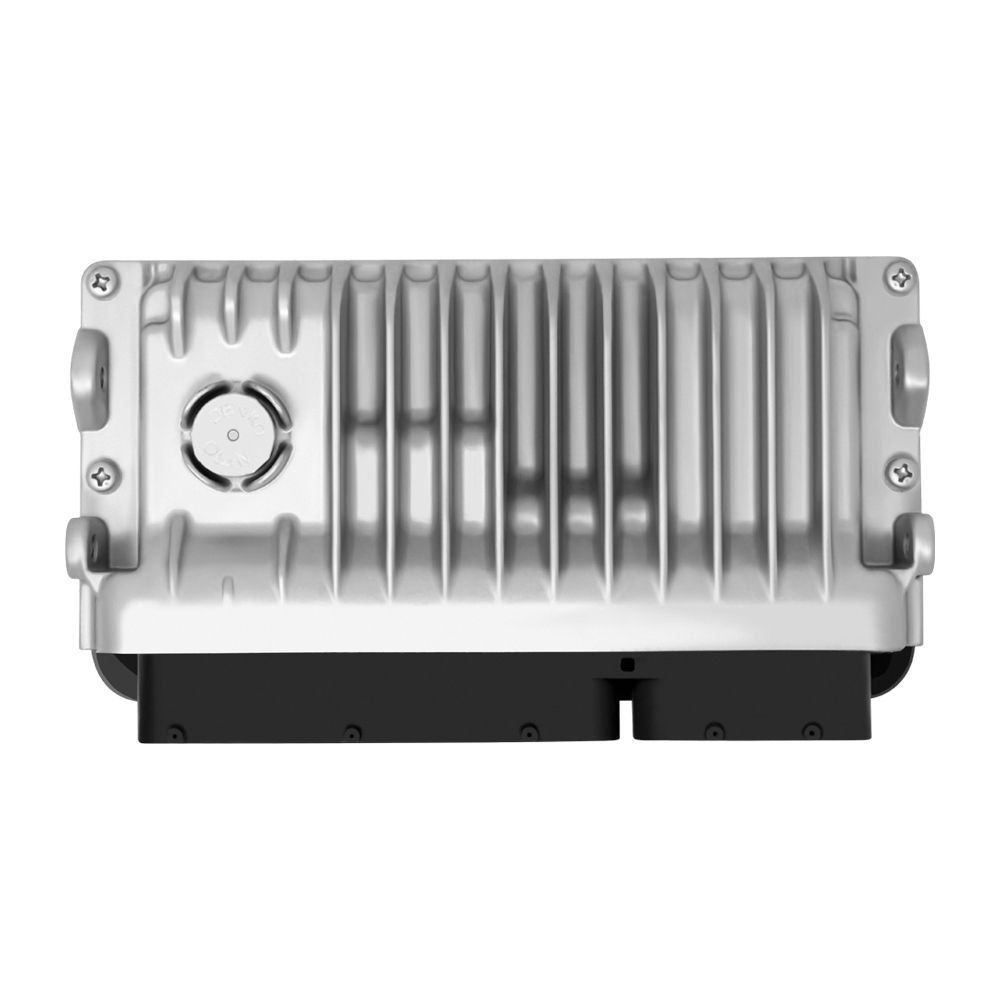
Flagship One stocks a refurbished, VIN-programmed PCM for the 2016 Lexus NX300h with a lifetime warranty, free shipping and no core charge. The full Lexus NX300h module lineup covers other engine configurations as well.
The Engine Control Module serves as the central nervous system of your 2016 Lexus NX300h’s powertrain, and internal failure typically requires replacement rather than repair. The factory procedure involves module removal through the deck board and air cleaner access path, with associated labor hours for installation and relearn procedures. Flagship One provides VIN-programmed replacement units that may streamline your installation process. Evaluate your repair options based on diagnostic findings, budget considerations, and your vehicle’s specific requirements.