
Last updated on August 25th, 2026 at 02:14 pm
The Engine Control Module (ECM) in your 1993 Isuzu Rodeo is the primary computer managing the 2.6L engine’s fuel injection, ignition timing, and idle air systems. This pre-OBD-II unit acts as the electronic brain for the powertrain. When it fails, your vehicle may not start, run poorly, or stall unexpectedly, often leaving you stranded.
If your 1993 Isuzu Rodeo with the 2.6L engine won’t start, runs roughly, or stalls unexpectedly, the Engine Control Module may be the culprit. The ECM serves as the central computer for your vehicle’s powertrain, and when this component fails, the engine loses its ability to operate properly. This guide explains what the ECM does in your specific vehicle, where it’s located, common failure symptoms, and what your replacement options are. Whether you’re diagnosing a no-start condition or planning a repair, understanding the role of this critical module helps you make informed decisions about the best path forward for your Rodeo. You’ll learn about the replacement process, programming requirements, and how to identify whether the ECM is truly at fault before spending money on a new or refurbished unit.
The ECM in your 1993 Isuzu Rodeo is the main electronic control unit responsible for managing the 2.6L four-cylinder engine’s core functions. Unlike modern OBD-II vehicles, this pre-OBD-II system uses a simpler architecture where the ECM directly controls fuel injection pulse width, ignition coil firing points, and idle air control valve positioning based on inputs from basic sensors like the coolant temperature sensor, throttle position sensor, and MAP sensor. The unit also monitors the automatic transmission shift points in Rodeo models equipped with an automatic, making it integral to drivability. This means when the ECM develops internal faults—whether from age-related component degradation, thermal cycling stress, or voltage spikes from jump-starting—the entire engine management system can collapse. A failing ECM may produce no spark, no fuel delivery, or erratic timing that causes severe misfiring. Many technicians first suspect the ECM when scan tool communication fails entirely or when the vehicle exhibits multiple unrelated symptoms that point to a loss of central control. If you’re shopping for replacement engine computers for the Rodeo, you’ll find both new and refurbished options that can restore function to your vehicle’s powertrain.
1993 Isuzu Rodeo
OEM programmed ECM for your 1993 Isuzu Rodeo — plug & play, no dealer visit.
Free shipping · Lifetime warranty
The ECM on your 1993 Isuzu Rodeo is mounted in a relatively accessible location: in front of the center console, beneath the dashboard trim. To access it, you typically need to remove the lower dashboard panel on the driver’s side and any trim pieces surrounding the center console. The module is often secured with a few screws or bolts to a mounting bracket. Replacement involves unplugging the main electrical connector and any secondary connectors, removing the mounting hardware, and reversing the process with the new unit. You’ll want to ensure all connectors are clean and free of corrosion before plugging in the replacement. The process is straightforward mechanically but requires care with electrical connections. Plan for adequate time to properly route and secure wiring to avoid future connection issues.
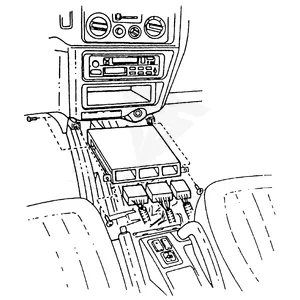
Work with the ignition off, and treat the module as static-sensitive: avoid touching the connector pins at any point.
After replacing the ECM in your 1993 Isuzu Rodeo, the factory service procedure requires programming the new module to match your specific vehicle’s VIN and configuration. This involves using a dealer-level scan tool or equivalent diagnostic equipment to input the vehicle identification number and calibrate the module to the engine and transmission combination. The unit must also learn sensor characteristics and idle air control positions through a relearn procedure. However, when you purchase from Flagship One, you receive a VIN-programmed replacement unit that arrives pre-configured with your specific VIN already loaded. This means the critical programming steps have been completed before the module reaches you, significantly reducing installation time and eliminating the need for dealer programming appointments. You’ll still need to verify idle air control operation and clear any stored fault codes after installation.
When the ECM fails on your 1993 Isuzu Rodeo, the symptoms often appear suddenly and can be confusing because they mimic many other problems. The most common presentation is a no-start condition—the engine cranks but receives no fuel or spark because the ECM isn’t outputting the necessary signals. Another frequent symptom is intermittent stalling, where the engine runs for a few minutes then dies unexpectedly, often after warming up. Misfire codes may appear even though spark plugs and wires are new, caused by incorrect fuel injection timing or pulse width. In some cases, the check engine light may not illuminate at all because the bulb is burned out or the ECM failure prevents the light from functioning. Scan tool communication failure is a strong indicator—when your diagnostic tool cannot establish communication with any module, the ECM is often the root cause. Transmission shifting problems can also occur since the ECM controls shift solenoids on automatic-equipped Rodeos. If your vehicle exhibits any combination of these issues, particularly after a battery jump-start or electrical work, the ECM should move higher on your diagnostic list.
If you have basic mechanical skills and are comfortable removing dashboard trim, the ECM replacement is doable as a DIY project. The mechanical removal and installation is straightforward. The key consideration is that programming may be required if you purchase a unit that isn’t pre-programmed with your VIN.
Start by checking for scan tool communication—if your diagnostic scanner cannot communicate with any module, the ECM is likely failed. Also note if multiple unrelated systems fail simultaneously, such as fuel delivery, ignition, and transmission shifting all stopping at once, which points to a central controller issue rather than individual component failures.
New ECMs come from the manufacturer with no prior use. Refurbished units are original ECMs that have been tested, had failed components replaced, and been reprogrammed. Both can be reliable options, but quality varies by seller. Units from Flagship One are tested and come with a warranty.
With a properly programmed replacement unit, your Rodeo should run very close to original specifications. You may need to allow the idle air control to relearn positions after installation, and any pending codes should be cleared. The engine may run slightly differently during the first few drive cycles as the system calibrates.
Yes, on automatic-equipped 1993 Rodeos, the ECM controls shift solenoids and transmission line pressure. A failing ECM can cause harsh shifting, failure to shift into gear, or the transmission getting stuck in limp mode. However, transmission problems can also be caused by transmission-specific issues, so proper diagnosis is important.
When your 1993 Isuzu Rodeo’s ECM has failed, you have two primary repair paths. You can purchase a new OEM unit from a dealer, which ensures fresh components but often comes with a premium price tag. Alternatively, a refurbished replacement from a reputable supplier like Flagship One offers a cost-effective solution while still providing reliable function. The key advantage of purchasing from a specialized supplier is receiving a unit that arrives VIN-programmed for your specific vehicle, eliminating dealer programming delays and additional costs. Consider your budget, timeline, and warranty preferences when making your decision.
Flagship One stocks a refurbished, VIN-programmed ECM for the 1993 Isuzu Rodeo with a lifetime warranty, free shipping and no core charge. The full Isuzu Rodeo module lineup covers other engine configurations as well.
The ECM is the heart of your 1993 Isuzu Rodeo’s engine management system, and when it fails, your vehicle’s operation is seriously compromised. Understanding the symptoms, location, and replacement process helps you approach this repair with confidence. Whether you choose new or refurbished, a properly programmed replacement can restore your Rodeo to reliable operation. Take time to diagnose carefully, source a quality unit, and your Isuzu will be back on the road.