
Last updated on August 25th, 2026 at 02:14 pm
The Engine Control Module in the 1991 Isuzu Rodeo manages fuel delivery, ignition timing, and sensor feedback. When the unit fails, the engine may refuse to start, run rough, or lose power, because the computer can no longer coordinate critical engine functions.
When a 1991 Isuzu Rodeo begins to exhibit no‑start conditions, rough idle, or sudden loss of power, the engine’s brain—the ECM—may be at fault. Because this vehicle predates OBD‑II, the diagnostic process relies on basic sensor feedback and the computer’s ability to manage fuel and spark. Understanding where the module lives, what it controls, and how a proper replacement restores function can save you time and prevent unnecessary repairs. This guide walks you through locating the ECM, what the module does for your Rodeo, typical symptoms of a failing unit, and how Flagship One’s VIN‑programmed replacements simplify the re‑installation process.
1991 Isuzu Rodeo
OEM programmed ECM for your 1991 Isuzu Rodeo — plug & play, no dealer visit.
Free shipping · Lifetime warranty
In the 1991 Isuzu Rodeo, the Engine Control Module acts as the central processor that receives input from throttle position, coolant temperature, and crankshaft sensors, then determines the precise amount of fuel and spark timing needed for smooth operation. By continuously adjusting these parameters, the ECM ensures the engine runs efficiently across all conditions, from cold starts to highway cruising. A malfunction can disrupt this balance, leading to poor performance or a complete shutdown. The module’s reliability is essential because it coordinates emissions, fuel economy, and drivability. For owners seeking a new unit, consider replacement engine computers for the 1991 Isuzu Rodeo as a direct fit that matches the original specifications.
The ECM for the 1991 Isuzu Rodeo is typically positioned in front of the center console, mounted beneath the dashboard. Access usually requires removal of the lower dash panel or console trim to expose the unit. Once visible, the connector can be unplugged, and the mounting bolts loosened to free the module. After the old ECM is removed, the replacement is positioned in the same location, bolts are torqued to factory specifications if provided, and the electrical connector is reattached. Reconnecting the battery completes the physical installation before any programming steps are considered.
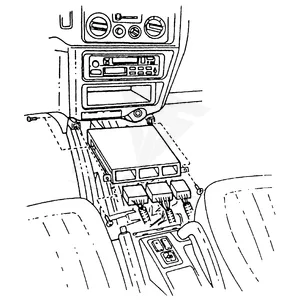
Work with the ignition off, and treat the module as static-sensitive: avoid touching the connector pins at any point.
After the ECM is physically installed in a 1991 Isuzu Rodeo, the factory service procedure often calls for a verification of sensor signals and a basic initialization using a dealer scan tool. Flagship One units arrive pre‑configured for the vehicle’s VIN, so those initialization steps are already satisfied. This means the technician can focus on confirming connector security and battery voltage, and then perform a brief functional test. The pre‑programmed nature of the unit removes the need for on‑site coding, reducing labor time and potential errors. For a seamless swap, use a VIN-programmed replacement unit that matches the Rodeo’s specifications.
A failing ECM in a 1991 Isuzu Rodeo may reveal itself through a range of observable issues. The engine might refuse to crank or start altogether, even when the ignition key is turned, because the computer cannot command fuel injection. Intermittent stalling while driving, especially under load or during acceleration, can indicate that the module is losing communication with sensor inputs. Rough idle or misfire‑like behavior often points to incorrect timing or fuel calculations from a defective unit. Additionally, the vehicle may exhibit poor throttle response or unexpected loss of power, as the ECM cannot properly interpret the throttle position sensor. In some cases, the diagnostic scan tool may show no communication with the module, confirming a possible internal fault.
If the engine cranks but does not fire, and you have verified fuel delivery and spark, the ECM may be preventing fuel injection. Checking for lack of communication with a scan tool or observing erratic sensor readings can help confirm the issue.
Yes, disconnecting the negative battery terminal is recommended to avoid electrical shorts and protect both the vehicle’s wiring and the replacement module during removal.
Repaired ECMs can sometimes be reinstalled, but because the module contains calibrated memory, a VIN‑matched replacement from Flagship One often provides a more reliable solution without additional programming steps.
The factory service manual provides the exact torque value; if it is not available, snug the bolts by hand and ensure the unit is securely seated without overtightening.
Flagship One’s VIN‑programmed units are calibrated to match the specific engine and emission configuration of each vehicle, so they are appropriate for all trim levels of the 1991 Isuzu Rodeo.
When the ECM in your 1991 Isuzu Rodeo needs attention, you can choose between a professional repair or a refurbished replacement. A Flagship One VIN‑programmed unit offers a straightforward swap that eliminates on‑site coding, while a repair may be viable if the fault is isolated to a specific circuit. Evaluating the condition of the module and your comfort with the installation steps will guide the best path forward for restoring reliable performance.
Flagship One stocks a refurbished, VIN-programmed ECM for the 1991 Isuzu Rodeo with a lifetime warranty, free shipping and no core charge. The full Isuzu Rodeo module lineup covers other engine configurations as well.
Replacing the ECM in a 1991 Isuzu Rodeo can resolve no‑start, stalling, and power loss issues, returning the vehicle to smooth operation. Consider a VIN‑programmed replacement for a hassle‑free install, and follow the outlined steps to protect the new unit.