
Last updated on August 25th, 2026 at 02:14 pm
The Engine Control Module in your 1991 Isuzu Pickup serves as the primary computer responsible for managing the fuel injection system, ignition timing, and emissions controls on the 2.3L engine. When this module fails, the engine typically loses its ability to regulate fuel delivery and spark timing properly, resulting in drivability problems or complete failure to start.
If your 1991 Isuzu Pickup runs poorly, stalls unexpectedly, or refuses to start, the Engine Control Module may be the culprit. This vehicle relies on its ECM to manage the 2.3L engine’s fuel and ignition systems without the diagnostic sophistication found in later models. Understanding how this computer operates, where it resides in your truck, and what symptoms indicate failure can save you from unnecessary repairs and help you make an informed decision when replacement becomes necessary. This guide covers the role of the module, where technicians locate it during service, what programming procedures the manufacturer specifies, and how Flagship One supports your repair with pre-programmed replacement units configured to your specific truck. By the end, you will understand the failure signs, service approach, and your options for getting your Isuzu Pickup back on the road.
The Engine Control Module in your 1991 Isuzu Pickup functions as the central nervous system for the 2.3L engine. This computer continuously monitors various engine sensors including the throttle position, engine temperature, and intake air conditions to determine the appropriate fuel injector pulse width and ignition timing advance for current operating conditions. Unlike vehicles equipped with OBD-II diagnostics introduced later in the 1990s, this pre-emissions era system relies on a simpler architecture with fewer sensors and less sophisticated feedback loops.
Your ECM receives signals from the oxygen sensor, coolant temperature sensor, and other inputs to maintain the air-fuel mixture within acceptable ranges during acceleration, cruising, and idle. It controls the dwell time for the ignition coil and regulates the fuel injector opening duration to deliver the correct amount of gasoline for each combustion event. This precise coordination ensures reasonable drivability, fuel economy, and emissions output from your four-cylinder powerplant.
The module also manages several auxiliary functions including the electric cooling fan clutch activation, alternator charging voltage regulation, and exhaust gas recirculation valve operation. When the ECM encounters internal electronic failures, these coordinated functions degrade simultaneously, producing multiple symptoms that often appear unrelated at first glance. Many owners initially suspect fuel pump issues or ignition problems when the root cause actually resides within the replacement engine computers for Isuzu trucks mounted under the dashboard.
The electronic components within the ECM experience stress from heat cycling, voltage irregularities, and moisture intrusion over decades of service. The factory epoxy封装 used in 1991 provides basic environmental protection but cannot indefinitely shield the internal circuits from the harsh under-dash conditions where temperatures fluctuate significantly and road moisture occasionally reaches sensitive electrical connections.
1991 Isuzu Pickup
OEM programmed ECM for your 1991 Isuzu Pickup — plug & play, no dealer visit.
Free shipping · Lifetime warranty
Locating the Engine Control Module in your 1991 Isuzu Pickup requires accessing the interior cabin area ahead of the center console. The module mounts in this position beneath the dashboard trim panels, positioned in an area that receives limited protection from the heating and cooling cycles that occur within the passenger compartment. This mounting location places the ECM relatively close to the factory air conditioning ductwork in some configurations.
Service procedures for removing the module typically involve disconnecting the negative battery terminal first, then removing the lower dashboard panel on the passenger side to access the electrical connector. The module itself may be secured with mounting brackets or sheet metal screws penetrating the sub-dash structure. Disconnecting the multi-pin harness connector requires releasing the locking tab before carefully pulling the harness free from the module body.
Installation reverses this procedure with attention to connector cleanliness and secure reconnection. The electrical terminals should show no signs of corrosion, bending, or damage before reconnecting a replacement unit. Some technicians apply dielectric grease to the connector pins to inhibit future moisture-related problems. After reconnection, the battery cable returns to its terminal and the system undergoes verification testing before the vehicle returns to service. The physical access itself presents modest difficulty compared to some vehicles where extensive dashboard disassembly becomes necessary, though working in the confined footwell space requires patience and appropriate lighting.
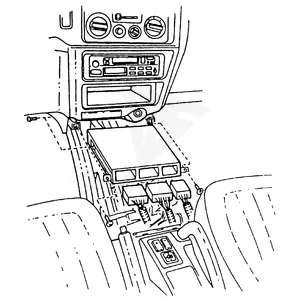
Work with the ignition off, and treat the module as static-sensitive: avoid touching the connector pins at any point.
Following ECM replacement on your 1991 Isuzu Pickup, the factory service documentation specifies procedures to recalibrate the replacement module to your specific vehicle. These procedures typically involve adjusting the idle mixture screws, setting the initial idle speed with the throttle position sensor properly recognized, and allowing the module to learn the specific characteristics of your engine sensors through a reset drive cycle.
The replacement unit must recognize your vehicle identification number to ensure the correct calibration constants load during initialization. Without proper configuration, the module may default to generic settings that produce poor drivability, excessive emissions, or illuminated warning indicators. Dealers and independent shops equipped with the manufacturer diagnostic software can perform this initialization using factory tools and procedures specified for this era.
When you purchase a replacement ECM from Flagship One, the unit arrives with your specific vehicle identification number already programmed into its memory, eliminating the need for your shop to perform this step. This means a VIN-programmed replacement unit arrives ready for installation with the correct calibration data for your 2.3L engine already loaded. Your technician can proceed directly to installation and basic verification rather than waiting for programming equipment or contacting the dealer for this service. This convenience reduces shop time and gets your truck back to you faster without sacrificing the precise calibration your engine requires.
Recognizing the signs of ECM failure in your 1991 Isuzu Pickup helps you pursue the correct repair path rather than replacing components that may appear faulty while the underlying computer problem goes undiagnosed. Hard starting represents one of the most common complaints when the module fails, with the engine either refusing to crank initially or cranking without firing despite seemingly adequate fuel pressure and spark. This symptom often leads owners to test the fuel pump, ignition coil, and starter motor before considering the central computer as the source.
Intermittent stalling during deceleration or at idle frequently indicates an ECM problem, particularly when the issue persists after verifying vacuum leaks, idle air control operation, and throttle body condition. The module may command correct fuel delivery under load but fail to maintain proper idle compensation when engine demands decrease. Similarly, random misfiring that manifests as engine hesitation or jerking during light acceleration often traces to erratic injector pulsewidth signals originating from a failing computer.
Scan tool communication failure presents another telling symptom. When your diagnostic scanner cannot establish communication with the vehicle computer, the problem may lie with the serial data circuit or the ECM itself. Some owners report that their scan tool connects intermittently or only after multiple key cycles, suggesting heat-related expansion within the module exacerbates internal circuit problems. In severe cases, the engine may run acceptably but exhibit poor fuel economy, excessive emissions, or an illuminated check engine lamp that never activates due to the diagnostic circuit failure. These varied symptoms often appear simultaneously or progress over weeks as moisture and thermal stress gradually degrade the internal electronics.
Diagnostic steps typically involve verifying power and ground at the ECM first, then checking for factory trouble codes stored in memory. When multiple symptoms occur simultaneously, such as hard starting combined with stalling and scan tool communication failure, the computer becomes the more likely suspect compared to individual sensor failures.
Heat-related failures commonly produce intermittent symptoms where the engine runs normally during cool morning starts but fails as the module heats up during operation. Restarting may require waiting for the computer to cool sufficiently, which can take minutes to hours depending on ambient conditions.
Salvage yard units often come from unknown-mileage vehicles with undisclosed water damage or heat exposure history. Without knowing the donor vehicle condition, these modules carry significant risk of premature failure. Additionally, a used unit requires programming to your specific truck, adding cost and complexity to the repair.
Communication failure typically indicates either a problem with the serial data circuit between the tool and computer, or an internal ECM failure preventing the module from responding to diagnostic requests. Verifying the scan tool works on another vehicle helps eliminate the tool itself as the source of the problem.
Continuing operation with a compromised module risks complete failure that leaves you stranded, potential damage to catalytic converters from prolonged rich-running conditions, and unpredictable engine behavior that compromises safety during traffic situations. Prompt diagnosis and replacement prevent these secondary consequences.
When your 1991 Isuzu Pickup requires Engine Control Module service, you face a choice between repair of the existing unit and installation of a replacement. In-shop repair involves specialized electronics equipment and carries uncertainty about long-term reliability after moisture intrusion or thermal damage has already occurred. A professionally rebuilt replacement unit configured specifically for your truck eliminates this uncertainty by providing known-good electronics in a configuration matched to your vehicle identification number. The pre-programmed units from Flagship One arrive ready for installation, reducing your mechanic’s labor time and ensuring correct calibration for your 2.3L engine from the moment of installation.
Flagship One stocks a refurbished, VIN-programmed ECM for the 1991 Isuzu Pickup with a lifetime warranty, free shipping and no core charge. The full Isuzu Pickup module lineup covers other engine configurations as well.
The Engine Control Module in your 1991 Isuzu Pickup performs essential functions that keep your 2.3L engine running smoothly across all operating conditions. Recognizing the symptoms of module failure, understanding the service location beneath the dashboard ahead of the console, and knowing that VIN programming ensures proper calibration helps you make informed decisions about repair versus replacement. Whether your truck has sat unused for months or shows early signs of computer-related drivability problems, addressing the ECM proactively restores reliable operation to your Isuzu Pickup.