
Last updated on August 25th, 2026 at 02:14 pm
The Engine Control Module (ECM) in your 1990 Isuzu Pickup manages fuel injection, ignition timing, and idle control. When it fails, you may experience hard starts, stalling, or erratic engine behavior, often without warning.
If your 1990 Isuzu Pickup is running rough, stalling unexpectedly, or refusing to start, the Engine Control Module (ECM) could be the culprit. This small but critical computer manages everything from fuel delivery to ignition timing, ensuring your engine runs smoothly. Unlike modern vehicles with self-diagnostic systems, this pre-OBD-II truck relies on the ECM to interpret sensor data and adjust engine parameters in real time. When the ECM fails, symptoms can range from subtle performance issues to complete engine shutdown. Replacing it isn’t just about swapping a part—it’s about restoring the brain that keeps your engine running efficiently. Understanding where the ECM is located, how to replace it, and what to expect afterward can save you time and frustration. Whether you’re dealing with a sudden no-start situation or intermittent stalling, knowing the role of the ECM helps you make informed decisions about repairs or replacements.
1990 Isuzu Pickup
OEM programmed ECM for your 1990 Isuzu Pickup — plug & play, no dealer visit.
Free shipping · Lifetime warranty
The Engine Control Module in your 1990 Isuzu Pickup acts as the central processing unit for the engine. It continuously monitors inputs from sensors like the throttle position, coolant temperature, and oxygen sensors to adjust fuel injection and ignition timing. This ensures optimal performance, fuel efficiency, and emissions control. Without a functioning ECM, your engine may run too rich or too lean, misfire, or fail to start altogether. The module also plays a role in idle control, preventing stalling when the vehicle is stationary. Over time, heat, vibration, or electrical issues can degrade the ECM’s performance, leading to erratic behavior. If you’re considering a replacement, replacement engine computers for the Isuzu Pickup are designed to restore factory-level functionality. Since this is a pre-OBD-II vehicle, the ECM doesn’t store trouble codes in the same way modern systems do, making diagnosis slightly more challenging but not impossible.
In the 1990 Isuzu Pickup, the ECM is typically mounted in front of the center console, tucked under the dashboard. Accessing it requires removing the lower dash panel, which may involve unscrewing a few fasteners or gently prying off plastic clips. Once the panel is removed, the ECM should be visible, often secured with a bracket or mounting screws. Replacement involves disconnecting the wiring harness, removing the old module, and installing the new one in its place. While the physical swap is straightforward, the location can make it a bit cramped, so patience is key. There are no documented torque specifications for this vehicle, but ensuring all connections are snug and secure is critical to prevent electrical issues. If you’re unfamiliar with dash disassembly, taking your time to avoid breaking clips or damaging wiring is essential.
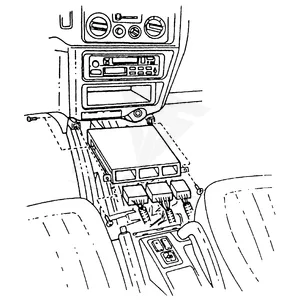
Work with the ignition off, and treat the module as static-sensitive: avoid touching the connector pins at any point.
After installing a new ECM in your 1990 Isuzu Pickup, the factory procedure typically requires programming to match the vehicle’s specific calibration. This step ensures the module communicates correctly with the engine’s sensors and fuel system. However, if you opt for a VIN-programmed replacement unit, this step is already completed before the part arrives. Pre-programmed units are configured to your truck’s exact specifications, eliminating the need for additional setup. This not only saves time but also reduces the risk of incorrect calibration, which could lead to poor performance or further issues. While some older vehicles may not require complex programming, having a unit ready to install out of the box ensures a smoother and more reliable repair process.
When the ECM in your 1990 Isuzu Pickup begins to fail, you may notice a range of symptoms that can make driving unpredictable. One of the most common signs is a no-start condition, where the engine cranks but refuses to fire up. This often happens because the ECM is no longer sending the correct signals to the fuel injectors or ignition system. Stalling is another frequent issue, particularly at idle or during deceleration, as the module struggles to maintain stable engine operation. You might also experience poor throttle response, where the engine hesitates or surges when you press the gas pedal. In some cases, the vehicle may run rough, with misfires or uneven idle speeds, indicating the ECM is not adjusting fuel or spark timing properly. Electrical gremlins, such as intermittent power loss or erratic gauge behavior, can also point to ECM problems. Since this is a pre-OBD-II vehicle, you won’t see traditional trouble codes, but a scan tool may still detect communication issues with the module. If you’re dealing with any of these symptoms, it’s worth investigating the ECM as a potential cause.
Stalling at idle is often linked to the ECM’s inability to maintain proper fuel or spark delivery. The module may be failing to adjust idle speed or compensate for changes in engine load, leading to sudden shutdowns. Checking the ECM’s connections and considering a replacement can help resolve this issue.
Yes, a failing ECM can disrupt ignition timing or fuel injection, resulting in misfires. Since the module controls these systems, any degradation in its performance can lead to uneven combustion, rough running, or even backfiring. Replacing the ECM may restore proper engine operation.
Without a scan tool, you’ll need to rely on symptoms like no-start conditions, stalling, or poor throttle response. If the engine runs erratically or refuses to start despite a good battery and fuel supply, the ECM could be the issue. Swapping in a known-good module is one way to confirm the diagnosis.
Replacing the ECM is straightforward but requires removing the lower dash panel to access the module. The process involves disconnecting the wiring harness and securing the new unit in place. While not overly complex, it does require patience to avoid damaging dash clips or wiring during removal.
A used ECM may work, but it’s not guaranteed. Since these modules are calibrated to specific vehicles, compatibility issues can arise. Additionally, used units may have their own wear or internal faults. Opting for a pre-programmed replacement ensures proper functionality without the risks associated with used parts.
If your 1990 Isuzu Pickup is showing signs of ECM failure, you have a few options. Repairing the existing module is rarely cost-effective, as internal damage is often irreversible. A refurbished or new replacement, particularly one that’s pre-programmed, offers a reliable solution. Given the age of the vehicle, ensuring the ECM is correctly matched to your truck’s specifications is key to avoiding further issues. Whether you’re dealing with a no-start situation or intermittent stalling, a properly functioning ECM can restore your vehicle’s performance and reliability.
Flagship One stocks a refurbished, VIN-programmed ECM for the 1990 Isuzu Pickup with a lifetime warranty, free shipping and no core charge. The full Isuzu Pickup module lineup covers other engine configurations as well.
The ECM in your 1990 Isuzu Pickup plays a vital role in keeping your engine running smoothly. When it fails, symptoms like stalling, misfires, or no-start conditions can leave you stranded. Replacing the module is a practical solution, especially with a pre-programmed unit that eliminates the need for additional setup. By understanding the ECM’s function, location, and common failure signs, you can make informed decisions about repairs and keep your truck on the road for years to come.