
Last updated on August 25th, 2026 at 02:14 pm
The engine control module (ECM) in your 1990 Isuzu Trooper 2.6L is the computer that manages fuel injection, ignition timing, and emissions. When it fails, the engine may not start, run poorly, or stall. Replacement requires a unit programmed for your specific vehicle.
If your 1990 Isuzu Trooper with the 2.6L engine is experiencing starting problems, stalling, or erratic performance, the engine control module (ECM) may be at fault. This computer is the brain of your fuel and ignition system, and when it fails, the entire engine can behave unpredictably. In this guide, you will learn exactly what the ECM does in your Trooper, where it is located, how to recognize common failure symptoms, and what your replacement options are. Because this vehicle is pre-OBD-II, diagnostics are different from modern cars, but the principles remain the same. We will also cover how a pre-programmed replacement unit can simplify the repair. By the end, you will have a clear understanding of whether your Trooper’s ECM needs attention and how to proceed with a reliable fix.
1990 Isuzu Trooper 2.6L
OEM programmed ECM for your 1990 Isuzu Trooper 2.6L — plug & play, no dealer visit.
Free shipping · Lifetime warranty
The engine control module (ECM) in your 1990 Isuzu Trooper 2.6L is a dedicated computer that controls critical engine functions. It receives input from sensors such as the throttle position sensor, coolant temperature sensor, and oxygen sensor, then adjusts fuel injection timing, pulse width, and ignition advance to maintain proper combustion. This module also manages the idle speed control and monitors emissions components. Because the Trooper uses a pre-OBD-II system, the ECM does not store generic diagnostic trouble codes; instead, it uses manufacturer-specific codes that can be read by observing the check engine light flash pattern. When the ECM fails, it can cause a wide range of drivability issues, from a no-start condition to intermittent stalling or poor fuel economy. If you need to replace this component, you will want a unit that is already programmed for your vehicle. That is where replacement ECMs for the 1990 Isuzu Trooper come into play, offering a direct fit without the need for dealer programming. Understanding what the ECM does helps you diagnose problems more accurately and avoid replacing parts unnecessarily.
The ECM in your 1990 Isuzu Trooper 2.6L is typically found in front of the center console, under the dash. To access it, you may need to remove a lower trim panel or kick panel. The module is usually mounted with a few bolts and has one or two multi-pin connectors. Before starting, disconnect the battery negative terminal to prevent any electrical shorts. Once the trim is removed, you can unbolt the ECM, carefully disconnect the wiring harness, and remove the unit. Installation is the reverse: position the new ECM, reconnect the harness, secure the bolts, and reinstall the trim. No special tools are required, but take care not to damage the connectors. After installation, reconnect the battery and check for proper operation. The entire process is straightforward and can be done in a home garage with basic hand tools.
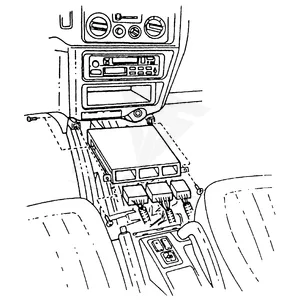
Work with the ignition off, and treat the module as static-sensitive: avoid touching the connector pins at any point.
After replacing the ECM in your 1990 Isuzu Trooper 2.6L, the factory procedure typically requires programming the unit with the vehicle’s VIN and specific calibration data. This step ensures the ECM communicates correctly with the engine sensors and actuators. In many cases, this programming must be performed using a dealer-level scan tool or a specialized programmer. However, Flagship One offers a VIN-programmed replacement ECM that arrives ready to install. This means the programming steps are already completed, so you can simply install the unit and drive. No additional trips to a dealership or expensive diagnostic equipment are needed. This saves time and eliminates the risk of incorrect programming. Always verify that the replacement unit matches your Trooper’s engine and model year for proper fit and function.
When the ECM in your 1990 Isuzu Trooper 2.6L begins to fail, you may notice a variety of symptoms. The most common is a no-start condition where the engine cranks but does not fire. This can happen if the ECM loses its ability to control the fuel injectors or ignition coil. Intermittent stalling, especially when the engine is warm, is another frequent sign. You might also experience rough idling, hesitation during acceleration, or a sudden loss of power. The check engine light may illuminate, and on pre-OBD-II vehicles, it will flash a code pattern that can be read by counting the flashes. Other symptoms include poor fuel economy, misfires, and difficulty starting when the engine is cold. Because the ECM controls so many functions, a failing module can mimic other problems like a bad sensor or fuel pump. If you have ruled out other causes, the ECM should be a prime suspect. Addressing these symptoms early can prevent being stranded and avoid further damage to the engine.
Common signs include the engine not starting, stalling, or running poorly. You may also see the check engine light on. A professional diagnosis can confirm by checking for stored codes or testing the module.
Yes, the ECM is accessible under the dash in front of the center console. With basic hand tools and careful handling of connectors, a DIYer can remove and install a replacement. Just ensure the new unit is pre-programmed for your vehicle.
It means the ECM does not use generic diagnostic trouble codes (P-codes). Instead, it uses manufacturer-specific codes that are read by flashing the check engine light. This requires a different diagnostic approach than modern vehicles.
A used ECM may work if it comes from the same year, engine, and transmission combination. However, it will need to be programmed with your vehicle’s VIN and calibration. A pre-programmed unit from a supplier like Flagship One is often more reliable.
The actual replacement can be done in about 30 minutes to an hour, depending on your experience and access. The main time is spent removing and reinstalling the under-dash trim. No special tools are needed.
When your 1990 Isuzu Trooper 2.6L ECM fails, you have two main options: repair the existing module or replace it with a refurbished unit. Repair can be cost-effective for simple issues like bad capacitors, but for a reliable long-term fix, a replacement ECM that is pre-programmed for your vehicle is often the better choice. Flagship One offers such units, ensuring you get a direct fit without the need for dealer programming.
Flagship One stocks a refurbished, VIN-programmed ECM for the 1990 Isuzu Trooper with a lifetime warranty, free shipping and no core charge. The full Isuzu Trooper module lineup covers other engine configurations as well.
The ECM in your 1990 Isuzu Trooper 2.6L is a critical component that controls engine performance. Recognizing the symptoms of failure and knowing where it is located can save you time and frustration. If you need a replacement, consider a pre-programmed unit from Flagship One to simplify the repair and get your Trooper back on the road quickly.