
Last updated on August 25th, 2026 at 02:14 pm
The engine control module in your 1994 Isuzu Trooper 3.2L manages fuel delivery, ignition timing, and sensor communication for the V6 powertrain. When this computer fails, your Trooper may experience rough running, stalling, or a complete no-start condition because the module can no longer process inputs from critical engine sensors.
When your 1994 Isuzu Trooper starts behaving unpredictably, the engine control module is one component that often comes under suspicion. This 3.2L V6 relies on its ECM to coordinate fuel injection, ignition timing, and a web of sensor inputs that keep everything running smoothly. Because your Trooper predates the OBD-II standard, diagnosing computer issues can feel more challenging than on newer vehicles. You will not find the familiar P-codes that later models generate, which means you need a solid understanding of what the ECM does and how it communicates problems. Understanding the role this module plays, where it physically sits in your vehicle, and what symptoms typically accompany its failure gives you a real advantage when deciding whether to repair or replace it. You will also learn how a pre-programmed replacement unit can simplify the process and get your Trooper back on the road without a trip to the dealership for factory flashing.
1994 Isuzu Trooper
OEM programmed ECM for your 1994 Isuzu Trooper — plug & play, no dealer visit.
Free shipping · Lifetime warranty
The engine control module in your 1994 Isuzu Trooper 3.2L is the central computer responsible for managing the fuel injection system, ignition timing, idle speed, and various emission-related functions on the V6 engine. It continuously reads input from sensors such as the mass airflow sensor, throttle position sensor, coolant temperature sensor, and oxygen sensors, then adjusts injector pulse width and spark timing to maintain optimal combustion. Because this vehicle was built before the OBD-II mandate, the ECM uses an earlier diagnostic protocol that does not produce the standardized P-codes most modern scan tools display. That means troubleshooting often requires manufacturer-specific equipment or careful manual testing of individual sensor circuits. The module also interacts with the transmission control system and immobilizer logic, so a failing ECM can produce symptoms that seem unrelated to the engine itself. When the internal circuitry degrades, the module may lose its ability to process sensor data accurately, causing the engine to run rich or lean, stumble under acceleration, or refuse to start entirely. Choosing 1994 Isuzu Trooper replacement ECM at the right time can prevent cascading damage to other components and restore consistent drivability.
The ECM in your 1994 Isuzu Trooper is typically found in front of the center console, under the dash. Accessing it generally involves working from the interior passenger compartment rather than under the hood. You will likely need to remove or partially disassemble trim panels near the lower dashboard area to expose the module and its wiring harness connectors. Because no specific labor time or torque specifications were documented for this vehicle, the actual installation effort depends on how easily the surrounding trim can be cleared without damage. Once the old unit is disconnected and removed, the replacement ECM connects to the existing harness using the factory plug design. Care should be taken to ensure all connector pins seat fully and that no corrosion is present on the terminals before power is restored.
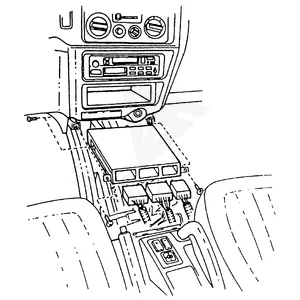
Work with the ignition off, and treat the module as static-sensitive: avoid touching the connector pins at any point.
After an ECM replacement on a 1994 Isuzu Trooper, the factory procedure would normally require the new module to be configured with your vehicle’s specific calibration data so that fuel maps, ignition tables, and immobilizer settings all match the original configuration. Because this is a pre-OBD-II vehicle, that setup process may involve proprietary dealer tools that are increasingly difficult to find. A unit from Flagship One eliminates that hurdle because a VIN-programmed replacement unit arrives already loaded with the correct software for your Trooper’s calibration. You install the module, reconnect the battery, and the computer is ready to operate without a separate flashing appointment. This saves time and avoids the risk of an incomplete programming session that could leave your vehicle in an inoperable state.
A failing ECM in your 1994 Isuzu Trooper 3.2L can produce a range of symptoms that often overlap with other engine problems, which makes careful diagnosis essential. One of the most common signs is a no-start condition where the engine cranks but never fires, because the module is no longer commanding the fuel injectors or ignition coils. Intermittent stalling is another frequent complaint, particularly at idle or during deceleration, when the ECM struggles to maintain proper air-fuel ratio. You may also notice rough running, hesitation under load, or a noticeable drop in fuel economy if the module begins sending incorrect injector pulse widths. Because this Trooper predates OBD-II, you will not see standard P-codes on a typical scan tool, which can make pinpointing the computer itself more difficult. Some owners report that the check engine lamp illuminates but yields no retrievable information through conventional tools. Loss of communication with a diagnostic scanner is another strong indicator that the module’s internal processor or communication circuit has failed. Electrical symptoms such as random engine surging, unexplained misfire behavior across multiple cylinders, or the fuel pump running continuously with the key off may also point to ECM trouble. If you observe several of these issues simultaneously and basic sensor testing checks out, the computer itself becomes a primary suspect.
The ECM is typically positioned in front of the center console, under the dashboard on the interior side of the vehicle. Accessing it usually requires removing or repositioning lower trim panels near the console area. You will not find it under the hood, so all replacement work is done from inside the cabin.
No. The 1994 Trooper was built before the OBD-II mandate took effect, so it does not generate standardized P-codes. Diagnosing ECM issues on this vehicle typically requires manufacturer-specific tools or manual circuit testing. A conventional OBD-II scanner will generally not communicate with this computer.
Yes. A failing ECM may lose its ability to maintain proper fuel delivery or ignition timing, which can cause the engine to stall unexpectedly. This often happens at idle or during deceleration. If stalling occurs alongside other symptoms like rough running or poor fuel economy, the module becomes a likely suspect.
Factory procedure would normally require calibration data to be written to a new ECM. However, a VIN-programmed unit from Flagship One arrives already configured for your vehicle, so that step is completed before shipping. You install the module and reconnect power without needing a separate dealer visit.
Typical signs include a crank-but-no-start condition, intermittent stalling, rough idle, hesitation under acceleration, and loss of communication with diagnostic equipment. Because this vehicle lacks OBD-II codes, multiple symptoms appearing together with no single sensor at fault often point toward the computer itself.
If your 1994 Isuzu Trooper is showing signs of ECM failure, you have a choice between attempting a repair on the original module or installing a pre-programmed replacement. Repairs can be uncertain and may not address all internal faults, while a refurbished unit configured to your vehicle’s VIN offers a more straightforward path. Flagship One supplies ECMs that are ready to install, saving you the complexity of dealer-level setup on a pre-OBD-II vehicle.
Flagship One stocks a refurbished, VIN-programmed ECM for the 1994 Isuzu Trooper with a lifetime warranty, free shipping and no core charge. The full Isuzu Trooper module lineup covers other engine configurations as well.
Your 1994 Isuzu Trooper depends on a healthy ECM to keep the 3.2L engine running smoothly and efficiently. Recognizing the symptoms of computer failure and understanding where the module sits can help you make an informed repair decision. A VIN-programmed replacement from Flagship One simplifies the process and gets your Trooper back on the road with confidence.