
Last updated on August 25th, 2026 at 02:17 pm
In the 2017 Chevrolet Sonic, the powertrain control module (PCM) and engine control module (ECM) manage engine timing, fuel delivery, and emissions. Failure of either unit can stem from printed‑circuit‑board delamination, leading to open circuits that prevent the engine from starting or cause sudden stalls.
When a 2017 Chevrolet Sonic begins to exhibit no‑start conditions, intermittent stalling, or a cascade of diagnostic trouble codes, the powertrain control module (PCM) and engine control module (ECM) often become suspects. These electronic brains coordinate fuel injection, ignition timing, and emissions control, so any internal fault can quickly manifest as drivability issues. This guide walks you through how the modules function in the Sonic, where they are located, what labor is involved in removal and installation, and what programming steps are required after a replacement. By the end, you will understand the typical symptoms, the relevant service bulletins, and how a Flagship One VIN‑programmed unit can simplify the repair process.
The PCM in the 2017 Chevrolet Sonic gathers data from sensors across the powertrain and commands the engine and transmission to operate within factory specifications. It processes inputs such as throttle position, engine speed, and coolant temperature to calculate fuel delivery and shift timing. The ECM performs a similar role but focuses on emissions control, managing the catalytic converter, oxygen sensors, and ignition timing. Together, they ensure smooth acceleration, fuel efficiency, and compliance with emissions standards. A failure in either module can disrupt these processes, leading to loss of power or engine shutdown. Understanding the function of these computers is essential when diagnosing complex drivability problems. For owners seeking replacements, replacement engine computers for the Sonic provide a direct fit and retain the vehicle’s original performance characteristics.
Both the PCM and ECM are mounted within the engine compartment, typically attached to the firewall or near the intake manifold. Removal involves disconnecting the electrical connector, unbolting the unit, and extracting it from its bracket. According to the labor guide, swapping the PCM requires about 0.5 hours, followed by an additional 0.5 hours for the PCM relearn procedure. The ECM follows the same timing: 0.5 hours for removal and replacement, plus 0.5 hours for the relearn step. In some cases, a brief ECM reset of 0.3 hours may be performed after installation to clear residual data. Access is straightforward, but care should be taken to protect connector pins and avoid contaminating the PCB during handling.
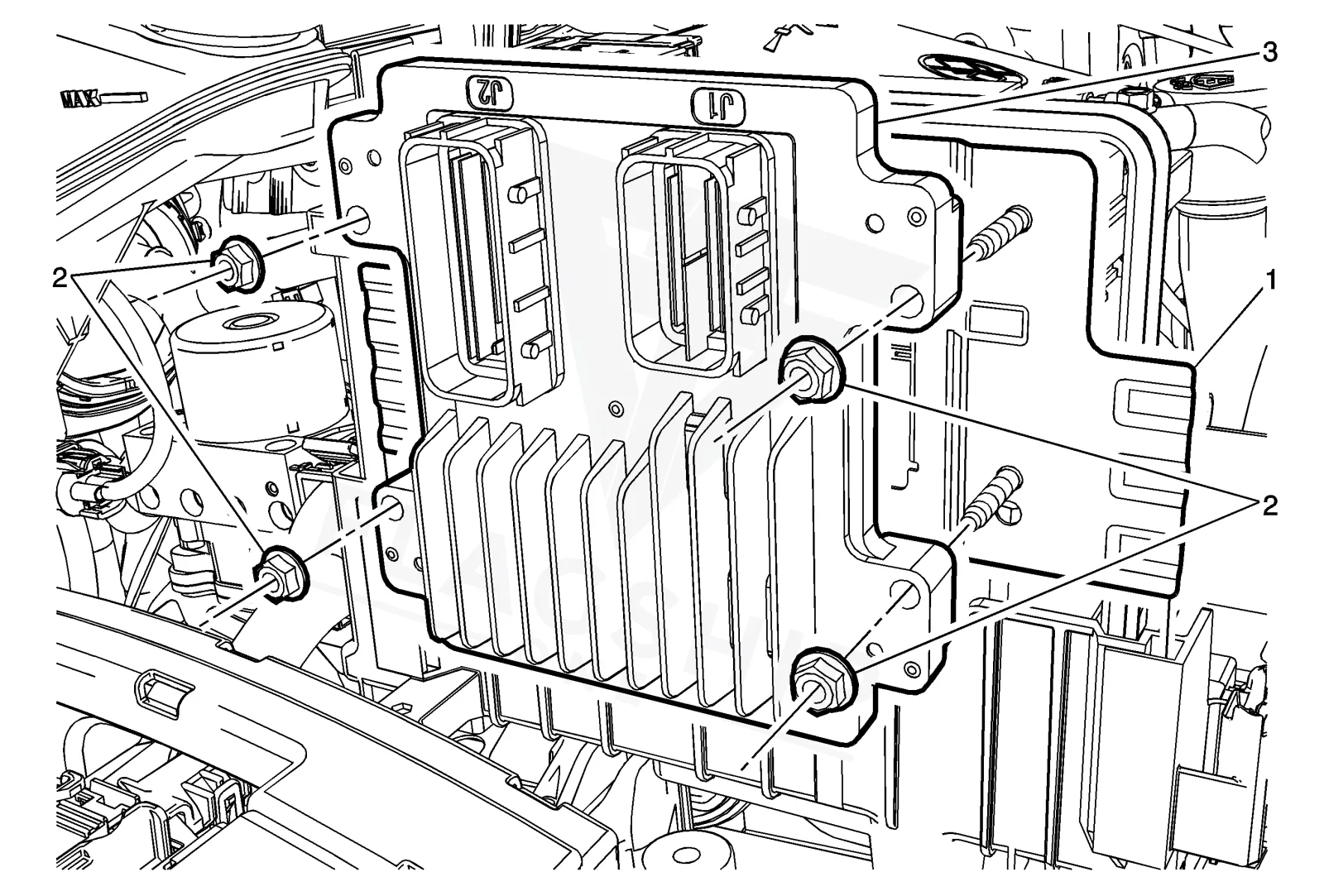
Work with the ignition off, and treat the module as static-sensitive: avoid touching the connector pins at any point.
| Operation | Configuration | Book Time |
|---|---|---|
| Powertrain Control Module R&R | All configurations | 0.5 hr |
| Powertrain Control Module Relearn | All configurations | 0.5 hr |
| Engine Control Module R&R | All configurations | 0.5 hr |
| Engine Control Module Relearn | All configurations | 0.5 hr |
| Engine Control Module Reset | All configurations | 0.3 hr |
2017 Chevrolet Sonic
OEM programmed ECM for your 2017 Chevrolet Sonic — plug & play, no dealer visit.
Free shipping · Lifetime warranty
After installing a new PCM or ECM in the 2017 Sonic, the factory repair procedure calls for a module‑specific relearn or reset to synchronize the unit with the vehicle’s existing sensors and transmission control logic. The PCM requires a 0.5‑hour relearn, while the ECM also needs a 0.5‑hour relearn, and sometimes a short 0.3‑hour reset. Flagship One units arrive pre‑programmed to the vehicle’s VIN, which means those relearn steps are already completed, allowing you to skip the factory programming sequence. This simplifies the repair and reduces the chance of post‑install errors. When using a Flagship One replacement, a VIN‑programmed replacement unit ensures the module is ready for immediate operation.
When the PCM or ECM in a 2017 Chevrolet Sonic develops internal faults, drivers often notice a complete loss of engine power, intermittent stalling at idle, or an inability to restart after shutdown. Diagnostic scans may reveal a range of codes, including P0601, P0602, P0603, and others related to internal processor failures. Specifically, the presence of processor clock fault suggests a timing issue within the module’s microcontroller. Additional signs can include erratic sensor readings, delayed throttle response, or a sudden drop in fuel efficiency. In severe cases, the vehicle may refuse to crank or exhibit a dead scan‑tool communication link, indicating that the control module is not transmitting data to the diagnostic interface.
The following internal trouble codes have been reported for the 2017 Chevrolet Sonic’s PCM and ECM:
Service bulletin #17139, dated April 13, 2017, alerts owners that certain 2017 Sonic vehicles may experience printed‑circuit‑board delamination in the ECM, potentially causing no‑start or stall conditions. Additionally, bulletin #PIP5373B from June 11, 2018, provides programming guidance for ECM error codes E4491 and E4423.
| Bulletin | Subject | What It Addresses |
|---|---|---|
| — | Service Update – ECM Printed Circuit Board Delamination – (Apr 13, 2017) | Certain 2017 model year Chevrolet Express, Silverado HD, Sonic, Trax, and 2017 model year GMC Savana and Sierra HD vehicles may have delamination on the… |
| — | Program ECM Error E4491/E4423 – (Jun 11, 2018) | — |
The labor guide lists about half an hour for the removal and installation of the PCM, followed by another half hour for the required relearn procedure.
Yes, bulletin #17139 notes that delamination of the ECM’s printed circuit board can open circuits, which may prevent the engine from starting or cause it to stall.
The factory process includes a short reset step of roughly 0.3 hours, but a VIN‑programmed replacement from Flagship One eliminates the need for an additional reset.
Codes such as P0601, P0602, P0603, P0604, P0606, P062B, P062F, and P0630 are associated with internal processor or communication failures within the PCM.
Yes, the PCM relearn takes about 0.5 hours to synchronize the new module with the vehicle’s existing systems, unless a pre‑programmed unit is used.
When your 2017 Chevrolet Sonic experiences PCM or ECM failure, you can choose a brand‑new factory‑spec unit or a refurbished Flagship One replacement. Both options restore the vehicle’s control functions, but a VIN‑programmed unit removes the need for post‑install relearn steps, saving time in the shop. Evaluate your budget and the importance of immediate readiness when deciding which path to take.
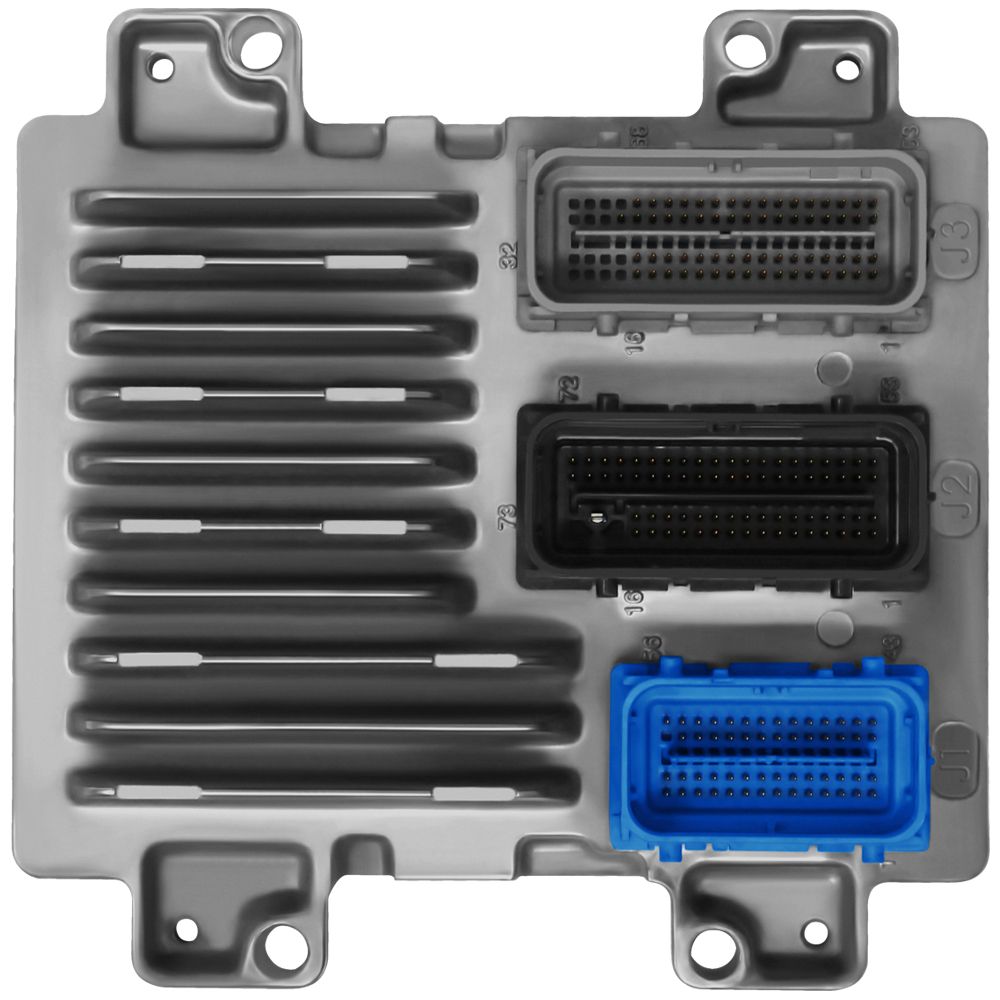
Flagship One stocks a refurbished, VIN-programmed PCM for the 2017 Chevrolet Sonic with a lifetime warranty, free shipping and no core charge. The full Chevrolet Sonic module lineup covers other engine configurations as well.
The 2017 Chevrolet Sonic’s PCM and ECM are critical to reliable operation, and addressing failures promptly can keep your vehicle running smoothly. Whether you opt for a new factory part or a Flagship One VIN‑programmed replacement, proper installation and understanding of the required procedures will ensure a successful repair.