
Last updated on August 25th, 2026 at 02:23 pm
The Powertrain Control Module (PCM) and Engine Control Module (ECM) in your 2013 Chevrolet Sonic with the 1.4L engine manage fuel injection, ignition timing, emissions controls, and transmission shift points. Internal processor failures may trigger multiple diagnostic codes and leave the vehicle inoperable.
If your 2013 Chevrolet Sonic with the 1.4L turbocharged engine won’t start, runs poorly, or has illuminated multiple warning lights, the Powertrain Control Module or Engine Control Module may be the culprit. These onboard computers manage critical engine functions, and when they fail internally, the vehicle may enter a no-start condition or run in a degraded limp mode. Many owners encounter this issue after the module experiences voltage spikes, moisture intrusion, or simply reaches the end of its service life. Understanding what these modules do, where they are located, and what the replacement process involves helps you make informed decisions about repair options. This guide covers the factory-recommended procedures, common symptoms that suggest module failure, and the programming requirements that must be addressed after installing a replacement unit.
The Engine Control Module in your 2013 Chevrolet Sonic serves as the primary brain for the 1.4L turbocharged engine. It processes input from dozens of sensors throughout the powertrain and uses that information to calculate optimal fuel injector pulse width, ignition timing advance, turbocharger boost pressure, and emissions control device operation. The PCM variant found in this vehicle integrates transmission control functions, managing the automatic gearbox shift points based on throttle position, vehicle speed, and engine load demands. replacement engine computers for the Sonic must be programmed with the specific VIN, emission configuration, and calibration revision that matches your vehicle’s build specifications. Failure of this module typically manifests as a no-start condition, intermittent stalling, or the illumination of multiple check engine, transmission, and ABS warning lights simultaneously. The module contains non-volatile memory that stores adaptive fuel trims, transmission clutch adaptions, and fault code history, all of which must be relearned after a new unit is installed.
The Engine Control Module on the 2013 Chevrolet Sonic is located in the engine compartment, typically mounted to the firewall on the driver’s side of the vehicle. Access requires removal of the engine cover and possibly the air intake ducting to reach the unit. The module is secured with mounting bolts and has a multi-pin electrical connector that must be carefully disconnected to avoid damaging the pins. According to factory labor guidelines, the physical removal and reinstallation of the ECM or PCM requires approximately 0.5 hours of book time. After the new module is installed, the technician must perform a relearn procedure that takes an additional 0.5 hours to allow the vehicle’s systems to recalibrate to the new hardware. Some replacement scenarios may also require an ECM reset procedure, which adds 0.3 hours to the total labor. Proper torque specifications must be followed when securing the new module to prevent vibration-related failures, and all electrical connections should be treated with dielectric grease to resist moisture intrusion.
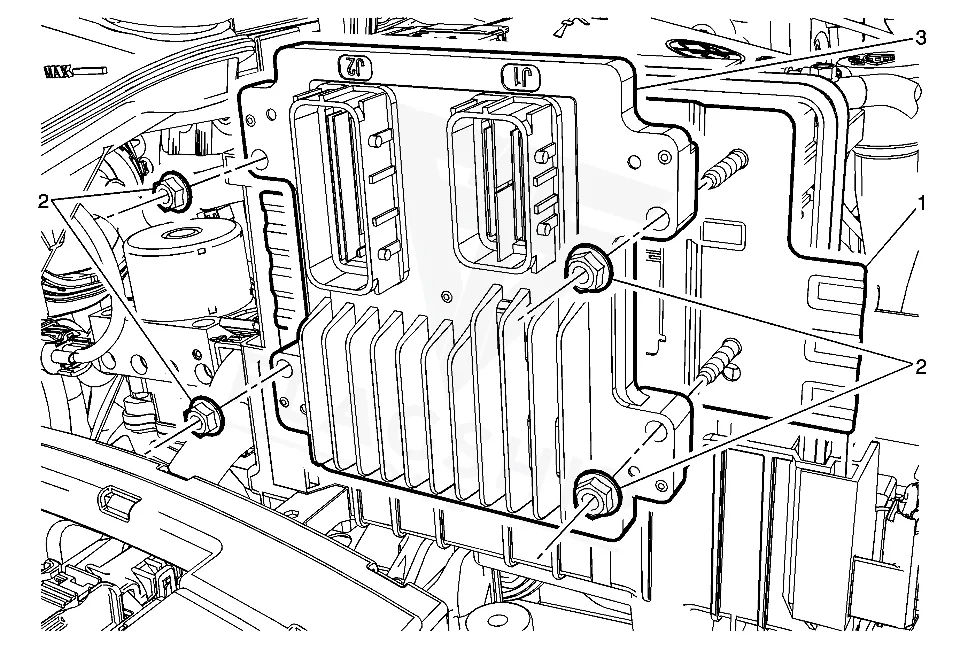
Work with the ignition off, and treat the module as static-sensitive: avoid touching the connector pins at any point.
| Operation | Configuration | Book Time |
|---|---|---|
| Powertrain Control Module R&R | All configurations | 0.5 hr |
| Powertrain Control Module Relearn | All configurations | 0.5 hr |
| Engine Control Module R&R | All configurations | 0.5 hr |
| Engine Control Module Relearn | All configurations | 0.5 hr |
| Engine Control Module Reset | All configurations | 0.3 hr |
2013 Chevrolet Sonic
OEM programmed ECM for your 2013 Chevrolet Sonic — plug & play, no dealer visit.
Free shipping · Lifetime warranty
After replacing the ECM or PCM in your 2013 Chevrolet Sonic, the factory procedure requires connection to GM-specific diagnostic equipment to reprogram the new module with the correct software calibration, VIN assignment, and emission strategy. This programming step is mandatory—the vehicle will not run properly without it. The required special equipment includes a GM-approved scan tool with programming capability and access to the manufacturer’s calibration update files. Without this procedure, the new module will not communicate with the vehicle’s network and the engine may remain in a no-start condition. a VIN-programmed replacement unit arrives from Flagship One pre-loaded with the correct program for your specific VIN, which means the shop performing the installation can often skip the programming step entirely and proceed directly to the relearn procedure. This can significantly reduce the time and cost associated with the repair while ensuring the vehicle leaves the shop running correctly on the first attempt.
When the ECM or PCM begins to fail on a 2013 Chevrolet Sonic, several patterns commonly emerge. The vehicle may experience a no-start condition where the engine cranks normally but fails to fire, or it may start and then stall immediately once the module loses communication with critical sensors. Many owners report that the check engine light illuminates along with additional warning indicators for the transmission and stability control systems. Diagnostic scanners may be unable to communicate with the module at all, indicating a failed communications circuit within the internal memory checksum error itself. Other symptoms include rough idle, hesitation under acceleration, incorrect fuel mixture causing black smoke from the exhaust, and erratic transmission shifting where the gearbox seems to hunt between gears or refuses to shift out of first gear. In some cases, the vehicle may run but display multiple pending trouble codes that clear and return repeatedly, suggesting an unstable internal processor. These symptoms often progress in severity over time, beginning as occasional glitches and advancing to a complete module failure that leaves the vehicle stranded.
The 2013 Chevrolet Sonic with the 1.4L engine may store several module-internal trouble codes that indicate specific types of internal failures within the ECM or PCM. These codes differ from standard sensor-related codes in that they point directly to a fault within the control module itself rather than an external component. The module may generate any combination of these internal codes depending on which internal circuit has failed, and multiple codes are often present simultaneously when the module is scanned.
General Motors has issued factory service bulletins addressing parts restrictions for the ECM used in the 2013 Chevrolet Sonic. Bulletin PIP5051, dated August 7, 2012, and its follow-up revision PIP5051A, dated January 25, 2013, both identify a specific ECM part number—12642927—as subject to a PQC (Product Quality Center) restriction. This means that only the exact specified part number may be used for replacement, and alternative or aftermarket units may not be acceptable for warranty or insurance repairs. These bulletins indicate that GM identified a quality or compatibility issue with certain ECM lots and restricted replacement units to ensure proper vehicle operation and emission compliance. When sourcing a replacement ECM, technicians should verify that the unit matches the currently restricted part number or obtain an approved alternative through GM’s established channels.
| Bulletin | Subject | What It Addresses |
|---|---|---|
| — | PQC Part Restriction – E83 ECM Restriction Part Number 12642927 – (Jan 25, 2013) | — |
| — | PQC Part Restriction – E83 ECM Restriction Part Number 12642927 – (Aug 7, 2012) | — |
No. The vehicle will typically not start or will run in a limited capacity if the ECM is not programmed with the correct VIN and calibration. The engine may crank but will not achieve idle speed or proper fuel delivery without valid calibration data.
A used ECM must still be programmed with your specific VIN and the correct calibration file for your 1.4L engine configuration. Simply swapping modules without programming will result in a no-start condition, and some salvage units may have pre-existing internal faults that led to their removal.
The vehicle may run but will likely experience poor idle quality, incorrect fuel mixture, hesitation under acceleration, and erratic transmission shifting. The relearn procedure allows the new module to adapt its calculations to your specific engine’s characteristics.
Not always. While these codes indicate module-internal faults, they can occasionally be triggered by severe voltage irregularities or corrupted memory from other system failures. A thorough diagnosis should rule out battery, alternator, and wiring issues before concluding the ECM itself has failed.
When a replacement ECM is properly programmed with the correct emission calibration, the vehicle retains its original emission certification. Using an incorrect part number or improper programming could potentially affect emission control functionality, which is why GM restricts replacement parts to specific numbers.
If your 2013 Chevrolet Sonic has experienced module failure, you have two primary repair paths. A new or remanufactured ECM from the dealer will arrive blank and requires GM programming equipment to become operational, adding diagnostic fees and programming time to the repair cost. Alternatively, a pre-programmed replacement unit from Flagship One arrives ready to install with your VIN and calibration already loaded, potentially saving you significant labor costs. Consider your budget, timeline, and access to GM programming equipment when deciding which option best suits your situation.
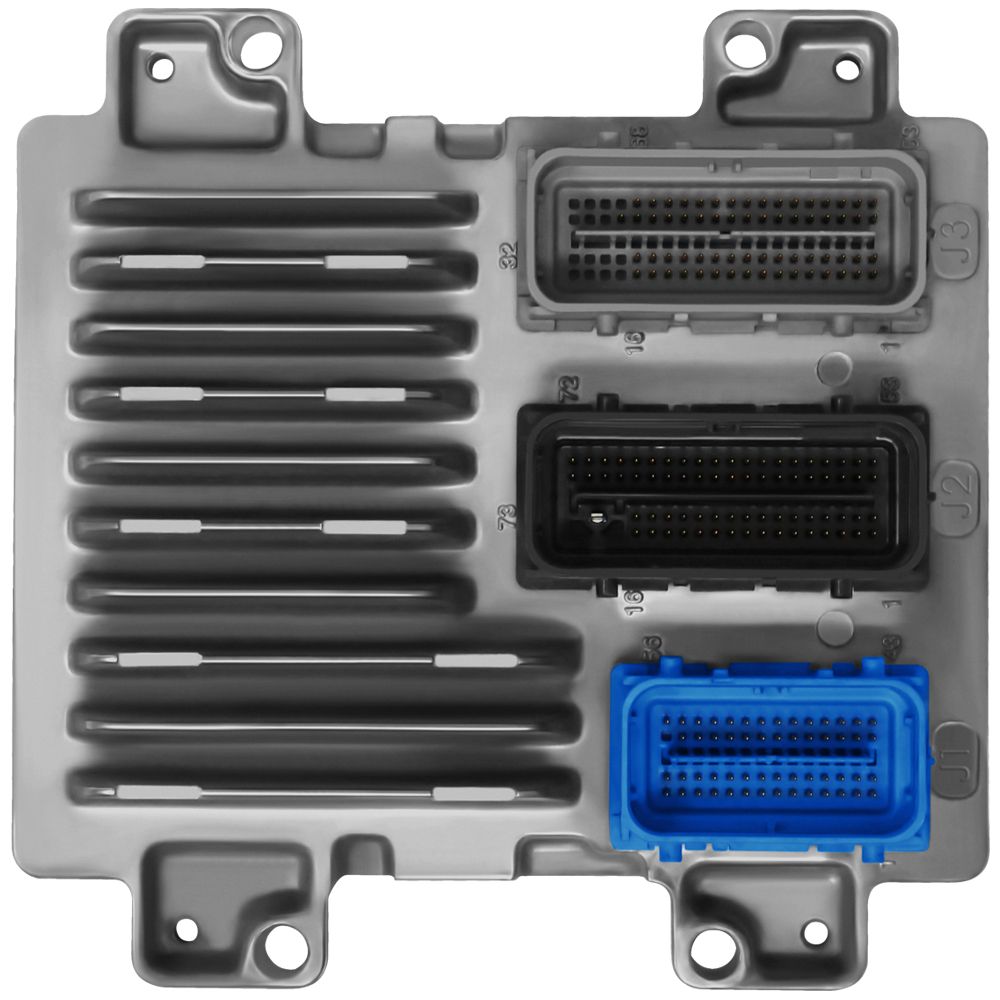
Flagship One stocks a refurbished, VIN-programmed PCM for the 2013 Chevrolet Sonic with a lifetime warranty, free shipping and no core charge. The full Chevrolet Sonic module lineup covers other engine configurations as well.
The 2013 Chevrolet Sonic’s ECM is a critical component that manages engine and transmission functions for the 1.4L turbocharged engine. When internal failures occur, the vehicle may experience no-start conditions, stalling, or multiple warning lights. Understanding the factory labor requirements, programming needs, and common symptoms helps you approach the repair with realistic expectations. Whether you choose dealer-sourced or aftermarket programming, ensuring the replacement module is properly calibrated for your specific VIN is essential to restoring reliable operation to your vehicle.