
Last updated on August 25th, 2026 at 02:39 pm
In the 2005 Buick Park Avenue, the powertrain and engine control modules manage fuel delivery, ignition timing, and transmission shifting. A failure can cause loss of engine power, stalling, or communication errors with diagnostic tools, often triggering multiple DTCs across the control network.
When a 2005 Buick Park Avenue experiences engine‑control problems, the powertrain and engine control modules are common culprits. Understanding how these computers function, where they sit, and what the factory expects after a swap can save you time and avoid costly mistakes. This guide outlines the key steps, safety cautions, and what you can expect from a properly programmed replacement, so you can make an informed decision about repair or refurbishment.
The powertrain control module in the 2005 Buick Park Avenue coordinates engine and transmission functions, while the engine control module fine‑tunes fuel injection and ignition timing. Together they ensure smooth acceleration and emissions compliance. Proper operation is critical for performance and fuel economy. For owners seeking a new unit, replacement engine computers for the 2005 Buick Park Avenue provide a direct fit and calibrated functionality.
The factory removal procedure reaches the control module positioned next to the air cleaner assembly. Removing the module typically involves disconnecting the battery, then the PCM/ECM connectors, and extracting the unit. Reinstallation follows the reverse order and is estimated at 0.7 hours for a powertrain control module or engine control module replacement, according to the labor guide.
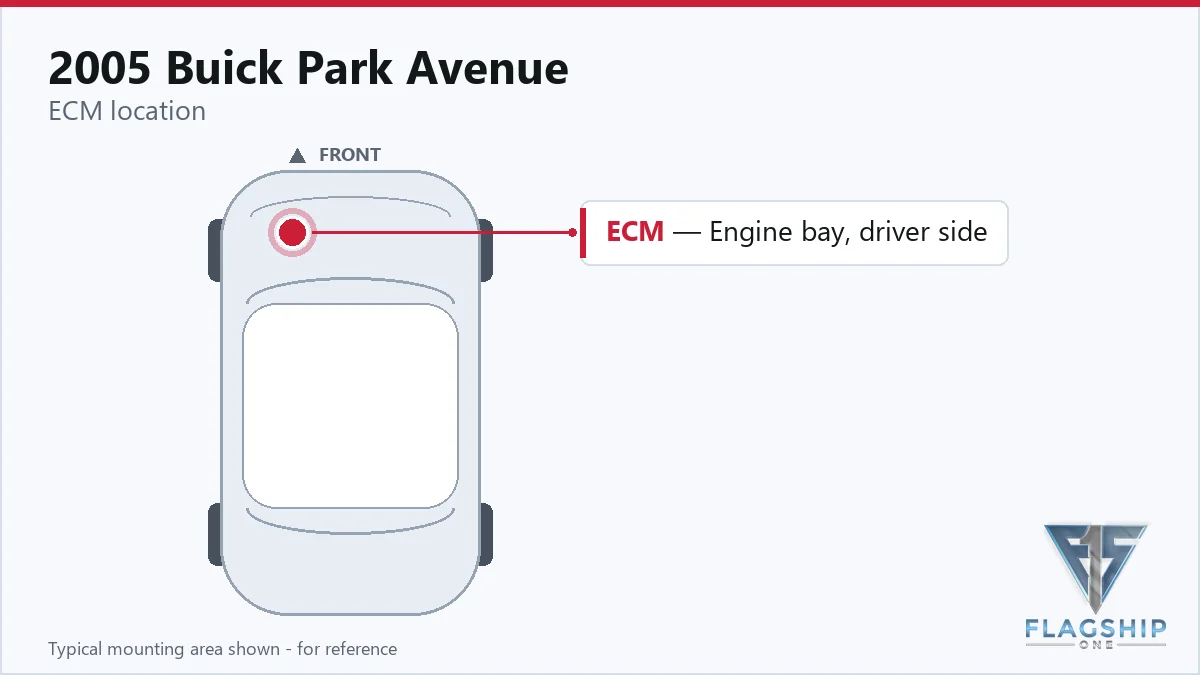
Work with the ignition off, and treat the module as static-sensitive: avoid touching the connector pins at any point.
| Operation | Configuration | Book Time |
|---|---|---|
| Powertrain Control Module Relearn | All configurations | 0.5 hr |
| Powertrain Control Module R&R | All configurations | 0.7 hr |
| Engine Control Module Relearn | All configurations | 0.5 hr |
| Engine Control Module Reset | All configurations | 0.3 hr |
| Engine Control Module R&R | All configurations | 0.7 hr |
2005 Buick Park Avenue
OEM programmed ECM for your 2005 Buick Park Avenue — plug & play, no dealer visit.
Free shipping · Lifetime warranty
After installing a new module, the factory process requires special equipment and the correct calibration files to complete reprogramming. Flagship One units arrive as a VIN‑programmed replacement unit so those steps are already satisfied, eliminating the need for additional on‑site programming.
Common signs of a failing PCM or ECM in the 2005 Buick Park Avenue include intermittent no‑start conditions, rough idle, and loss of transmission shift control. Diagnostic scans often reveal codes such as Powertrain control module communication error along with other related DTCs, indicating the module is not communicating correctly with the vehicle’s networks.
The following trouble codes are documented for the 2005 Buick Park Avenue’s control modules:
Service bulletin #05-06-04-060, dated September 23, 2005, addresses shared DTCs P0601 through P0604 and P1621 across the PCM, ECM, and TCM, providing guidance on diagnosis and repair procedures.
| Bulletin | Subject | What It Addresses |
|---|---|---|
| 05-06-04-060 | Powertrain Control Module (PCM), Engine Control Module (ECM), Transmission Control Module (ECM) | — |
The labor guide lists about 0.7 hours for a powertrain control module removal and installation.
Factory reprogramming requires dedicated equipment and the correct calibration files, which Flagship One units already include.
Yes, touching the connector pins can cause ESD damage, so it is recommended to handle the module with proper grounding precautions.
When the PCM or ECM in your 2005 Buick Park Avenue fails, you can choose a repair with a new factory‑spec unit or a refurbished replacement that meets the original specifications. Both options require the same removal steps and safety precautions, but a refurbished unit from Flagship One arrives pre‑programmed to match your vehicle’s VIN, simplifying the post‑install process.
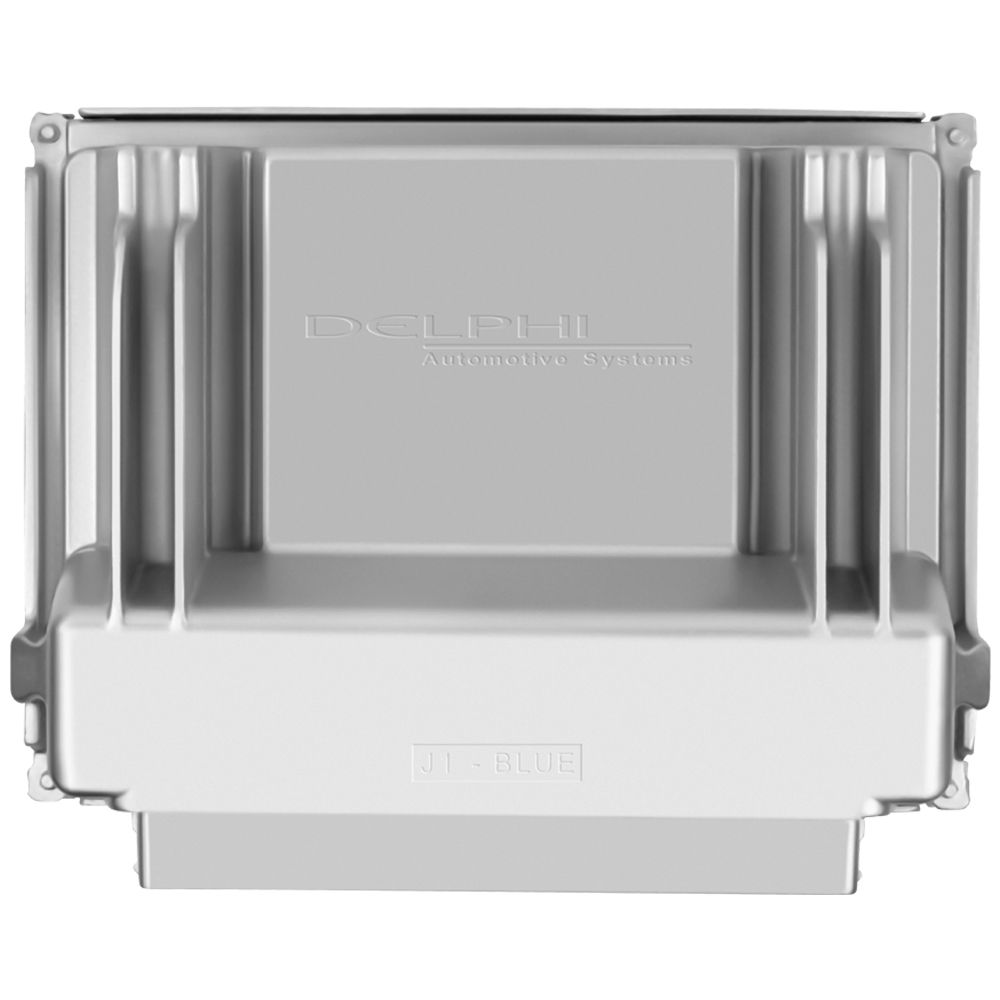
Flagship One stocks a refurbished, VIN-programmed PCM for the 2005 Buick Park Avenue with a lifetime warranty, free shipping and no core charge. The full Buick Park Avenue module lineup covers other engine configurations as well.
For owners of a 2005 Buick Park Avenue, understanding the PCM and ECM replacement process helps ensure a reliable fix. Whether you opt for a new or refurbished unit, proper handling and programming are key to restoring performance.