
Last updated on August 25th, 2026 at 02:37 pm
The powertrain control module in your 1993 Buick Century is the central computer responsible for managing engine operation and transmission function. This module monitors sensor inputs and adjusts fuel delivery, ignition timing, and shift scheduling accordingly. When this module fails, the engine may not run properly or the vehicle may not start at all.
When your 1993 Buick Century develops a hard-starting condition, stalls unexpectedly, or experiences transmission shifting problems, the root cause may lie within the vehicle’s central computer module. The powertrain control module serves as the brain of your Buick, processing sensor data and commanding engine and transmission operation in response. Many owners facing these symptoms immediately suspect mechanical problems, not realizing that electronic module failure produces identical driveability complaints.
Understanding how this module operates, where it installs on your vehicle, and what the replacement process entails empowers you to make informed repair decisions. This guide walks through the function of the module in your specific application, common failure symptoms to recognize, and what to expect during replacement. You will learn the factory-recommended procedures and how replacement modules from suppliers like Flagship One arrive configured for straightforward installation. By the end, you will understand whether module replacement is the appropriate solution for your Century’s symptoms.
The powertrain control module in the 1993 Buick Century functions as the primary electronic coordinator for both engine and transmission operation. This single module processes input from numerous sensors positioned throughout the engine compartment, including those measuring air temperature, coolant temperature, throttle position, engine speed, and vehicle speed. Based on this sensor data, the module calculates and commands fuel injector pulse width, ignition timing advance, automatic transmission shift points, and idle air control positioning.
The module contains permanent memory that stores critical calibration information specific to your vehicle. This calibration data includes your Century’s gross vehicle weight rating, engine displacement and output characteristics, transmission gear ratios, and final drive axle ratio. The module uses this stored information alongside real-time sensor inputs to determine appropriate operating commands for all conditions. When you replace the module, the new unit must contain calibration data matching your vehicle’s specifications to ensure proper operation.
replacement engine computers for the Buick Century receive this vehicle-specific calibration during manufacturing. The module also manages the automatic transmission’s shift schedule, determining when gear changes occur based on throttle position, vehicle speed, and engine load. Without correct calibration data loaded into a replacement module, the engine may run poorly or the transmission may shift incorrectly. The module’s internal programming adapts to driving conditions over time, learning driver preferences for throttle response and shift quality. This adaptive strategy optimizes vehicle behavior based on your specific usage patterns rather than relying solely on fixed factory settings.
1993 Buick Century
OEM programmed ECM for your 1993 Buick Century — plug & play, no dealer visit.
Free shipping · Lifetime warranty
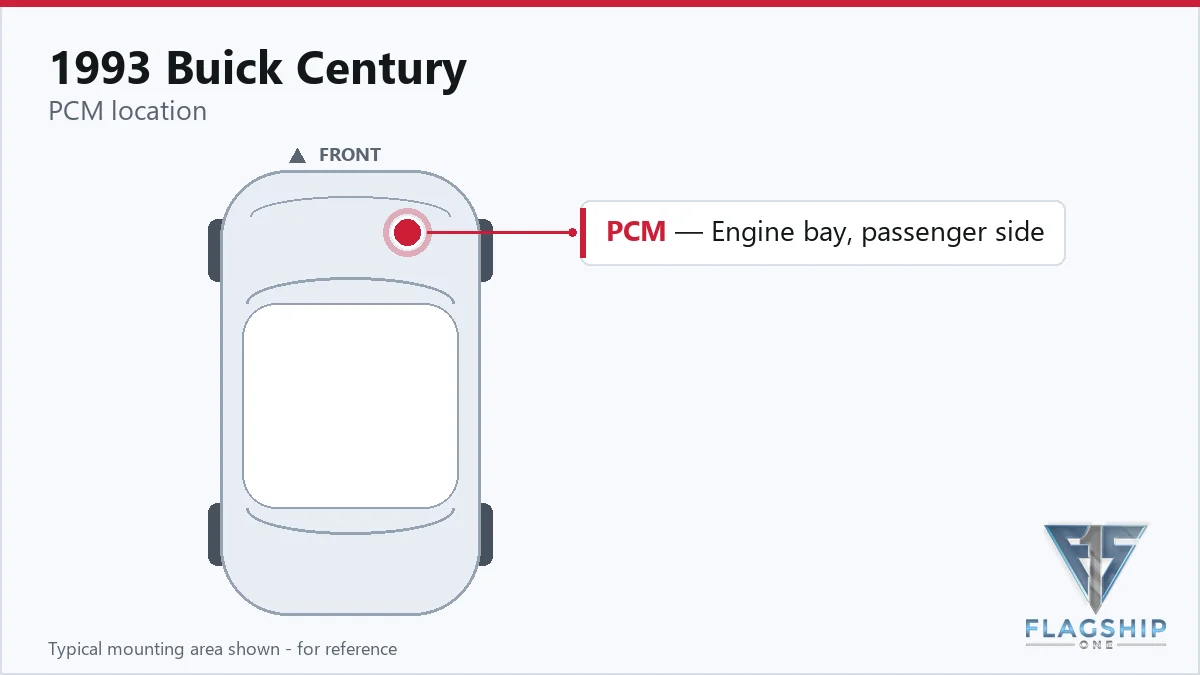
The powertrain control module in the 1993 Buick Century installs behind the passenger-side kick panel in the interior, beneath the dashboard on that side of the vehicle. Access requires removing the kick panel trim piece and any associated sound insulation to reach the module mounting location. The module itself is a rectangular electronic assembly with a multi-pin electrical connector that attaches to the vehicle wiring harness.
Removing the existing module involves disconnecting the electrical connector, releasing any mounting fasteners, and extracting the old unit from the passenger compartment. The replacement process reverses this procedure, positioning the new module in the same location and reconnecting the wiring harness. The factory labor standard for this removal and replacement operation is 1.4 hours according to published service times. After installing the new module, ensure the electrical connector is fully seated and locked into place. Check that all mounting points are secure before reassembling the interior trim panels. Verify that the module is positioned where it will not interfere with pedals or other interior components during normal vehicle operation.
| Operation | Configuration | Book Time |
|---|---|---|
| Engine Control Module R&R | All configurations | 1.4 hr |
| Powertrain Control Module Relearn | All configurations | 0.5 hr |
| Powertrain Control Module R&R | All configurations | 1.4 hr |
After installing a replacement powertrain control module in the 1993 Buick Century, the factory service procedure requires performing a relearn procedure to calibrate the new module to your specific vehicle. This relearn operation allows the module to establish baseline idle air control values, reset fuel trim adaptations, and synchronize transmission shift characteristics with your vehicle’s drivetrain. The published labor time for this relearn procedure is 0.5 hours.
The procedure involves connecting a diagnostic scan tool to the vehicle and following a specific sequence of steps that prompt the module to learn new parameters while the engine runs through various operating conditions. This process ensures the replacement module adapts to your specific engine’s characteristics rather than those of the donor vehicle the replacement was originally calibrated for.
When you purchase a VIN-programmed replacement unit from Flagship One, the calibration data matching your vehicle’s specifications is loaded into the module before shipping. This means the critical calibration steps that would normally require factory-level programming tools are already completed. The relearn procedure after installation still verifies proper module communication with all vehicle sensors and allows the adaptive memory to begin recalibrating to your engine’s current condition.
Powertrain control module failure in the 1993 Buick Century typically announces itself through several recognizable symptoms that may appear suddenly or develop gradually over time. One of the most common complaints involves hard starting or a no-start condition, where the engine cranks normally but fails to catch and run. This symptom occurs when the module stops providing the proper fuel injector pulse commands or ignition timing signals needed for combustion to begin.
Stalling during idle or deceleration represents another frequent indicator of module problems. The engine may run normally at higher speeds but die when returning to idle or coasting to a stop. You might notice the check engine light illuminating on the instrument cluster, sometimes accompanied by transmission shifting complaints such as harsh gear changes, failure to shift into certain gears, or erratic shift timing. Some owners report that the engine runs rough or develops a noticeable misfire, particularly under load conditions.
A failed module may also prevent diagnostic scan tools from communicating with the vehicle entirely, which can complicate troubleshooting efforts. In some cases, multiple trouble codes may set simultaneously across different vehicle systems because the module is no longer processing sensor inputs correctly. Voltage irregularities from faulty internal circuitry can produce intermittent symptoms that come and go, making the problem difficult to reproduce consistently during diagnosis.
General Motors issued Technical Service Bulletin 61-70-02 to address powertrain control module concerns across multiple model lines including the 1993 Buick Century. This bulletin provides guidance to service technicians regarding proper diagnostic procedures and replacement considerations for the module. The bulletin clarifies that module internal failures can produce various driveability symptoms and outlines the importance of using the correct replacement module with proper calibration for each specific vehicle application. Dealers and independent technicians were advised to reference this bulletin when addressing related concerns on affected vehicles.
This model uses an integrated module that controls both engine and transmission functions. Whether referred to as an ECM, PCM, or ECU, the unit serves the same purpose on your Century.
A used module will not contain the correct calibration data for your specific vehicle without reprogramming. Module replacement typically requires either a new unit with proper calibration or extensive programming of a used unit using factory-level diagnostic equipment.
Driving with a failing module is not recommended because symptoms can worsen suddenly, potentially leaving you stranded. A module that causes stalling may fail completely without warning, preventing the engine from running.
The relearn procedure allows the new module to establish baseline parameters for your specific engine and transmission, synchronizing fuel delivery, ignition timing, and shift schedules with your vehicle’s current mechanical condition.
Common causes include heat cycling damage over time, voltage spikes from charging system problems, moisture intrusion through electrical connectors, and age-related deterioration of internal electronic components.
When your 1993 Buick Century requires powertrain control module service, you face a choice between repair of the existing unit and installation of a replacement module. Repair may be possible in some cases, but success depends on the specific nature of the internal failure and component availability. Replacement with a remanufactured or new module often provides more predictable long-term results. Flagship One supplies pre-programmed replacement modules configured with calibration data matching your Century, allowing installation without the need for specialized programming equipment. Consider the vehicle’s overall condition and your planned ownership duration when deciding between repair and replacement options.
Flagship One stocks a refurbished, VIN-programmed PCM for the 1993 Buick Century with a lifetime warranty, free shipping and no core charge. The full Buick Century module lineup covers other engine configurations as well.
The powertrain control module in your 1993 Buick Century represents a critical component that manages both engine operation and transmission shifting behavior. When this module fails, symptoms range from hard starting and stalling to transmission complaints and complete no-start conditions. Understanding the module’s location, function, and replacement requirements helps you make informed decisions about repair options for your Buick. Whether you pursue module replacement or repair, addressing symptoms promptly prevents further damage and restores your vehicle’s driveability.