
Last updated on August 25th, 2026 at 02:44 pm
The Digital Motor Electronics (DME) module in the 2000 BMW Z8 controls fuel injection, ignition timing, and emissions systems. Failures may cause erratic engine behavior, stalling, or a complete no-start condition, often triggered by electrical issues or internal corruption.
If your 2000 BMW Z8 has been acting unpredictably—stalling at stops, refusing to start, or illuminating the check engine light—your vehicle’s engine computer, or DME, may be the culprit. This module is the brain behind your Z8’s 4.9L V8, controlling everything from fuel injection to ignition timing. When it fails, the symptoms can range from subtle performance issues to a complete breakdown. Replacing the DME isn’t just about swapping a part; it requires careful handling to avoid further electrical issues and ensuring the new unit is programmed to your vehicle’s specifications. Understanding the role of this module, how to identify failure symptoms, and what replacement entails can help you make an informed decision and restore your Z8’s reliability. Whether you’re troubleshooting an existing problem or preparing for potential repairs, this guide covers what you need to know about the DME in your 2000 BMW Z8.
2000 BMW Z8
OEM programmed ECM for your 2000 BMW Z8 — plug & play, no dealer visit.
Free shipping · Lifetime warranty
The Digital Motor Electronics (DME) module in your 2000 BMW Z8 is a sophisticated engine control unit responsible for managing the engine’s performance. It processes data from sensors throughout the vehicle to optimize fuel delivery, ignition timing, and emissions control. Without a properly functioning DME, your Z8’s 4.9L V8 may run inefficiently, misfire, or fail to start altogether. This module also communicates with other systems, such as the transmission and onboard diagnostics, ensuring smooth operation and compliance with emissions standards. Over time, electrical fluctuations, moisture intrusion, or internal component degradation may compromise its performance. When replacement becomes necessary, opting for replacement DME modules for the BMW Z8 ensures compatibility and reliability, as these units are designed to meet the exact specifications of your vehicle’s engine and electronics architecture.
In the 2000 BMW Z8, the DME is housed within the electronics box (E-box) located in the engine compartment. Accessing the module requires removing the E-box cover, which is typically secured with fasteners. The factory removal procedure is straightforward but demands care to avoid damaging connectors or nearby components. Once the cover is removed, the DME can be unplugged and replaced. There are no specific torque specifications provided for this procedure, but ensuring all connections are secure and free of corrosion is critical. Given the module’s location, replacement is generally less labor-intensive than in vehicles where the DME is mounted inside the cabin or beneath seats. However, proper handling of the electronics box and its components is essential to prevent static discharge or physical damage to the new unit.
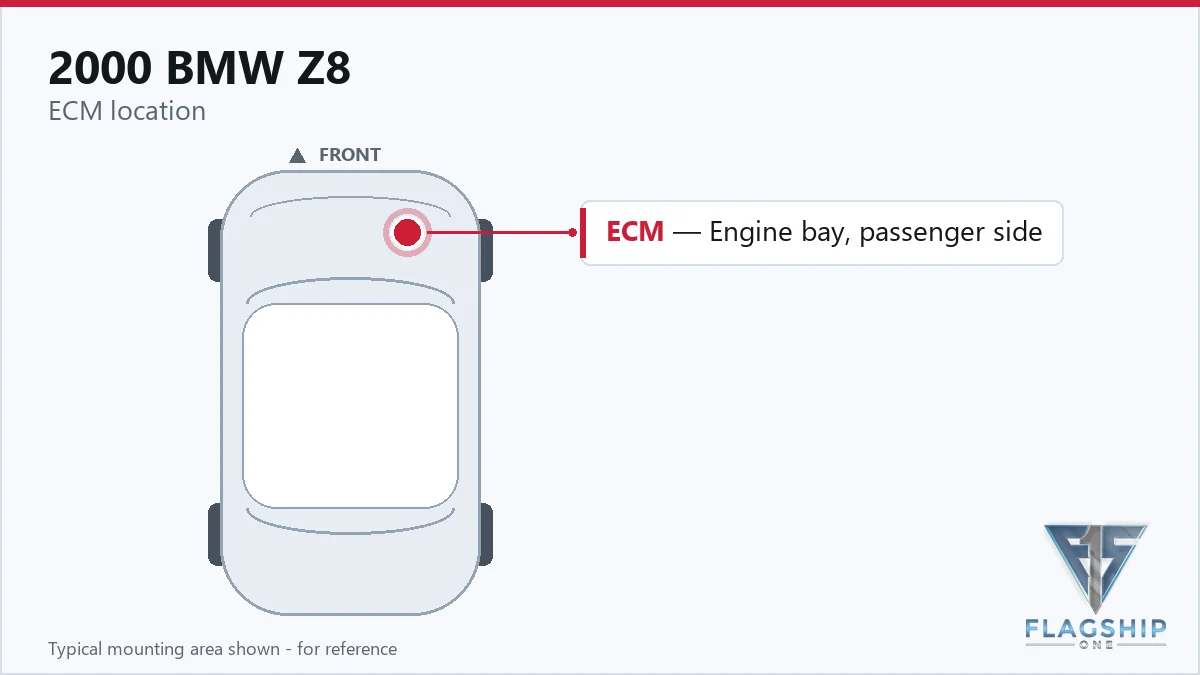
Work with the ignition off, and treat the module as static-sensitive: avoid touching the connector pins at any point.
After installing a new DME in your 2000 BMW Z8, the factory procedure requires reprogramming the module to match your vehicle’s VIN and software configuration. This step ensures the module communicates correctly with the engine, transmission, and other onboard systems. The process typically involves using specialized diagnostic equipment to load the appropriate software and calibrate the module to your Z8’s specific build. However, if you opt for a VIN-programmed replacement unit, this step is already completed before the module arrives. Flagship One units are pre-programmed to your vehicle’s specifications, eliminating the need for post-installation software updates and reducing the risk of compatibility issues. This not only saves time but also ensures your Z8 is back on the road with minimal downtime.
A failing DME in your 2000 BMW Z8 may produce a variety of symptoms, often starting with subtle performance issues before escalating to more severe problems. One of the most common signs is an illuminated check engine light, which may be accompanied by stored fault codes in the module’s memory. For example, you might encounter an internal control module memory check sum error, indicating corruption within the DME’s software or hardware. Other symptoms may include intermittent stalling, especially at idle or during deceleration, as the module struggles to maintain consistent fuel and ignition control. Some owners report difficulty starting the vehicle, with the engine cranking but failing to fire, or experiencing long cranking times before ignition. Misfires, rough idling, or a noticeable drop in power under acceleration may also occur, as the DME’s ability to adjust fuel and timing in real-time becomes compromised. In some cases, the vehicle may enter a limp-home mode, limiting engine performance to prevent further damage. If you notice any of these issues, it’s important to address them promptly, as prolonged operation with a failing DME can lead to additional strain on other engine components.
BMW issued Recall 06E-A03 addressing DME reprogramming for OBD communication issues in the S62 and S54 engines, which includes the 2000 BMW Z8. This recall highlights the importance of ensuring the DME’s software is up to date to prevent communication errors between the module and diagnostic tools. If your Z8’s check engine light is illuminated and fault codes are stored in the DME, this recall may be relevant to your vehicle. While the recall specifically targets OBD communication, it underscores the broader need for proper DME functionality to maintain engine performance and emissions compliance. If you’re experiencing symptoms related to DME failure, checking for applicable recalls or service bulletins can provide additional context for your repair.
| Bulletin | Subject | What It Addresses |
|---|---|---|
| — | Recall 06E-A03: S62,S54 – DME Reprogramming for OBD Communication | — |
| — | Check Engine Light Illuminated, Faults Stored in DME/ECM | — |
Common signs include an illuminated check engine light, intermittent stalling, difficulty starting the vehicle, and rough idling. You may also notice misfires or a drop in engine performance, as the DME struggles to manage fuel and ignition timing. In some cases, the vehicle may enter limp-home mode to prevent further damage.
If your Z8 exhibits persistent symptoms like stalling, no-start conditions, or stored fault codes indicating internal module corruption, replacement is often the most reliable solution. Diagnostic testing can confirm whether the DME is the root cause, and if so, a new unit is typically required to restore full functionality.
Yes, the factory procedure requires reprogramming the new DME to match your vehicle’s VIN and software configuration. This ensures the module communicates correctly with the engine and other systems. However, a pre-programmed replacement unit eliminates this step, saving time and reducing the risk of installation errors.
Driving with a failing DME may lead to additional strain on the engine and other components, potentially causing more extensive damage. Symptoms like stalling or misfires can also create unsafe driving conditions. It’s best to address DME issues promptly to avoid further complications.
Ensure the replacement DME is compatible with your Z8’s 4.9L V8 engine and comes pre-programmed to your vehicle’s VIN. This guarantees seamless integration with your Z8’s electronics and eliminates the need for post-installation reprogramming. Opting for a unit from a reputable supplier can also provide peace of mind regarding quality and reliability.
If your 2000 BMW Z8 is experiencing symptoms of DME failure, you have a few options to consider. Repairing the existing module may be possible in some cases, but replacement is often the most reliable solution, especially if the module is internally corrupted or damaged. A new or refurbished DME, pre-programmed to your vehicle’s specifications, can restore your Z8’s performance and reliability without the hassle of post-installation software updates. Given the critical role of the DME in managing your engine’s functions, choosing a high-quality replacement unit is essential for long-term satisfaction.
Flagship One stocks a refurbished, VIN-programmed ECM for the 2000 BMW Z8 with a lifetime warranty, free shipping and no core charge. The full BMW Z8 module lineup covers other engine configurations as well.
The DME in your 2000 BMW Z8 plays a vital role in ensuring smooth engine performance and reliable operation. If you’re experiencing symptoms like stalling, no-start conditions, or an illuminated check engine light, addressing the issue promptly can prevent further damage and restore your vehicle’s drivability. Whether you opt for a repair or a pre-programmed replacement unit, understanding the DME’s function and the steps involved in replacement can help you make an informed decision. With the right approach, your Z8 can continue to deliver the performance and driving experience it was designed for.