
Last updated on August 25th, 2026 at 02:45 pm
The Engine Control Module in a 1995 BMW 5 Series manages fuel delivery, ignition timing, and emissions functions. A failure typically disables engine management, leading to poor performance, stalling, or loss of diagnostic communication. Restoring a functional ECM returns control of these critical systems.
When the check engine light stays illuminated on your 1995 BMW 5 Series, the first place to look is the Engine Control Module. This electronic brain directs fuel injection, spark timing, and emissions control, so any glitch can quickly affect drivability. Understanding how the module works, where it sits, and what the factory recommends for removal and replacement helps you avoid costly missteps. This guide walks you through the basic procedures, the labor times the manufacturer assigns, and why a VIN‑programmed replacement from Flagship One often removes the need for additional programming steps. By the end, you should feel confident that you can address the issue safely and efficiently.
1995 BMW 5 Series
OEM programmed ECM for your 1995 BMW 5 Series — plug & play, no dealer visit.
Free shipping · Lifetime warranty
In the 1995 BMW 5 Series, the Engine Control Module acts as the central processor for the powertrain, interpreting sensor inputs and commanding actuators to keep the engine running smoothly. It stores fault codes, controls fuel injection pulses, and regulates ignition timing to meet emissions standards. Because the vehicle predates OBD‑II, the module uses a proprietary communication protocol, making proper connection essential for diagnostic tools. replacement engine computers for the 1995 BMW 5 Series ensures the vehicle receives the correct data streams after a swap, preserving performance and emissions compliance.
The ECM is mounted within the engine compartment, typically attached to the firewall near the intake manifold. Removal begins by disconnecting the battery and ensuring the ignition is switched off, as the factory caution emphasizes. After the ignition is off, you place the module on a static‑dissipative mat and carefully bend up the six retaining tabs to free the connector. The book time for removal and reinstallation is listed as half an hour each, reflecting the straightforward access once the tabs are released. Re‑installation follows the reverse order, making sure the connector seats fully before securing the module.
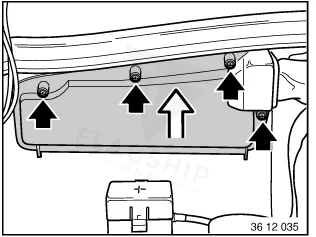
Work with the ignition off, and treat the module as static-sensitive: avoid touching the connector pins at any point.
| Operation | Configuration | Book Time |
|---|---|---|
| Engine Control Module R&R | All configurations | 0.5 hr |
| Powertrain Control Module R&R | All configurations | 0.5 hr |
| Powertrain Control Module Relearn | All configurations | 0.5 hr |
Factory service procedures require a Powertrain Control Module relearn after installing a new ECM, which is noted as a separate half‑hour task. Because Flagship One units arrive VIN‑programmed, that relearn step is already completed, saving you the extra labor. a VIN‑programmed replacement unit integrates the vehicle’s identification data, so the module communicates correctly with the existing sensors and actuators without additional coding.
When the Engine Control Module in a 1995 BMW 5 Series begins to fail, the most common sign is a steady illumination of the check engine light, often accompanied by a loss of power or rough idle. You may also notice the engine stalls at low speeds, or the vehicle refuses to start because the control unit cannot manage fuel and spark. Diagnostic scans can show stored fault information, and communication with a scan tool may be intermittent, reflecting the module’s deteriorating internal circuitry. Addressing these symptoms early can prevent further drivetrain stress.
| Bulletin | Subject | What It Addresses |
|---|---|---|
| — | Check Engine Light Illuminated, Faults Stored in DME/ECM | — |
| — | Engine Control Module Codes | — |
Verify that the ignition was off during removal and that all connector pins are fully seated. If the light persists, a scan may reveal a stored fault that requires further diagnosis.
Reusing the original unit is possible if it shows no internal damage, but a VIN‑programmed replacement ensures the module is calibrated to the vehicle’s specifications without additional relearn steps.
The service bulletin lists a half‑hour for the Powertrain Control Module relearn, which is separate from the ECM removal and installation time.
Yes, the factory caution requires the ignition to be switched off, and disconnecting the battery eliminates any residual voltage that could harm the module.
Electrostatic discharge can damage the sensitive electronics inside the module, leading to premature failure or intermittent operation.
When the ECM needs attention, you can choose a brand‑new factory‑spec unit or a refurbished Flagship One replacement. Both options restore the engine’s control functions, but the VIN‑programmed replacement eliminates the post‑install relearn step, potentially saving labor time while keeping your 1995 BMW 5 Series running as intended.
Flagship One stocks a refurbished, VIN-programmed PCM for the 1995 BMW 5 Series with a lifetime warranty, free shipping and no core charge. The full BMW 5 Series module lineup covers other engine configurations as well.
The Engine Control Module is vital to the performance of your 1995 BMW 5 Series. Whether you opt for a new or refurbished unit, proper removal, handling, and installation ensure reliable operation. Consider a VIN‑programmed replacement to streamline the process and keep your vehicle on the road.