
Last updated on August 25th, 2026 at 02:46 pm
The Digital Motor Electronics control unit serves as the primary computer for the 2.8L engine in your 1997 BMW Z3. When internal electronics fail, the module stores fault codes and may illuminate the Check Engine Light, indicating a need for diagnosis or replacement.
Finding your 1997 BMW Z3 with the Check Engine Light glowing on the instrument cluster can be concerning, especially when diagnostic scans reveal faults stored within the Digital Motor Electronics control module. This guide addresses what you need to know about DME and ECM faults on the 2.8L variant of this roadster, helping you understand whether replacement or relearn procedures make sense for your situation. Your vehicle relies on this control module for proper engine operation, and understanding its role can save you from unnecessary repairs or missed problems. Whether you are a hands-on owner evaluating repair options or seeking to understand what a shop may recommend, this information covers the key points about module replacement labor, programming requirements, and the differences between repair and replacement strategies. You will learn what symptoms typically point toward module faults, what the factory service information indicates, and how replacement units from suppliers like Flagship One approach the programming process differently than used salvage modules. This knowledge helps you have a more productive conversation with your technician and make informed decisions about your 1997 BMW Z3.
The DME module in your 1997 BMW Z3 functions as the central nervous system for the 2.8L engine, managing the precise coordination of fuel injection, ignition timing, and emissions control systems. Unlike simpler mechanical engines, this powertrain relies entirely on electronic management to maintain smooth operation, optimal fuel economy, and compliance with emissions standards. The module receives data from dozens of sensors throughout the engine bay, processing this information thousands of times per second to adjust actuator outputs for prevailing conditions. When you accelerate, the DME increases fuel delivery and advances spark timing. When cruising at steady speed, it fine-tunes mixture ratios based on exhaust gas oxygen readings. This continuous adaptation keeps the M52B28 engine running properly across varying temperatures, altitudes, and loads.
Internal electronics within the DME can degrade over time due to heat cycles, voltage stress, or manufacturing weaknesses. When these internal circuits fail, the module may lose the ability to process sensor data correctly or communicate with other vehicle systems. Fault codes get stored in non-volatile memory, creating a record of what the module believed was occurring at the time of the failure. In some cases, the Check Engine Light illuminates immediately. In others, performance may deteriorate gradually without an obvious warning. The module is not serviceable internally, meaning that replacement engine computers for the 1997 BMW Z3 must be installed when internal faults are confirmed. Understanding this architecture helps explain why some diagnostic steps focus on wiring and sensors before condemning the module itself.
Flagship One keeps BMW Z3 replacement engine computers in stock for exactly this failure pattern.
1997 BMW Z3
OEM programmed ECM for your 1997 BMW Z3 — plug & play, no dealer visit.
Free shipping · Lifetime warranty
The DME module on the 2.8L engine in your 1997 BMW Z3 is typically located in the engine compartment, though exact positioning may vary based on production date. Accessing the module requires removing surrounding components to reach the unit and its electrical connections. Factory labor estimates allocate approximately 0.4 hours for removal and installation of the module on the 2.8L variant, which covers the physical work of disconnecting wiring, unbolting the unit, and reversing these steps with the replacement. Your technician should document the current fault codes and any configuration settings before disconnection to establish a baseline for comparison.
Once the module is mechanically installed, the electrical connectors attach and mounting hardware gets tightened to specification. Torque specifications, if specified in factory documentation, ensure the unit sits securely without risking connector damage from vibration or thermal movement. The replacement process involves matching the correct module version to your vehicle configuration, as the 1.9L variants use different programming than the 2.8L models. After physical installation, the system may need to perform a relearn procedure to adapt to the new module, a step factory documentation allocates approximately 0.5 hours to complete. Your technician can advise whether any additional steps are needed based on your specific situation and any remaining fault codes after installation.
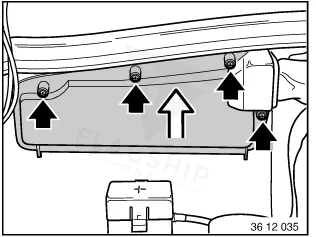
Work with the ignition off, and treat the module as static-sensitive: avoid touching the connector pins at any point.
| Operation | Configuration | Book Time |
|---|---|---|
| Powertrain Control Module R&R | 1.9L | 0.4 hr |
| Powertrain Control Module R&R | 2.8L | 0.4 hr |
| Powertrain Control Module Relearn | All configurations | 0.5 hr |
| Engine Control Module R&R | 1.9L | 0.4 hr |
| Engine Control Module R&R | 2.8L | 0.4 hr |
When the DME module in your 1997 BMW Z3 begins failing, several distinct patterns may emerge depending on the nature of the internal fault. Some vehicles experience hard starting or no-start conditions where the engine cranks but refuses to fire, suggesting the module is not properly controlling fuel delivery or spark generation. Others notice intermittent stalling during deceleration or idle, where the module fails to maintain proper idle speed control or suddenly cuts off fuel. Misfire codes represent another common indicator, as the module may incorrectly interpret sensor data or fail to properly sequence cylinder events.
In cases where module communication fails, a scan tool may show no response when attempting to connect with the DME, making traditional diagnostic procedures difficult. Automatic transmission shifting quality can also suffer, since the module often shares data with the transmission control unit on these models. Fault codes that appear include generic and manufacturer-specific codes related to internal module errors. One specific internal fault code that may appear involves memory checksum failures within the control unit itself. These symptoms often develop gradually, with the Check Engine Light illuminating intermittently before staying on permanently. If multiple unrelated codes appear simultaneously across different systems, especially codes that do not correspond to actual component failures, the DME module itself may be the root cause rather than individual sensors or wiring.
Factory service information for the 1997 BMW Z3 documents that Check Engine Light illumination paired with faults stored in the DME represents a known concern for this model year. Technical service communications acknowledge that engine control module codes may appear under various driving conditions, potentially indicating the need for module-level diagnosis. These bulletins provide guidance for technicians evaluating multiple fault codes that resist conventional repair. While specific bulletin numbers may be referenced in complete factory documentation, the general topic centers on DME fault storage patterns and recommended diagnostic approaches when multiple codes are present without clear external causes.
| Bulletin | Subject | What It Addresses |
|---|---|---|
| — | Check Engine Light Illuminated, Faults Stored in DME/ECM | — |
| — | Engine Control Module Codes | — |
Salvage yard modules often come from vehicles with unknown histories and may contain faults not immediately apparent. Additionally, security programming in many modules binds them to specific vehicles, meaning a used unit may not communicate properly even if it appears functional. Pre-programmed replacement modules from reputable suppliers are typically a more reliable option for most owners.
The mechanical removal and installation of the module may be feasible for experienced do-it-yourself technicians, but programming requirements typically require dealer-level equipment or specialized tools. Without proper programming, the engine may not start or may run poorly. Labor estimates suggest around 0.4 hours for physical R&R, plus 0.5 hours for relearn procedures on the 2.8L engine.
Not necessarily. Many issues trigger the Check Engine Light without involving module internal failures. Oxygen sensors, mass air flow sensors, and ignition components commonly cause fault codes on these vehicles. Proper diagnosis should rule out external component faults before concluding that the module itself has failed. A qualified technician can determine whether the fault codes point toward sensors or the control unit.
Clearing codes may extinguish the Check Engine Light temporarily, but if an actual fault exists, the light typically returns within the same or subsequent drive cycle. Repeatedly clearing codes without addressing root causes may also complicate diagnosis by erasing freeze-frame data that helps identify conditions present when faults occurred.
Factory labor documentation allocates approximately 0.5 hours for DME relearn procedures following replacement on the 2.8L engine. The actual time may vary based on whether the replacement module arrived pre-programmed, whether additional adaptation steps are needed, and whether the vehicle requires specific driving cycles to complete the process.
Deciding between repairing your existing DME module or installing a replacement involves weighing cost, reliability, and your vehicle usage patterns. Used modules carry unknown histories and potential latent faults, while rebuilt units may offer a middle ground. New production replacement modules arrive ready for installation, potentially reducing the time your vehicle spends in the shop. For the 1997 BMW Z3 specifically, the 2.8L engine management complexity makes reliable module sourcing important for long-term drivability. Evaluate your timeline and budget, then discuss options with your chosen repair facility.
Flagship One stocks a refurbished, VIN-programmed PCM for the 1997 BMW Z3 with a lifetime warranty, free shipping and no core charge. The full BMW Z3 module lineup covers other engine configurations as well.
The DME module performs essential functions in your 1997 BMW Z3, and faults within this unit can produce a wide range of symptoms from warning lights to drivability concerns. Understanding the role of this module, the labor involved in replacement, and the programming considerations helps you approach the repair process with confidence. Whether you ultimately choose repair, used replacement, or a new unit from Flagship One, informed decisions lead to better outcomes for your 1997 BMW Z3.