
Last updated on August 25th, 2026 at 11:56 am
The powertrain control module on your 2018 Toyota Camry serves as the central computer managing the engine and transmission. When this module develops an internal fault, it may trigger a P0606 code and cause drivability problems ranging from poor acceleration to complete no-start conditions. Module failure typically requires replacement rather than repair.
If your 2018 Toyota Camry has developed driveability issues or triggered a P0606 trouble code, the powertrain control module may be at fault. This central computer handles communication between engine sensors and the transmission, making its proper function essential for smooth operation. Understanding the replacement process, required programming steps, and what to expect during repair helps you make informed decisions about your vehicle. The following guide walks through module location, access procedures, and post-installation requirements specific to your vehicle.
The powertrain control module on your 2018 Toyota Camry functions as the primary computer governing engine and transmission operation. This unit receives input from dozens of sensors throughout the drivetrain and adjusts fuel delivery, ignition timing, and shift points in real time to maintain optimal performance and efficiency. On this particular model, the module also manages emissions control systems and interacts with other vehicle networks. When internal circuitry within the module degrades, symptoms can range from subtle drivability concerns to immediate stalling or failure to start. The P0606 code logged in your vehicle specifically indicates an internal processing fault detected by the module’s self-diagnostic system. Replacement engine computers for the 2018 Camry must be programmed with vehicle-specific calibration data to restore proper operation.
Flagship One keeps Toyota Camry replacement engine computers in stock for exactly this failure pattern.
2018 Toyota Camry
OEM programmed ECM for your 2018 Toyota Camry — plug & play, no dealer visit.
Free shipping · Lifetime warranty
The powertrain control module on the 2018 Toyota Camry installs next to the air cleaner assembly in the engine compartment. Access requires removing the negative battery cable first, then extracting the cool air intake duct seal, the number one engine cover sub-assembly, the inlet air cleaner assembly, and finally the air cleaner assembly with its connected hose. Book time for powertrain control module removal and reinstallation is listed at 1.0 hour. After the module is installed, Toyota requires both a learn procedure taking 0.5 hours and a reset procedure taking 0.3 hours to complete the replacement process. These separate procedures ensure the new module properly synchronizes with your vehicle’s specific sensors and systems.
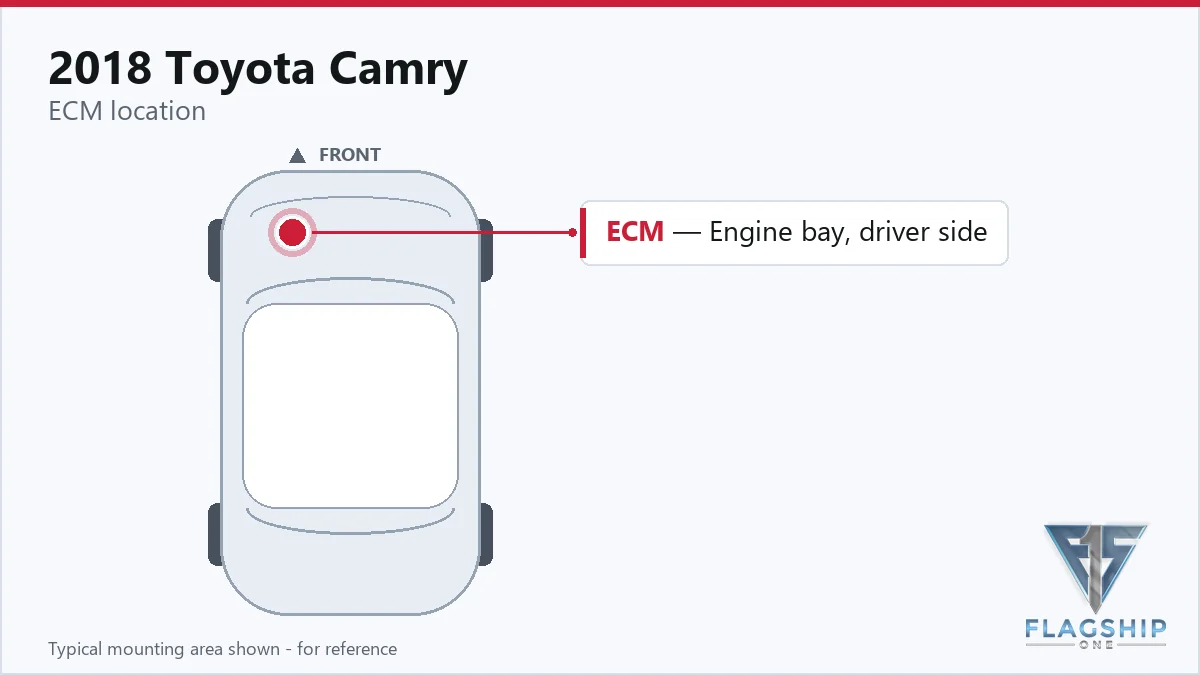
Work with the ignition off, and treat the module as static-sensitive: avoid touching the connector pins at any point.
| Operation | Configuration | Book Time |
|---|---|---|
| Engine Control Module Relearn | All configurations | 0.5 hr |
| Engine Control Module R&R | All configurations | 1.0 hr |
| Engine Control Module Reset | All configurations | 0.3 hr |
| Powertrain Control Module R&R | All configurations | 1.0 hr |
| Powertrain Control Module Relearn | All configurations | 0.5 hr |
Toyota’s factory procedure for this model specifies that adjustment, calibration, initialization, or registration procedures must be performed after removing and installing or replacing the powertrain control module. The process involves both a relearn step and a reset step, each with its own specified duration. These procedures allow the new module to establish proper communication with engine and transmission components. A critical note from the factory cautions that waiting time may be required after turning the ignition switch off before disconnecting the negative battery terminal. Flagship One units arrive as VIN-programmed replacement units, meaning the calibration data matching your specific vehicle is already installed at the factory, eliminating the need for manual programming at installation.
Every VIN-programmed replacement unit from Flagship One arrives with these steps already completed.
When the powertrain control module begins failing on your 2018 Toyota Camry, you may notice the engine stalling unexpectedly or refusing to start altogether. Acceleration can become sluggish or inconsistent, and the transmission may exhibit harsh or delayed shifting behavior. Diagnostic scans often reveal an inability to communicate with the module or multiple trouble codes related to engine operation. A stored P0606 code frequently appears when the module detects its own internal processor fault. Other potential indicators include illuminated warning lights, reduced fuel economy, and stuttering during throttle input. If your vehicle exhibits any combination of these symptoms following battery disconnection or electrical work, the powertrain control module may be the underlying cause.
The 2018 Toyota Camry with the base four-cylinder engine may store module-internal trouble codes when the powertrain control module experiences internal failure. These codes indicate problems the module has detected within its own circuitry or processing functions rather than faults from external sensors.
| Code | Meaning | Full Guide |
|---|---|---|
| P0606 | Module processor failure | Full P0606 guide → |
The P0606 code indicates the powertrain control module detected an internal processor fault. This typically stems from internal circuit degradation within the module itself rather than external sensor failures.
Factory procedure requires both relearn and reset procedures after PCM replacement. Flagship One units arrive pre-programmed with your vehicle’s specific VIN, so the reprogramming step is handled before the module reaches you.
Book time for removal and reinstallation is listed at one hour. Additional time is required for post-installation procedures including relearn and reset steps as specified by the factory.
When your 2018 Toyota Camry requires powertrain control module service, you face two primary paths: repairing the existing unit or replacing it with a refurbished or new module. Repair success depends on the specific nature and extent of internal damage. Replacement with a pre-programmed unit offers a known-good starting point with your vehicle’s calibration already installed. Consider factors including module condition, diagnostic findings, and service history when evaluating whether repair or replacement better suits your situation.
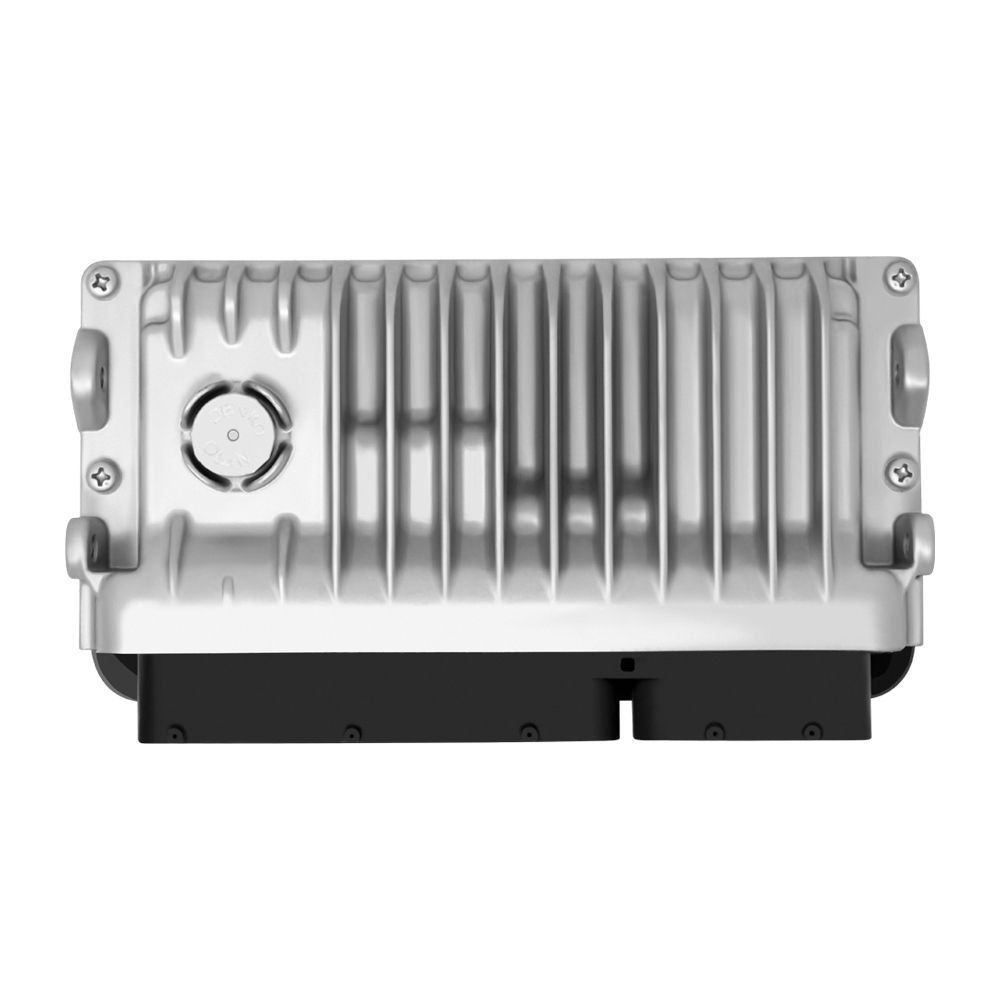
Flagship One stocks a refurbished, VIN-programmed PCM for the 2018 Toyota Camry with a lifetime warranty, free shipping and no core charge. The full Toyota Camry module lineup covers other engine configurations as well.
The powertrain control module on your 2018 Toyota Camry represents a critical component requiring careful diagnosis before replacement. Understanding the access location, required post-installation procedures, and the implications of the P0606 code helps you approach repair with confidence. Whether you ultimately choose repair or replacement, ensuring the module receives proper programming and initialization will determine long-term success.