
Last updated on August 25th, 2026 at 11:56 am
The powertrain control module in the 2017 Toyota Sequoia 5.7L manages fuel delivery, ignition timing, and transmission shifts. Internal processor faults or voltage damage can cause erratic running, communication loss, or complete shutdown.
When a 2017 Toyota Sequoia 5.7L develops sudden drivability issues — unexpected stalling, a crank-no-start condition, or a scan tool that cannot communicate — the powertrain control module often becomes the focus of diagnosis. This module governs critical engine and transmission functions, so a failure can mimic many other problems. Understanding where the module lives, what the factory procedure requires, and which symptoms genuinely point to module failure helps you avoid unnecessary parts swaps. The following guide walks through location, labor expectations, programming reality, and common failure signs so you can approach the repair with confidence.
In the 2017 Toyota Sequoia 5.7L the powertrain control module acts as the central processor for engine management and automatic transmission control. It monitors sensor inputs such as crankshaft position, throttle angle, and transmission speed sensors, then commands fuel injectors, ignition coils, and shift solenoids accordingly. A failing module may produce intermittent misfires, erratic shifting, or a complete loss of communication with diagnostic tools. Because the module also stores adaptive learning values, replacement units must match the vehicle’s specific calibration. Technicians often source replacement engine computers for the Sequoia to ensure the correct hardware and software version are installed, avoiding compatibility issues that can arise from mismatched part numbers.
2017 Toyota Sequoia 5.7L
OEM programmed ECM for your 2017 Toyota Sequoia 5.7L — plug & play, no dealer visit.
Free shipping · Lifetime warranty
The factory removal procedure reaches the control module next to the air cleaner assembly. To access it, you remove the air cleaner assembly and the connector holder block. Book time for the powertrain control module removal and installation is 1.0 hours; the same 1.0 hours applies to engine control module removal and installation. After the physical swap, the factory procedure calls for a powertrain control module relearn of 0.5 hours and an engine control module relearn of 0.5 hours. An engine control module reset is also listed at 0.3 hours. No torque values are provided in the available data.
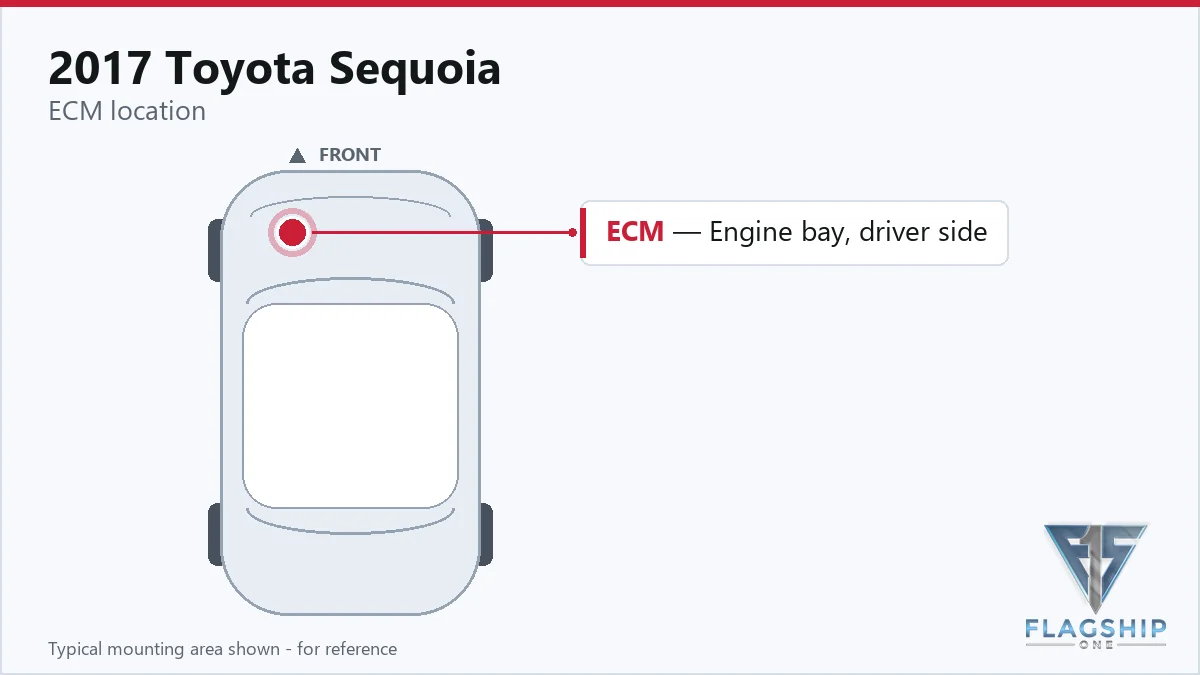
Work with the ignition off, and treat the module as static-sensitive: avoid touching the connector pins at any point.
| Operation | Configuration | Book Time |
|---|---|---|
| Powertrain Control Module R&R | All configurations | 1.0 hr |
| Powertrain Control Module Relearn | All configurations | 0.5 hr |
| Engine Control Module Relearn | All configurations | 0.5 hr |
| Engine Control Module R&R | All configurations | 1.0 hr |
| Engine Control Module Reset | All configurations | 0.3 hr |
After a module is installed the factory service procedure requires a powertrain control module relearn of 0.5 hours and an engine control module relearn of 0.5 hours, plus an engine control module reset of 0.3 hours. These steps allow the new module to learn sensor baselines and adaptive values. Flagship One units arrive as a VIN-programmed replacement unit so those relearn and reset steps are already completed before the part ships. This means the module can be installed and the vehicle returned to service without additional dealer-level programming equipment or time.
Common signs of a failing control module in this SUV include a crank-no-start condition, sudden stalling at idle or under load, and erratic or harsh transmission shifts. The check engine light may illuminate with codes that do not correspond to any sensor or actuator fault. A scan tool that cannot establish communication with the module is a strong indicator of internal failure. When the module’s processor degrades, it may log processor performance fault among other codes. Voltage spikes from improper jump-starting or a failing alternator can accelerate this type of damage, so charging-system health should always be verified first.
The following module-internal trouble code has been documented for this vehicle. It points to an internal processor issue rather than an external sensor or circuit fault.
| Code | Meaning | Full Guide |
|---|---|---|
| P0606 | Module processor failure | Full P0606 guide → |
Yes, if you install a unit that has already been VIN-programmed for your specific vehicle. The factory relearn and reset procedures are then unnecessary, and the module is ready to operate after installation.
The factory book time for removal and installation is 1.0 hours. Access requires removing the air cleaner assembly and connector holder block.
P0606 indicates an internal processor performance fault within the control module itself. It typically means the module’s self-test has detected a calculation or memory error.
When diagnosis confirms a module failure, you can choose between a new dealer unit — which still requires the 0.5-hour PCM relearn, 0.5-hour ECM relearn, and 0.3-hour ECM reset — or a refurbished unit that arrives pre-programmed to your VIN. The latter eliminates the programming labor and gets your 2017 Toyota Sequoia 5.7L back on the road faster.
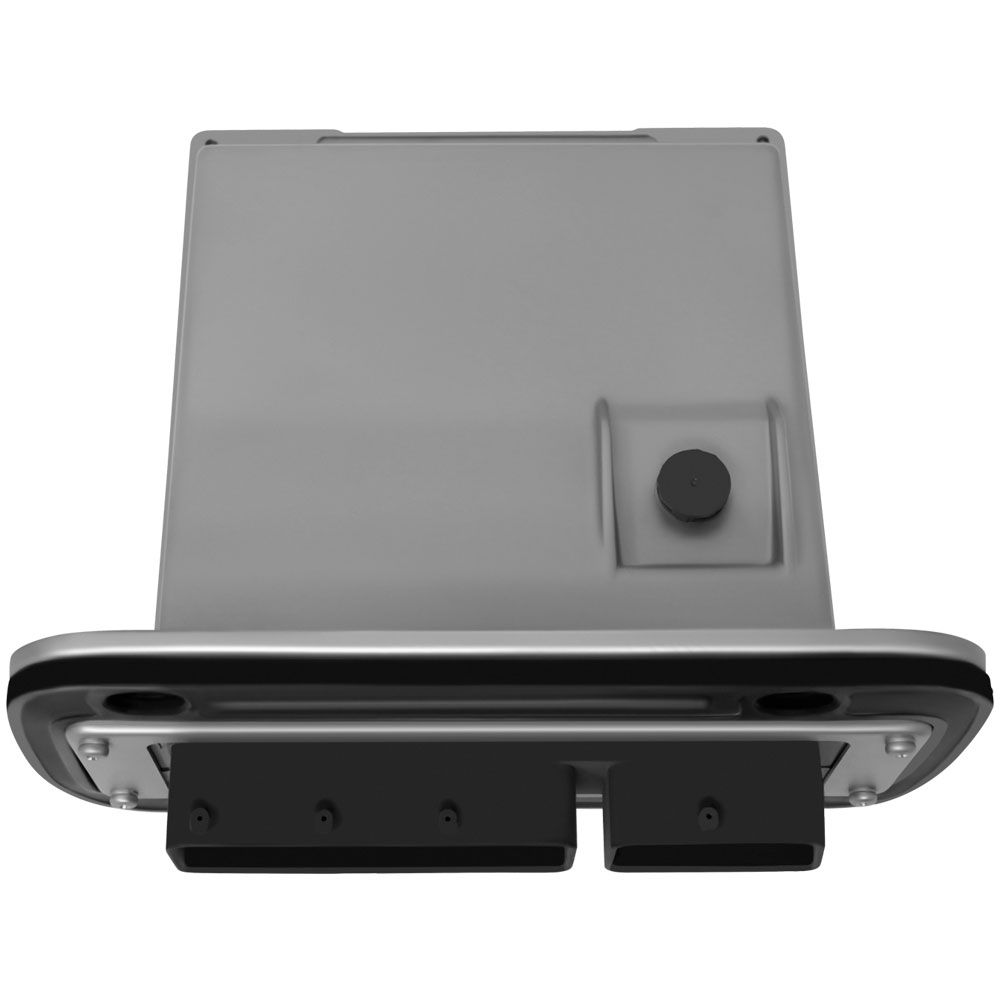
Flagship One stocks a refurbished, VIN-programmed PCM for the 2017 Toyota Sequoia with a lifetime warranty, free shipping and no core charge. The full Toyota Sequoia module lineup covers other engine configurations as well.
A reliable 2017 Toyota Sequoia 5.7L depends on a healthy powertrain control module. Knowing the access path, book times, and the reality of factory programming lets you plan the repair efficiently. If you need a tested, VIN-matched replacement, Flagship One is ready to help.