
Last updated on August 25th, 2026 at 11:56 am
The engine control module in your 2017 Toyota Prius v is the central computer that manages the 1.8L hybrid powertrain, controlling fuel delivery, ignition timing, emissions systems, and hybrid component coordination. When this module fails internally, it can trigger a P0606 code and cause drivability problems ranging from hard starting to complete no-start conditions.
If your 2017 Toyota Prius v has developed starting problems, hybrid system warnings, or runs poorly after a module-related trouble code, you are likely dealing with an engine control module issue. The ECM is the brain of your vehicle’s powertrain, and when it fails internally, the car may not run properly or may not start at all. This guide explains what the module does, where it is located, what replacement involves, and how the programming process works. Whether you are repairing the vehicle yourself or having it serviced, understanding these basics helps you make informed decisions about the repair path you choose.
The engine control module in your 2017 Toyota Prius v serves as the primary computer for the 1.8L hybrid powertrain system. It processes inputs from dozens of sensors throughout the engine and hybrid assembly, then adjusts fuel injection, ignition timing, and emission control devices in real time to maintain optimal performance and fuel efficiency. The module also communicates with the hybrid vehicle control unit to manage battery regeneration and electric motor engagement. Because this computer handles such critical functions, replacement ECMs for the Prius v must maintain precise calibration to keep the vehicle running smoothly. A failing module can affect everything from throttle response to transmission shifting, making reliable operation dependent on having a properly functioning ECM.
2017 Toyota Prius v
OEM programmed ECM for your 2017 Toyota Prius v — plug & play, no dealer visit.
Free shipping · Lifetime warranty
The engine control module on a 2017 Toyota Prius v is located beneath the rear deck floor area. To replace it, technicians must remove the deck board assembly, the No. 1 and No. 2 deck boards, the rear deck floor box, and the deck floor box on the right side. The access path also requires disconnecting the cable from the negative auxiliary battery terminal, though the factory cautions that a waiting period is necessary after turning the power switch off before performing this disconnection to avoid system damage. The book time for ECM R&R is 2.7 hours, and the relearn procedure adds another 0.5 hours once the new module is installed and the battery is reconnected.
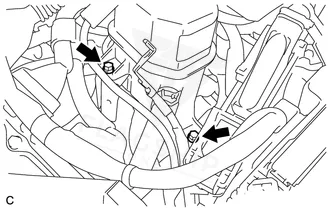
Work with the ignition off, and treat the module as static-sensitive: avoid touching the connector pins at any point.
| Operation | Configuration | Book Time |
|---|---|---|
| Powertrain Control Module R&R | All configurations | 2.7 hr |
| Engine Control Module Relearn | All configurations | 0.5 hr |
| Engine Control Module R&R | All configurations | 2.7 hr |
After installing a new engine control module in your 2017 Toyota Prius v, the factory procedure requires performing a relearn procedure to establish communication between the new ECM and the rest of the vehicle’s control systems. This procedure takes approximately 0.5 hours and uses dealer-level diagnostic equipment to initialize the module. The good news is that when you purchase a replacement unit from Flagship One, it arrives a VIN-programmed replacement unit that is pre-configured for your specific vehicle, which means the relearn procedure is typically simplified or may not be required at all, saving you time and potentially avoiding a dealer visit.
When the engine control module fails on a 2017 Toyota Prius v, several symptoms commonly appear. The vehicle may refuse to start or stall unexpectedly during operation. Rough idle, misfiring, and poor acceleration are frequent complaints. Diagnostic scanning often reveals communication failures or the module may not respond to a scan tool at all. In some cases, the transmission may exhibit harsh shifting or become stuck in limp mode. The internal processor fault indicates a failure within the module itself rather than a sensor or wiring issue, which points directly to ECM replacement rather than repair of external components.
The 2017 Toyota Prius v documents one module-internal trouble code that is specifically associated with engine control module failure. This code, P0606, indicates an internal processor or memory fault within the ECM and cannot be cleared by simply replacing sensors or repairing wiring. When this code is present with the symptoms described above, replacement of the engine control module is the correct repair path.
| Code | Meaning | Full Guide |
|---|---|---|
| P0606 | Module processor failure | Full P0606 guide → |
A used ECM would require dealer programming to match your vehicle’s VIN and configuration. This adds cost and complexity. Purchasing a new or refurbished unit that arrives pre-programmed for your specific vehicle eliminates this step and is generally the more practical choice.
It is not recommended to drive with a known ECM failure. The vehicle may stall unexpectedly, fail to start, or experience transmission problems that could leave you stranded. Additionally, driving with a failing module can potentially cause damage to other components.
If you purchase a unit that arrives VIN-programmed for your vehicle from Flagship One, the dealer programming step is typically not required. The module should communicate with your vehicle’s systems immediately upon installation and battery reconnection.
When your 2017 Toyota Prius v needs an engine control module, you have two main options. You can replace it with a new or refurbished unit that arrives ready to install, or you can attempt to find a used module and pay for dealer programming. The first option typically saves time and provides a known-good unit with a warranty. The second option may cost less upfront but often involves additional fees and delays. Consider your budget, timeline, and comfort level when deciding which path makes sense for your situation.
Flagship One stocks a refurbished, VIN-programmed PCM for the 2017 Toyota Prius v with a lifetime warranty, free shipping and no core charge. The full Toyota Prius v module lineup covers other engine configurations as well.
The engine control module in your 2017 Toyota Prius v is a critical component that manages the hybrid powertrain’s operation. When it fails, the vehicle may experience starting issues, stalling, or transmission problems. Understanding the replacement process, the need for programming, and your options helps you approach the repair with confidence. Whether you handle the installation yourself or rely on a professional, having a properly functioning ECM restores your Prius v to reliable operation.