
Last updated on August 25th, 2026 at 11:56 am
The Engine Control Module (ECM) in the 2017 Toyota Prius manages fuel injection, ignition timing, and hybrid system coordination. Failures may cause stalling, poor performance, or communication errors with other vehicle systems.
If your 2017 Toyota Prius is experiencing intermittent stalling, a no-start condition, or throwing a P0606 trouble code, the Engine Control Module (ECM) may be at fault. This critical component oversees engine performance, fuel efficiency, and hybrid system integration. Replacing it involves more than just swapping hardware—proper relearn procedures are essential to avoid drivability issues or data loss. Understanding the labor times, access steps, and factory requirements ensures a smooth repair. This guide covers what the ECM does, where it’s located, and how to approach replacement without complications.
In the 2017 Toyota Prius, the Engine Control Module (ECM) acts as the brain for both the gasoline engine and hybrid powertrain. It processes sensor data to optimize fuel delivery, ignition timing, and regenerative braking, ensuring seamless transitions between electric and gas power. A faulty ECM may disrupt these functions, leading to poor acceleration, reduced fuel economy, or even a complete no-start condition. Because the Prius relies on precise coordination between systems, replacing the ECM requires careful attention to programming. When sourcing replacement engine computers for the Prius, ensure compatibility with your vehicle’s hybrid architecture to avoid additional relearn steps or system conflicts.
2017 Toyota Prius
OEM programmed ECM for your 2017 Toyota Prius — plug & play, no dealer visit.
Free shipping · Lifetime warranty
The ECM in the 2017 Toyota Prius is located near the inverter with converter assembly, accessible after removing the cable from the negative auxiliary battery terminal. Before installation, avoid lowering the vibration-dampening connectors until the motor generator control ECU kit is secured to the inverter. Replacement typically takes 0.8 hours of labor, according to factory estimates. After physical installation, a relearn procedure (0.5 hours) is required to synchronize the ECM with the vehicle’s systems. Always follow the factory caution regarding battery disconnection to prevent unintended data loss or electrical issues.
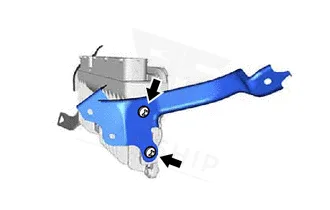
Work with the ignition off, and treat the module as static-sensitive: avoid touching the connector pins at any point.
| Operation | Configuration | Book Time |
|---|---|---|
| Powertrain Control Module R&R | All configurations | 0.8 hr |
| Powertrain Control Module Relearn | All configurations | 0.5 hr |
| Engine Control Module Relearn | All configurations | 0.5 hr |
| Engine Control Module R&R | All configurations | 0.8 hr |
| Engine Control Module Reset | All configurations | 0.3 hr |
After replacing the ECM in your 2017 Prius, Toyota requires a relearn procedure to calibrate the module to the vehicle’s systems. This step, which typically takes 0.5 hours, ensures proper communication with the hybrid powertrain and other control units. However, if you install a VIN-programmed replacement unit, these initial programming steps are already completed, saving time and reducing the risk of errors. Still, some post-install checks may be necessary to confirm full functionality, particularly with hybrid system interactions.
A failing ECM in the 2017 Toyota Prius may cause a range of drivability issues. Common symptoms include intermittent stalling, rough idle, or a no-start condition, often accompanied by warning lights on the dashboard. Some owners report poor acceleration or erratic shifting, as the ECM’s communication with the transmission control module may be disrupted. Scan tools may also fail to communicate with the ECM, or you might see module-specific codes like an internal processor fault. If the vehicle enters a limp-home mode or fails to transition smoothly between electric and gas power, the ECM should be inspected as a potential cause.
The 2017 Toyota Prius may log specific trouble codes when the ECM experiences internal faults. These codes help diagnose whether the module itself is failing or if related systems are contributing to the issue.
| Code | Meaning | Full Guide |
|---|---|---|
| P0606 | Module processor failure | Full P0606 guide → |
Toyota has issued cautions regarding ECM replacement in the 2017 Prius to prevent data loss. Specifically, the factory advises against replacing the battery ECU and ECM simultaneously unless following a prescribed procedure. If both modules must be replaced at the same time, additional steps are required to preserve hybrid battery learning values. Always review the disconnecting procedures for the auxiliary battery terminal before beginning work to avoid unintended consequences.
While physically replacing the ECM is possible, the process requires careful handling of the auxiliary battery and adherence to factory cautions. The relearn procedure also demands specialized tools and knowledge. If you’re not experienced with hybrid systems, professional installation is recommended to avoid data loss or drivability issues.
Skipping the relearn procedure may result in poor engine performance, erratic shifting, or communication errors between the ECM and other control modules. The vehicle may also fail to start or enter a reduced-power mode until the procedure is completed.
The battery ECU stores hybrid battery learning values critical to the vehicle’s operation. Replacing both modules simultaneously without following the proper procedure can erase these values, leading to drivability issues or requiring additional calibration steps.
If your 2017 Toyota Prius requires an ECM replacement, you have options. A new OEM module may involve longer programming times and higher costs, while a refurbished unit can offer a cost-effective alternative. For hybrid vehicles like the Prius, ensuring the replacement ECM is pre-programmed to your VIN simplifies installation and reduces the risk of post-repair issues. Consider the labor and programming requirements when deciding on the best approach for your vehicle.
Flagship One stocks a refurbished, VIN-programmed PCM for the 2017 Toyota Prius with a lifetime warranty, free shipping and no core charge. The full Toyota Prius module lineup covers other engine configurations as well.
Replacing the ECM in your 2017 Toyota Prius is a manageable repair when approached with the right information. Understanding the labor times, factory cautions, and post-install requirements helps avoid common pitfalls like data loss or incomplete calibration. Whether you opt for a new or refurbished module, prioritize compatibility and programming to restore your Prius’s performance reliably.