
Last updated on August 25th, 2026 at 02:22 pm
In the 2015 Chevrolet SS the Powertrain Control Module (PCM) and Engine Control Module (ECM) manage fuel delivery, ignition timing, and emission controls. A failure typically results in loss of engine power, diagnostic trouble codes, and impaired communication with scan tools, requiring removal and reprogramming to restore functionality.
When a 2015 Chevrolet SS begins to exhibit erratic performance, unexpected stalling, or a complete no‑start condition, the engine’s control electronics are often the first suspects. The Powertrain Control Module and Engine Control Module act as the vehicle’s brain, interpreting sensor data and commanding actuators. Understanding how these modules function, what the factory recommends for removal and installation, and the programming steps required after a swap can help you make an informed decision about repair versus replacement. This guide walks you through the essential facts, typical symptoms, and practical steps so you know exactly what to expect when addressing a PCM or ECM issue in your Chevrolet SS.
The Powertrain Control Module in the 2015 Chevrolet SS coordinates the engine’s fuel injection, ignition timing, and transmission shift strategy, while the Engine Control Module focuses on sensor processing and emission controls. Together they ensure the V8 operates within factory‑specified parameters, delivering smooth acceleration and optimal fuel economy. A malfunction in either unit can cause a cascade of performance problems, from rough idle to loss of driveability, because the engine’s core functions depend on accurate data and precise actuator commands. Maintaining proper voltage and clean connector contacts is critical, as the modules are sensitive to electrical transients. The replacement engine computers for SS are engineered to match the original specifications, providing a reliable substitute when the factory‑original units fail.
2015 Chevrolet SS Powertrain and
OEM programmed replacements — plug & play, no dealer visit.
Find yours by year, make & model →
Free shipping · Lifetime warranty
Both the PCM and ECM are mounted within the engine compartment of the 2015 Chevrolet SS, typically attached to the firewall or near the intake manifold for direct sensor access. Removing a module involves disconnecting the electrical harness, securing any mounting bolts, and extracting the unit from its bracket. The factory book time lists one hour for the Powertrain Control Module removal and replacement, and the same duration for the Engine Control Module. After the ECM is installed, an additional half‑hour is allocated for the relearn procedure, which calibrates the new unit to the vehicle’s existing sensors and systems. Following removal, the connectors should be inspected for corrosion and the pins cleaned before the new module is seated.
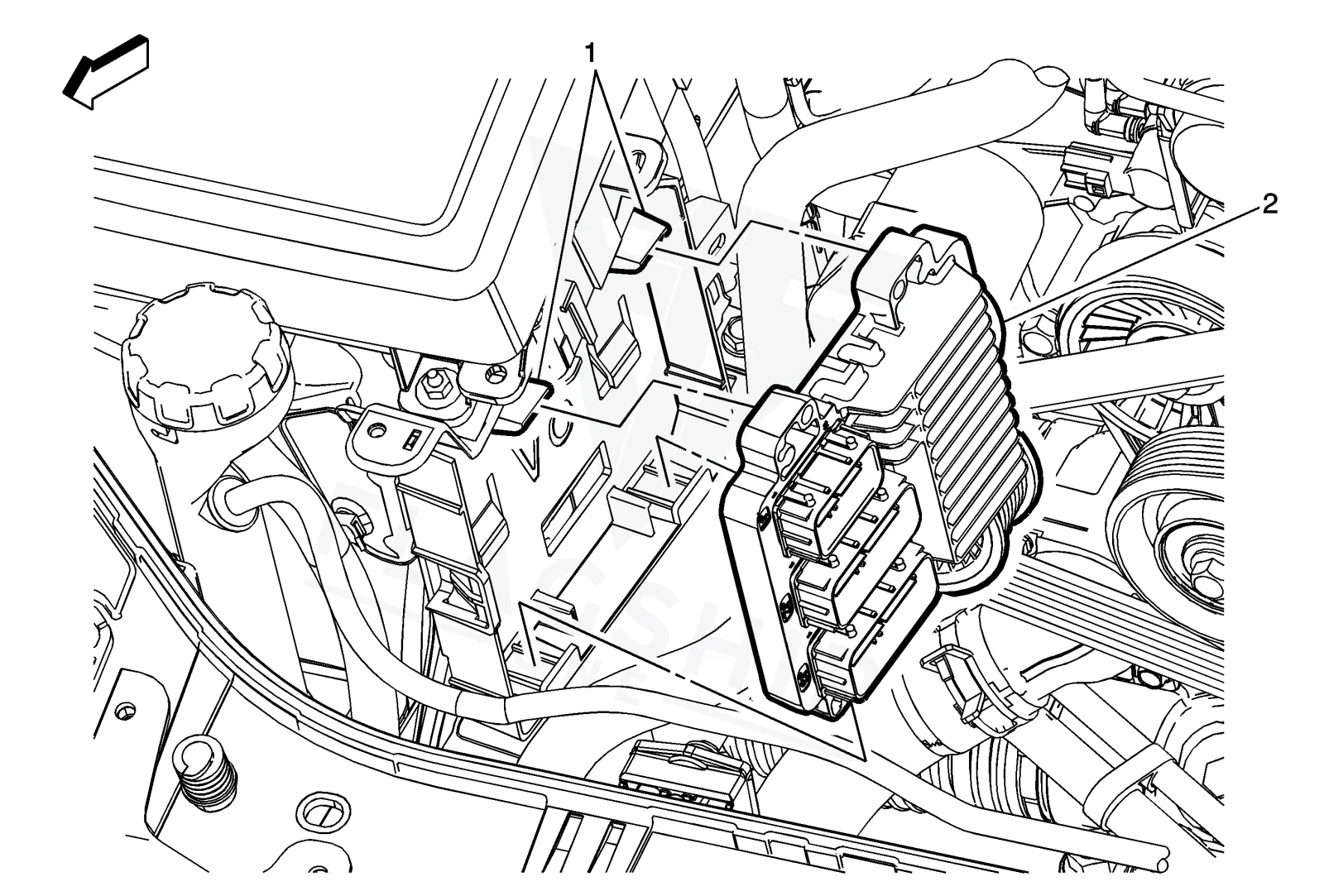
Work with the ignition off, and treat the module as static-sensitive: avoid touching the connector pins at any point.
| Operation | Configuration | Book Time |
|---|---|---|
| Powertrain Control Module R&R | All configurations | 1.0 hr |
| Engine Control Module R&R | All configurations | 1.0 hr |
| Engine Control Module Relearn | All configurations | 0.5 hr |
A failing PCM or ECM in a 2015 Chevrolet SS may manifest as a complete lack of engine start, intermittent stalling while cruising, rough idle, or a loss of power during acceleration. Diagnostic trouble codes often appear, with the scan tool unable to communicate once the module is dead. You might also notice unexpected shift patterns if the transmission control is affected. One common code is processor failure, indicating internal processor issues that prevent the module from executing its control algorithms.
The following diagnostic trouble codes are specific to the control modules in the 2015 Chevrolet SS:
Service Bulletin #17-NA-242, dated July 24, 2017, warns against reprogramming a module with its current calibration, while Bulletin #PIT5436A from November 24, 2014, provides a tip for enabling OnStar Wi‑Fi after a VCIM replacement or reprogramming event.
| Bulletin | Subject | What It Addresses |
|---|---|---|
| — | Information on Changes to SPS that Warn/Prohibit Reprogramming a Module With Its Current Calibr | — |
| — | Diagnostic Tip: OnStar WIFI Enable After VCIM Replacement Or Reprogramming Event – (Nov 24, 201 | — |
The factory book lists approximately one hour of labor to remove and reinstall the Powertrain Control Module on a 2015 Chevrolet SS.
Factory guidance requires the EL‑49642 SPS programming support tool for reprogramming, but a Flagship One VIN‑programmed unit eliminates that step.
Yes, because the ECM shares data with the transmission control system, a failure can lead to erratic shifting or loss of gear engagement.
The factory caution advises the ignition be off during connector removal to prevent possible damage to the module.
The relearn calibrates the new ECM to the vehicle’s existing sensors, ensuring accurate data interpretation and proper engine control.
When faced with a faulty PCM or ECM in your 2015 Chevrolet SS, you can choose a professional repair or a refurbished replacement. A properly programmed Flagship One unit offers a cost‑effective alternative that meets factory specifications while saving you the time required for on‑site reprogramming. Consider your vehicle’s mileage, warranty status, and budget to decide which path best restores reliable performance.
Flagship One stocks a refurbished, VIN-programmed PCM for the 2015 Chevrolet SS with a lifetime warranty, free shipping and no core charge. The full Chevrolet SS module lineup covers other engine configurations as well.
The 2015 Chevrolet SS relies on its Powertrain and Engine Control Modules for smooth operation. Whether you opt for a repair or a VIN‑programmed replacement, addressing the issue promptly will help keep your SS delivering the performance it was designed for. Contact a qualified technician to evaluate your specific situation.