
Last updated on August 25th, 2026 at 12:45 pm
In the 2014 Dodge Journey the Engine Control Module (ECM) and Powertrain Control Module (PCM) manage fuel injection, ignition timing and transmission shift logic. A failure typically disables communication with the scan tool, triggers internal codes and can cause no‑start or erratic shifting.
When a 2014 Dodge Journey begins to exhibit irregular idle, stalling or a complete loss of power, the underlying cause often points to the vehicle’s control modules. Understanding how the Engine Control Module and Powertrain Control Module function, what labor is involved in their service, and which diagnostic codes may appear can help you decide between a repair or a replacement. This guide walks you through the essential information you need to evaluate the issue, interpret symptoms, and know what to expect from a professional service, including the benefit of using a pre‑programmed replacement from Flagship One.
The Engine Control Module in a 2014 Dodge Journey 2.4L engine acts as the brain for engine management, regulating fuel delivery, spark timing and emissions controls. The Powertrain Control Module extends that oversight to the transmission, coordinating shift points and torque converter lock‑up. Together they ensure smooth acceleration, optimal fuel economy and compliance with emissions standards. A malfunction in either module can interrupt communication with diagnostic tools, trigger internal trouble codes and lead to drivability problems. Proper operation is critical because the Journey relies on these computers for both engine and transmission harmony. When a replacement is needed, replacement ECM for Journey provides a direct substitute that matches the vehicle’s specifications.
2014 Dodge Journey
OEM programmed ECM for your 2014 Dodge Journey — plug & play, no dealer visit.
Free shipping · Lifetime warranty
Both the ECM and PCM are mounted within the engine compartment of the 2014 Dodge Journey, typically attached to the firewall or near the intake manifold. Access generally requires removal of a few fasteners and the protective cover. The labor book times indicate that an ECM relearn will take about 0.5 hours, while a full ECM reset is roughly 0.3 hours. Replacing the ECM on the 2.4L version is estimated at 0.6 hours, the same as for the 3.6L variant. Similarly, PCM relearn work is listed at 0.5 hours and a PCM replacement for the 2.4L engine also averages 0.6 hours. These figures reflect the time needed to disconnect the connector, remove the mounting bolts, install the new unit and reconnect the electrical harness.
| Operation | Configuration | Book Time |
|---|---|---|
| Engine Control Module Relearn | All configurations | 0.5 hr |
| Engine Control Module Reset | All configurations | 0.3 hr |
| Engine Control Module R&R | 2.4L | 0.6 hr |
| Engine Control Module R&R | 3.6L | 0.6 hr |
| Powertrain Control Module Relearn | All configurations | 0.5 hr |
| Powertrain Control Module R&R | 2.4L | 0.6 hr |
| Powertrain Control Module R&R | 3.6L | 0.6 hr |
After installing a new ECM or PCM in the Journey, the factory procedure normally requires a specific relearn or reset sequence to synchronize the module with the vehicle’s existing sensors and transmission control logic. The required steps are captured in the labor times for ECM relearn (0.5 hours) and PCM relearn (0.5 hours). Flagship One units arrive already VIN‑programmed, so those post‑install procedures are effectively completed, meaning the technician only needs to perform the standard relearn routine without additional coding. This approach reduces shop time and the chance of programming errors. Using a a VIN-programmed replacement unit therefore streamlines the service process.
A failing ECM or PCM in the 2014 Dodge Journey may present as a no‑start condition, intermittent stalling, rough idle, or unexpected transmission shifting. You might also notice a loss of power during acceleration or the illumination of the check engine light. When internal diagnostics detect a problem, the system often logs codes such as internal fault or P0606, indicating internal processor errors. In some cases the scan tool will be unable to communicate with the module, which can further complicate diagnosis. These symptoms tend to appear gradually, but they can become more pronounced as the module’s condition deteriorates.
The following internal trouble codes are commonly reported for the ECM and PCM in a 2014 Dodge Journey:
| Code | Meaning | Full Guide |
|---|---|---|
| P0601 | Internal memory checksum error | Full P0601 guide → |
| P0606 | Module processor failure | Full P0606 guide → |
The book time for removing and installing the ECM on the 2.4L version is listed as 0.6 hours, which reflects the typical effort needed by a qualified technician.
Yes, the labor guide shows a PCM replacement for the 2.4L engine also takes about 0.6 hours, matching the ECM replacement time.
The documented internal codes for this model include P0601 and P0606, both indicating processor or communication problems within the module.
The relearn procedure follows the factory sequence and typically requires a scan tool that can access the vehicle’s control modules, but no proprietary hardware beyond standard diagnostic equipment.
Because the unit is pre‑programmed with the vehicle’s identification information, the technician can skip the initial coding step and proceed directly to the relearn, saving time and reducing the risk of errors.
When your 2014 Dodge Journey needs an ECM or PCM service, you can choose a repair using OEM parts or opt for a refurbished replacement that matches factory specifications. Flagship One offers units that arrive VIN‑programmed, which can reduce shop time and simplify the post‑install relearn. Evaluate the condition of the existing module, the labor estimates, and the convenience of a ready‑to‑install unit before deciding.
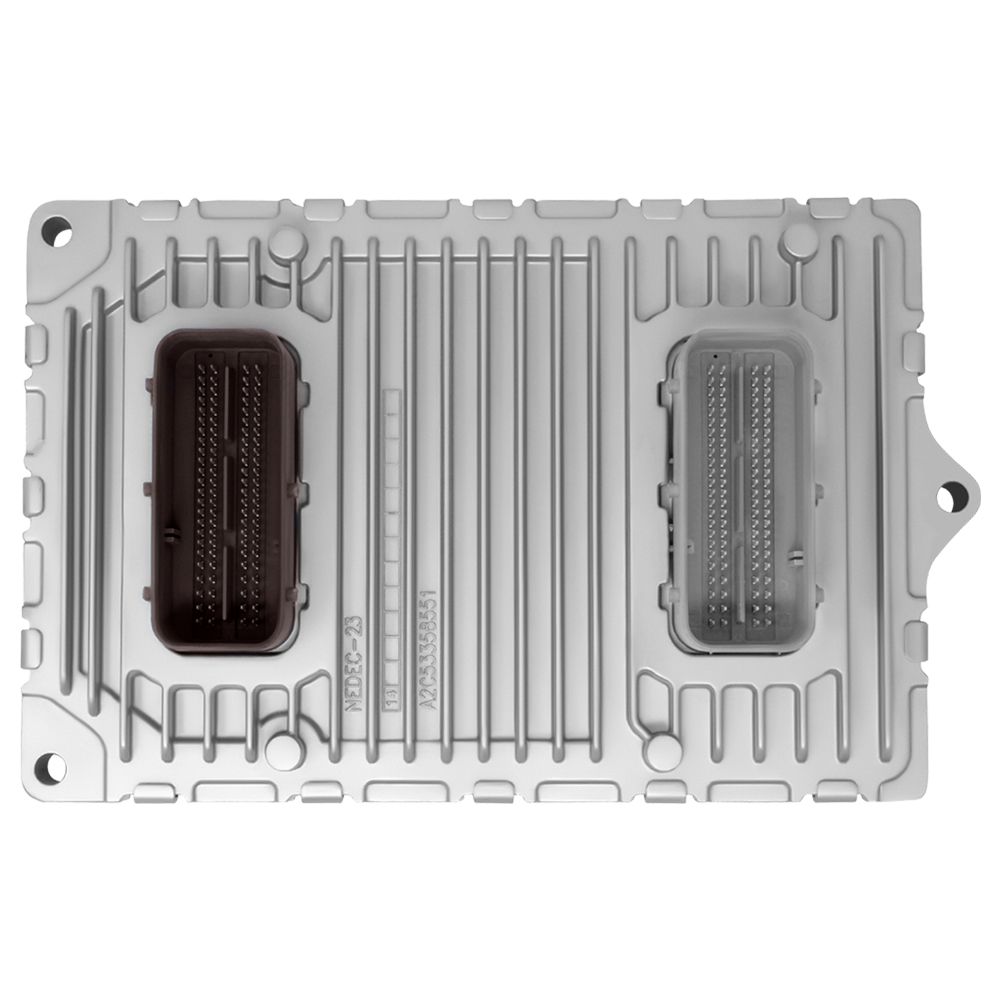
Flagship One stocks a refurbished, VIN-programmed PCM for the 2014 Dodge Journey with a lifetime warranty, free shipping and no core charge. The full Dodge Journey module lineup covers other engine configurations as well.
For owners of a 2014 Dodge Journey, understanding the role of the engine and powertrain control modules helps you make informed choices about repair or replacement. Flagship One’s pre‑programmed solutions can streamline the process while maintaining vehicle reliability.