
Last updated on August 25th, 2026 at 11:58 am
The engine control module in the 2013 Toyota Matrix manages critical fuel delivery and ignition timing. When this computer fails, it often causes erratic shifting or prevents the engine from starting entirely, requiring replacement to restore proper vehicle operation.
Diagnosing these problems early prevents additional wear on related parts. When your 2013 Toyota Matrix begins exhibiting hard starting or unexpected stalling, the engine control module often becomes a primary suspect. This critical computer manages essential engine functions, and its failure can severely disrupt your daily commute. Understanding how this component operates within your specific vehicle, where it is situated, and what symptoms indicate a malfunction helps you make accurate repair decisions. Replacing a defective unit involves particular steps and programming requirements that must be followed precisely to avoid further issues down the road. By exploring the replacement process, location details, and diagnostic trouble codes, you gain the knowledge needed to resolve the situation efficiently and return your vehicle to dependable performance without unnecessary delays or repeated troubleshooting steps.
The engine control module in the 2013 Toyota Matrix acts as the central brain for the powertrain. It continuously monitors data from various sensors throughout the vehicle to adjust fuel injection, ignition timing, and emission controls. By regulating these parameters, it ensures the engine runs efficiently and meets emissions standards. When this unit begins to fail, it may send incorrect signals, leading to poor fuel economy or rough idling. Because it controls the interaction between the engine and transmission, a malfunction can also cause unpredictable shifting behavior. If you need to address these issues, sourcing 2013 Toyota Matrix engine computers is often the most effective solution. A functioning module is crucial because it maintains the balance between performance and reliability, preventing cascading damage to other expensive components. Without proper regulation from this computer, your vehicle may experience significant drivability problems that worsen over time.
2013 Toyota Matrix
OEM programmed ECM for your 2013 Toyota Matrix — plug & play, no dealer visit.
Free shipping · Lifetime warranty
In the 2013 Toyota Matrix, the factory removal procedure reaches the control module next to the air cleaner assembly. To access this unit, you must remove the cable from the negative battery terminal. This step ensures safety while working with the electrical system and prevents accidental shorts. Once the battery is disconnected and the path is clear, the physical swap can begin. The listed book time for the powertrain control module removal and replacement is 0.7 hours, while the engine control module removal and replacement also requires 0.7 hours. These times reflect the standard labor required to complete the job efficiently. After physically installing the replacement unit, an engine control module relearn procedure is necessary, which typically takes 0.5 hours of book time. This relearn process allows the new computer to calibrate itself to the specific sensors and operating characteristics of your vehicle, ensuring proper idle and shifting behavior.
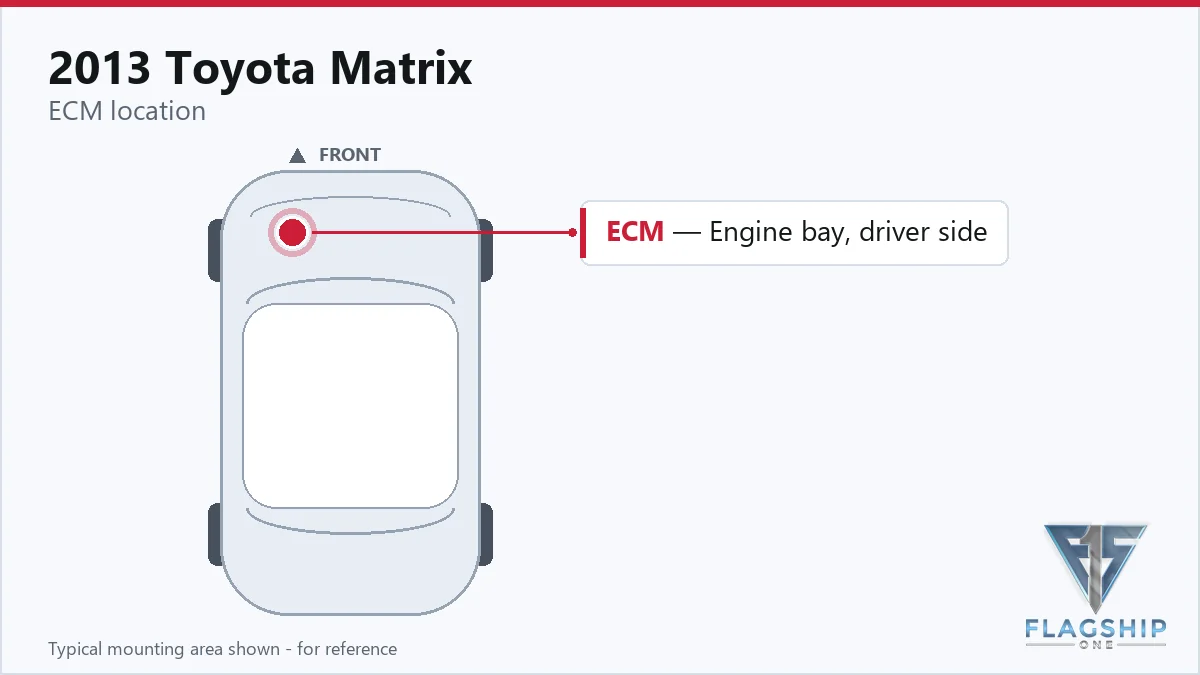
Work with the ignition off, and treat the module as static-sensitive: avoid touching the connector pins at any point.
| Operation | Configuration | Book Time |
|---|---|---|
| Powertrain Control Module R&R | All configurations | 0.7 hr |
| Engine Control Module Relearn | All configurations | 0.5 hr |
| Engine Control Module R&R | All configurations | 0.7 hr |
Following the installation of a new computer, the factory procedure requires an engine control module relearn process. This step takes 0.5 hours of book time and ensures the 2013 Toyota Matrix correctly adapts to the new hardware. During this procedure, the vehicle relearns idle parameters and fuel trim strategies so the engine runs smoothly. Skipping this step often results in rough idling or stalling. However, when you install a VIN-programmed replacement unit from Flagship One, those specific programming steps are already completed. Because the unit arrives pre-programmed with your vehicle’s information, you avoid the dealership visit typically required for the relearn process. This means you can install the computer and get your vehicle back on the road faster, without worrying about additional diagnostic fees or the need for specialized factory scan tools to initialize the system.
A failing engine computer in the 2013 Toyota Matrix often presents several noticeable drivability issues. You may experience a no-start condition where the engine cranks but fails to fire, or unexpected stalling while idling at a stoplight. Misfire codes and rough running are also common, as the module struggles to manage fuel delivery and spark timing accurately. Another frequent symptom is dead communication with a scan tool, preventing technicians from reading live data. In some cases, automatic transmission shifting issues may occur if the unit cannot properly coordinate with the transmission controller. Internal processor failures frequently trigger specific diagnostic trouble codes. For example, a internal control module memory fault often indicates that the computer cannot read its own programming correctly. You might also see check engine lights illuminating without an obvious mechanical cause, signaling that the module itself has lost its ability to process sensor data reliably.
When the engine computer in your 2013 Toyota Matrix experiences an internal malfunction, it typically logs specific diagnostic trouble codes. These module-internal codes point directly to processor failures rather than external sensor issues. Reviewing the following list helps you determine if your vehicle has stored a related fault.
| Code | Meaning | Full Guide |
|---|---|---|
| P0601 | Internal memory checksum error | Full P0601 guide → |
| P0606 | Module processor failure | Full P0606 guide → |
You must remove the cable from the negative battery terminal first. The factory procedure then allows access to the module located next to the air cleaner assembly.
The standard book time for the powertrain control module removal and replacement is 0.7 hours. An additional 0.5 hours is typically required for the engine control module relearn procedure.
Yes, the factory procedure requires an engine control module relearn after installation. However, a VIN-programmed unit from Flagship One arrives ready to operate, eliminating the need for this extra step.
Deciding between repairing or replacing the failing computer in your 2013 Toyota Matrix depends on the severity of the internal damage. While some shops offer repair services, they often lack the specialized equipment to fix processor-level faults reliably. Choosing a refurbished replacement ensures the unit meets factory specifications and resolves the underlying issue completely. This option provides a straightforward path to restoring vehicle operation without the uncertainty of a patch repair.
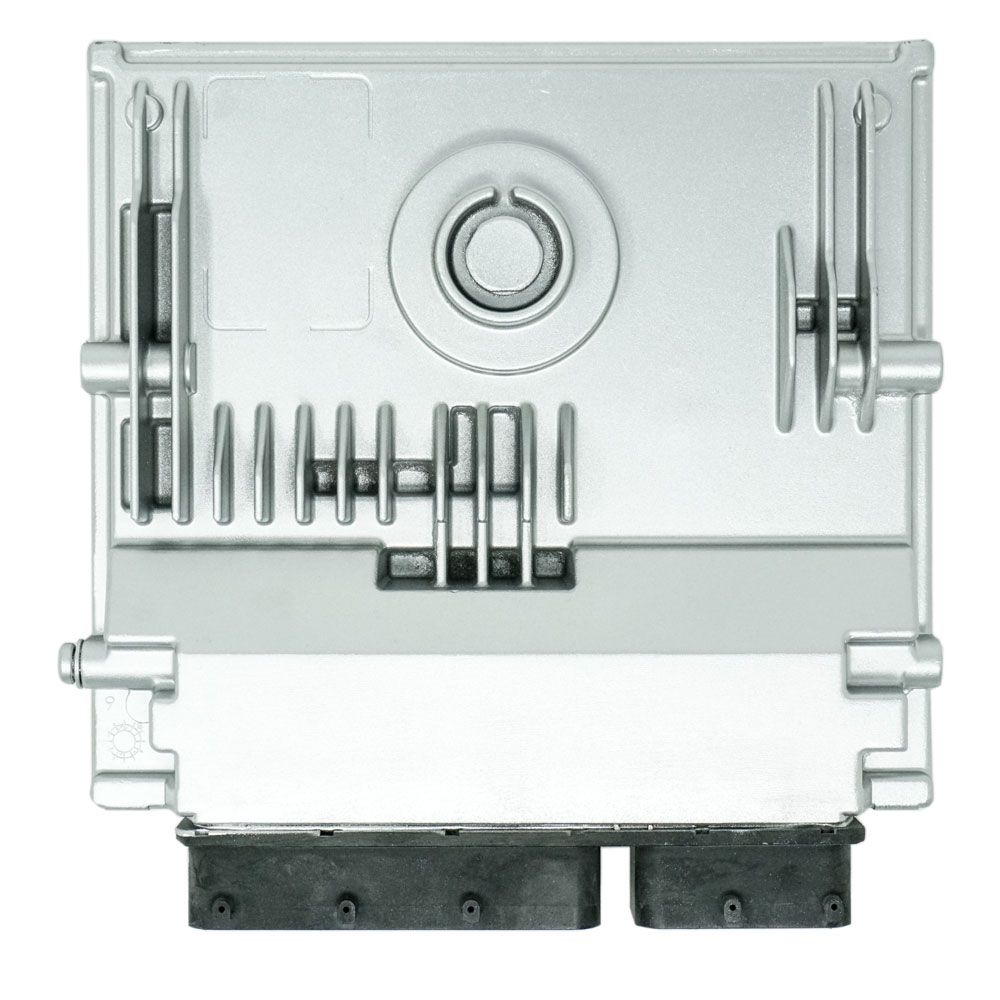
Flagship One stocks a refurbished, VIN-programmed PCM for the 2013 Toyota Matrix with a lifetime warranty, free shipping and no core charge. The full Toyota Matrix module lineup covers other engine configurations as well.
Addressing engine computer issues in your 2013 Toyota Matrix promptly prevents further drivability problems and keeps your daily commute predictable. By understanding the location, replacement times, and necessary programming steps, you can approach this repair with confidence. Whether dealing with stalling or communication faults, a properly programmed replacement restores your vehicle’s reliability. Explore our selection of programmed modules to find the exact solution for your specific needs.