
Last updated on August 25th, 2026 at 01:09 pm
The Powertrain Control Module (PCM) in your 2013 Jeep Wrangler with the 3.6L engine serves as the central computer managing fuel delivery, ignition timing, transmission shifting, and emissions systems. When this module fails or loses its internal memory validation, the engine may not start, run poorly, or set diagnostic trouble codes.
If your 2013 Jeep Wrangler with the 3.6L engine won’t start, runs poorly, or your scan tool cannot communicate with the engine computer, the Powertrain Control Module may be the culprit. This guide explains what the PCM does, where it lives, how replacement works, and what programming steps are required to get your Wrangler running again. You’ll learn the factory-recommended procedure, why certain precautions matter, and how to interpret common failure symptoms.
The Powertrain Control Module in your 2013 Jeep Wrangler is the primary computer responsible for managing the 3.6L Pentastar engine and automatic transmission. This unit controls fuel injector pulse width, ignition coil firing, throttle position, transmission shift points, and reports vehicle identification to other modules on the CAN bus. When the PCM fails internally, it may lose the ability to start the engine or maintain proper operation. The module also broadcasts the VIN over the vehicle network—a function critical to ABS system operation on this model. Without proper communication, various modules may set fault codes or behave erratically. Replacement engine computers for the Wrangler must be programmed with the correct VIN and mileage to function properly in your specific vehicle.
Flagship One keeps Jeep Wrangler replacement engine computers in stock for exactly this failure pattern.
2013 Jeep Wrangler
OEM programmed ECM for your 2013 Jeep Wrangler — plug & play, no dealer visit.
Free shipping · Lifetime warranty
The PCM on the 2013 Jeep Wrangler is mounted on the driver’s side of the engine compartment, typically near the firewall or front passenger area depending on production month. Access requires removing the engine cover and possibly surrounding air intake components. The replacement process involves disconnecting the battery, removing the old module, installing the new unit, and reconnecting all connectors. According to factory labor guides, the R&R (remove and replace) task requires 0.6 hours, with an additional 0.5 hour for the relearn procedure. The module must be torqued to specification when securing it to prevent vibration-related failures. Always ensure connector seals remain intact during the replacement to maintain environmental protection.
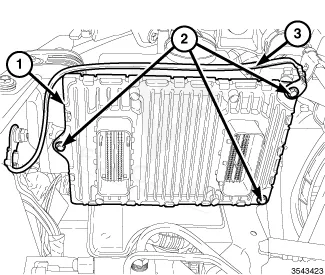
Work with the ignition off, and treat the module as static-sensitive: avoid touching the connector pins at any point.
| Operation | Configuration | Book Time |
|---|---|---|
| Engine Control Module Relearn | All configurations | 0.5 hr |
| Engine Control Module R&R | All configurations | 0.6 hr |
| Powertrain Control Module Relearn | All configurations | 0.5 hr |
| Powertrain Control Module R&R | All configurations | 0.6 hr |
After replacing the PCM, the new unit must be programmed with your vehicle’s original identification number (VIN) and current odometer reading using a diagnostic scan tool. This step is mandatory—failing to program the VIN will result in a Diagnostic Trouble Code being set and may cause intermittent no-start conditions. The factory recommends disconnecting the ABS controller temporarily during PCM replacement to prevent conflicts with the VIN broadcast over the bus network. Flagship One replacement units arrive pre-programmed with your VIN and mileage, so many of these steps are completed before the module reaches you, simplifying the installation process.
Every VIN-programmed replacement unit from Flagship One arrives with these steps already completed.
When the PCM on this vehicle fails, common symptoms include a no-start condition where the engine cranks but won’t fire, intermittent starting problems, and stalling after the engine starts. You may notice check engine light illumination with fault codes related to sensor communication or module internal errors. In some cases, the scan tool may be unable to communicate with the engine module at all. Transmission shifting may become erratic or the vehicle may enter limp mode. If internal memory validation fails, trouble code P0601 indicating ROM checksum invalid will often be present, signaling that the module’s internal processor has detected a fault.
The 2013 Jeep Wrangler with the 3.6L engine is documented to set specific module-internal trouble codes when the PCM experiences internal failures. These codes indicate problems with the module’s memory integrity rather than external sensor issues.
| Code | Meaning | Full Guide |
|---|---|---|
| P0601 | Internal memory checksum error | Full P0601 guide → |
| P0606 | Module processor failure | Full P0606 guide → |
Factory service bulletin 08-060-12 addresses intermittent no-start and no-crank conditions on this vehicle, specifically noting DTC B2204 indicating ECU Configuration Mismatch. This condition may occur when the PCM loses its programmed configuration or when the VIN broadcast to other modules becomes inconsistent. The bulletin recommends verifying proper PCM programming and ensuring all modules on the bus network recognize the correct vehicle identification before declaring the repair complete.
| Bulletin | Subject | What It Addresses |
|---|---|---|
| 08-060-12 | 08-060-12 Flash: NO Start, NO Crank Intermittently, B2204 ECU Configuration Mismatch | — |
No. The replacement PCM must be matched to your vehicle’s specific configuration. The module must be programmed with your exact VIN and current mileage to communicate properly with the rest of the vehicle’s modules.
Technically competent DIYers can perform the physical replacement, but programming equipment is required to complete the VIN write and relearn procedures. The ABS disconnection step is also recommended for best results.
The vehicle may start intermittently or not at all. The ABS system relies on VIN broadcast from the PCM, so you may also experience ABS warning lights and related codes. A DTC will likely be set in the module.
If your 2013 Jeep Wrangler’s PCM has failed, you have two primary repair paths. You can install a new or refurbished unit and have it programmed at a dealership or independent shop, or you can purchase a pre-programmed replacement unit that arrives ready to install with your VIN already loaded. Each approach has cost and convenience trade-offs worth considering based on your situation and mechanical comfort level.
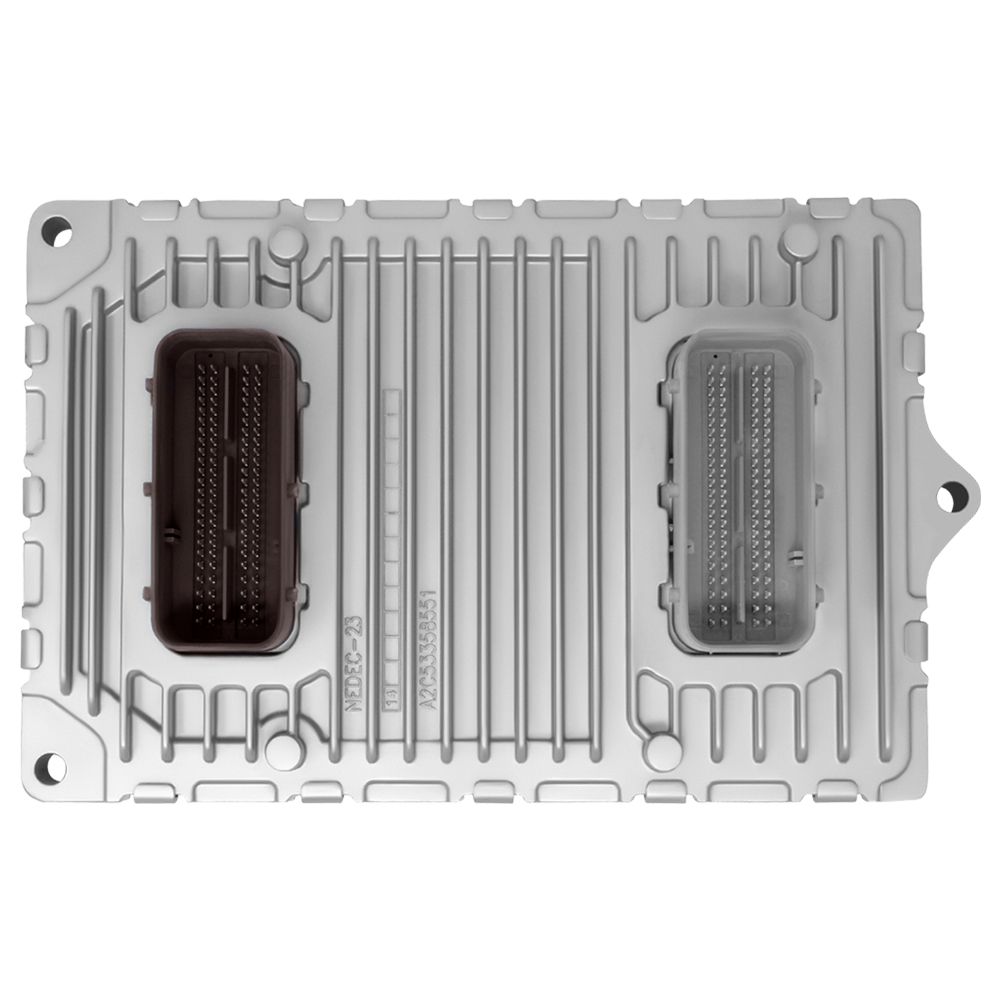
Flagship One stocks a refurbished, VIN-programmed PCM for the 2013 Jeep Wrangler with a lifetime warranty, free shipping and no core charge. The full Jeep Wrangler module lineup covers other engine configurations as well.
The PCM in your 2013 Jeep Wrangler is a critical component that manages engine and transmission operation. When internal failures occur, the symptoms are often dramatic and immediate. Understanding the replacement process, programming requirements, and the importance of VIN configuration helps ensure a successful repair. Whether you choose dealer programming or a pre-programmed replacement unit, addressing PCM failure promptly keeps your Wrangler running reliably.