
Last updated on August 25th, 2026 at 01:10 pm
The Engine Control Module and Powertrain Control Module on your 2010 Jeep Wrangler manage fuel delivery, ignition timing, emissions controls, and transmission shifting. Internal memory failures may trigger check engine lights and drivability symptoms that resist conventional repair.
When your 2010 Jeep Wrangler with the 3.8L engine develops trouble codes P0601 or P0606, you may be facing an Engine Control Module or Powertrain Control Module failure. These onboard computers handle critical engine management functions, and their failure can cause hard-starting, stalling, or unresponsive throttle. This guide explains what the module does in your Wrangler, what replacement involves, and what programming steps the factory requires. Understanding the process helps you make informed decisions whether you handle the repair yourself or have a professional perform the work.
The Engine Control Module in your 2010 Jeep Wrangler serves as the primary computer responsible for managing the 3.8L V6 engine. It processes inputs from dozens of sensors to calculate fuel injection pulse width, spark advance, idle speed, and emissions control device operation. The related Powertrain Control Module often shares these duties or handles transmission shift scheduling. When these processors develop internal faults, they may store integrity codes like P0601 or P0606 that indicate checksum failures in their memory banks. replacement engine computers for the Jeep Wrangler often come as complete assemblies that require VIN and mileage reprogramming before they will communicate properly with your vehicle’s remaining systems.
2010 Jeep Wrangler
OEM programmed replacements — plug & play, no dealer visit.
Find yours by year, make & model →
Free shipping · Lifetime warranty
The control module on this generation Wrangler typically mounts in the engine compartment, though connector accessibility and physical reach may require careful maneuvering around surrounding components. Factory labor allocations assign 0.6 hours for module removal and installation, plus an additional 0.5 hours for relearn procedures. Accessing the unit may involve disconnecting battery power, removing surrounding harnesses or brackets, and ensuring proper clearance for the new assembly. Following manufacturer torque specifications for mounting hardware ensures the replacement remains secure during vehicle operation. Professional technicians familiar with Jeep products understand common obstacles when working in the Wrangler engine bay.
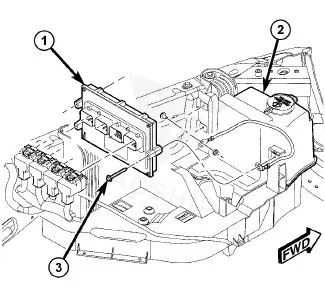
Work with the ignition off, and treat the module as static-sensitive: avoid touching the connector pins at any point.
| Operation | Configuration | Book Time |
|---|---|---|
| Engine Control Module Relearn | All configurations | 0.5 hr |
| Engine Control Module R&R | All configurations | 0.6 hr |
| Powertrain Control Module Relearn | All configurations | 0.5 hr |
| Powertrain Control Module R&R | All configurations | 0.6 hr |
After installing a replacement module, the factory service procedure requires using a diagnostic scan tool to write your Wrangler’s original Vehicle Identification Number and recorded mileage into the new computer. This step establishes proper communication with the Powertrain Control Module and prevents anti-theft system conflicts. Without this programming, the engine may crank but not start, and warning lights will persist. a VIN-programmed replacement unit arrives from Flagship One already configured with your vehicle’s identification data, which eliminates the need for dealer-level programming equipment and reduces post-installation time.
A failing Engine Control Module in your 2010 Jeep Wrangler commonly produces no-start conditions or intermittent starting that worsens over time. The engine may stall unexpectedly at idle or during deceleration, and you might notice the cruise control becoming inoperative or the check engine light remaining illuminated despite other repairs. Stored codes often include generic powertrain failures alongside the module-internal internal memory checksum failure that prompted the diagnosis. In some cases, the scan tool may show no communication with the module at all until it is replaced. Transmission shifting may feel harsh or delayed when the module cannot properly interpret sensor inputs.
The 2010 Jeep Wrangler may display module-internal trouble codes indicating the Engine Control Module has detected internal memory problems. These codes typically do not respond to sensor replacement or wiring repair and point directly to processor or memory chip failure within the computer itself.
| Code | Meaning | Full Guide |
|---|---|---|
| P0601 | Internal memory checksum error | Full P0601 guide → |
| P0606 | Module processor failure | Full P0606 guide → |
Factory service bulletins address software-related concerns for this vehicle. Recall Rc-Cl34-11 covers PCM reprogramming for downstream oxygen sensor monitoring issues. Service bulletin 18-024-11 addresses flash programming for MIL illumination combined with inoperative cruise switch and idle buffeting conditions. Both bulletins indicate that software calibration updates through module reprogramming resolve certain drivability concerns.
| Bulletin | Subject | What It Addresses |
|---|---|---|
| — | Rc-Cl34-11 Emissions Recall L34 – Reprogram PCM – Downstream Oxygen Sensor Slow Response Monito | — |
| 18-024-11 | 18-024-11 Flash: MIL Illumination and Cruise Switch Inoperative and Idle Buffeting Condition | — |
DIY replacement is possible for mechanically skilled owners, but programming the replacement unit requires dealer-level scan tools or equivalent equipment. If you purchase a pre-programmed unit from Flagship One, you may still need a competent technician to handle the physical installation and basic system verification.
Used modules typically retain the VIN and mileage of their original vehicle, which causes communication failures in your Wrangler. Without reprogramming, the module will not synchronize with your vehicle’s security system, and the engine may not start at all.
Module-internal codes like P0601 and P0606 specifically indicate processor or memory failures within the computer itself rather than external sensor problems. If multiple unrelated codes appear simultaneously or the scan tool cannot establish communication, the module is the likely culprit.
Deciding between repair and replacement often comes down to the extent of internal damage and the module’s service history. Rebuilt units from the dealer carry higher costs and programming fees, while aftermarket or supplier-sourced replacements may offer a middle ground. The 2010 Jeep Wrangler benefits from a straightforward module location, but the programming step makes professional installation attractive for owners lacking appropriate diagnostic equipment. Evaluate your technical comfort level and available resources before committing to a repair approach.
Flagship One stocks a refurbished, VIN-programmed PCM for the 2010 Jeep Wrangler with a lifetime warranty, free shipping and no core charge. The full Jeep Wrangler module lineup covers other engine configurations as well.
The 2010 Jeep Wrangler Engine Control Module and Powertrain Control Module handle essential engine management duties, and failure manifests through drivability symptoms and stored fault codes. Proper replacement requires attention to physical installation, torque specifications, and post-installation programming to match your vehicle’s identification data. Understanding these requirements helps you plan the repair and set realistic expectations for the outcome.