
Last updated on August 25th, 2026 at 02:24 pm
The Engine Control Module in a 2011 Chevrolet Cruze manages fuel injection, ignition timing, and emissions. Failure can disrupt powertrain operation, trigger multiple diagnostic codes, and cause loss of driveability, often requiring removal and reprogramming of the unit.
When a 2011 Chevrolet Cruze exhibits engine‑control issues, the ECM often becomes the focus of diagnosis. Understanding how the module functions, where it resides, and what steps are needed for a proper swap can save time and avoid unnecessary damage. This guide walks you through the replacement process, the essential programming requirements, and the practical steps to keep your vehicle running smoothly after the repair.
In the 2011 Chevrolet Cruze, the Engine Control Module monitors sensor data and commands actuators to maintain optimal engine performance. It stores calibration data that the powertrain relies on for fuel delivery, spark timing, and emissions control. Because it is central to engine operation, a faulty ECM can lead to stalling, loss of power, or multiple fault codes. Access to reliable replacement parts is critical, and replacement engine computers for the 2011 Chevrolet Cruze provide the necessary hardware to restore function.
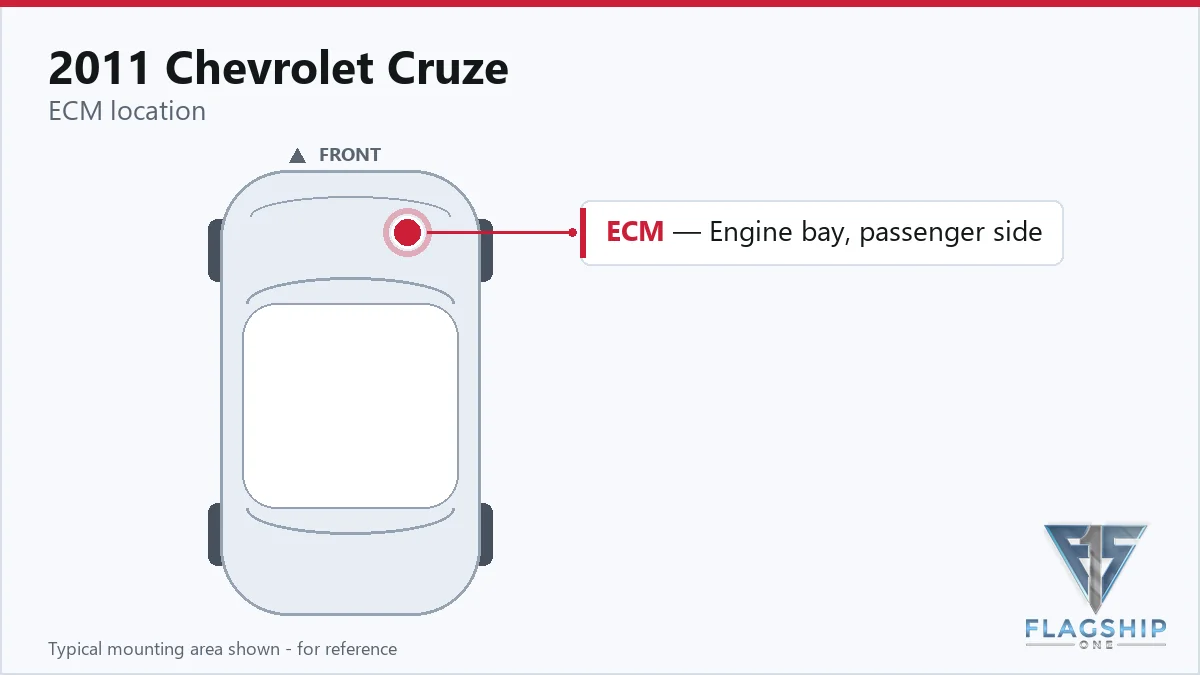
The ECM is situated within the engine compartment of the 2011 Chevrolet Cruze. Removing the unit generally follows the factory service steps: disconnect the battery, unplug the harnesses, and unbolt the mounting hardware. Reinstallation mirrors the removal process, and the labor guide lists 1.1 hours for both removal and replacement. After the unit is secured, the harnesses are reconnected and the battery restored.
Work with the ignition off, and treat the module as static-sensitive: avoid touching the connector pins at any point.
| Operation | Configuration | Book Time |
|---|---|---|
| Powertrain Control Module R&R | All configurations | 1.1 hr |
| Engine Control Module R&R | All configurations | 1.1 hr |
| Engine Control Module Relearn | All configurations | 0.5 hr |
2011 Chevrolet Cruze
OEM programmed ECM for your 2011 Chevrolet Cruze — plug & play, no dealer visit.
Free shipping · Lifetime warranty
Factory reprogramming of the ECM requires special equipment and the correct calibration file for the 2011 Chevrolet Cruze. Flagship One supplies a VIN-programmed replacement unit that arrives already matched to the vehicle, so the extensive re‑calibration procedure is completed before installation, simplifying the shop’s workload.
A failing ECM in a 2011 Chevrolet Cruze may cause the engine to refuse to start, stall unexpectedly, or produce erratic idle. You might also see diagnostic trouble codes appear, such as processor clock fault that indicate internal processor timing issues. Communication with scan tools can become intermittent, and transmission shifting may feel rough due to lost control signals.
The following internal diagnostic codes have been recorded for the 2011 Chevrolet Cruze ECM:
Bulletin #PIC4953E, dated August 23, 2011, addresses part restrictions for the E83 ECM used in this model. The service note clarifies that certain ECM revisions are not interchangeable and outlines the correct part numbers for replacement.
| Bulletin | Subject | What It Addresses |
|---|---|---|
| — | PQC Part Restriction – E83 ECM – (Aug 23, 2011) | — |
The service guide lists about 1.1 hours for removal and another 1.1 hours for installation, plus roughly 0.5 hours for the required relearn procedure.
Factory reprogramming normally requires a calibrated scan tool and the correct software file, but a VIN‑programmed unit from Flagship One eliminates the need for on‑site coding.
Common internal codes include P0601, P0602, P0603, P0604, P0606, P060A, P062F, and P1621, each pointing to specific processor or communication faults.
When the ECM fails, you can either have a new factory‑spec unit installed or choose a refurbished replacement that meets the same performance standards. Both options restore the engine’s control functions, but a refurbished module from Flagship One arrives pre‑programmed, reducing shop time and ensuring the vehicle returns to service quickly.
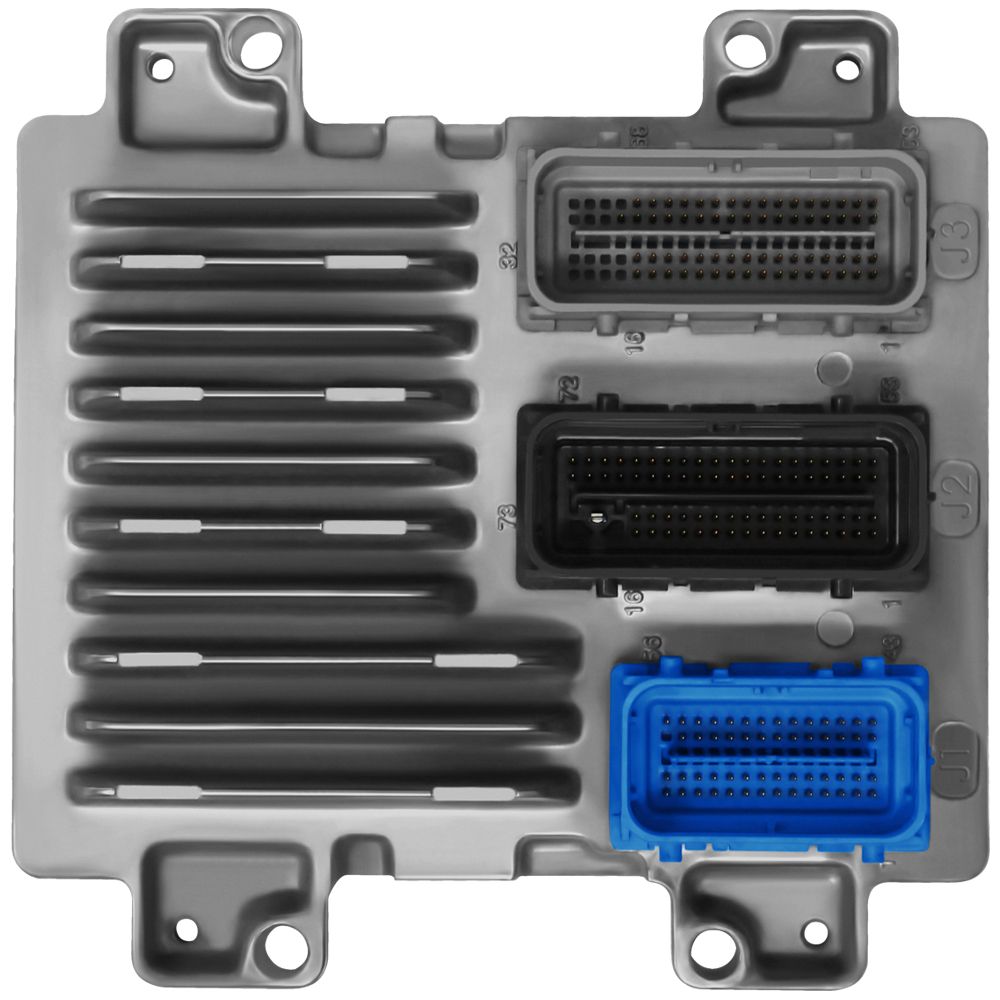
Flagship One stocks a refurbished, VIN-programmed PCM for the 2011 Chevrolet Cruze with a lifetime warranty, free shipping and no core charge. The full Chevrolet Cruze module lineup covers other engine configurations as well.
Replacing the Engine Control Module in your 2011 Chevrolet Cruze restores critical engine management functions and helps prevent further drivability issues. Consider a VIN‑programmed replacement to simplify the process and get back on the road with confidence.