
Last updated on August 25th, 2026 at 01:47 pm
The Engine Control Module (ECM) in your 2010 Nissan Titan manages fuel injection, ignition timing, and emissions systems. Failure may cause erratic engine behavior, stalling, or complete no-start conditions due to internal processor faults or voltage irregularities.
If your 2010 Nissan Titan suddenly stalls at stoplights, refuses to start, or throws cryptic check-engine codes, the Engine Control Module (ECM) may be the culprit. This small but critical computer sits under the hood, constantly adjusting fuel, spark, and emissions to keep your 5.6L V8 running smoothly. When it fails, symptoms can range from subtle drivability quirks to a complete no-start condition. Unlike sensors or actuators, the ECM isn’t something you can test with a simple multimeter—diagnosis often relies on ruling out other issues and confirming internal fault codes. Replacing it isn’t just about swapping a box; the new module must be programmed to your Titan’s VIN and may require a factory relearn procedure. Understanding these steps helps you avoid unnecessary labor costs or repeat visits to the shop. Whether you’re a DIYer or working with a mechanic, knowing what to expect with ECM replacement ensures your Titan gets back on the road without surprises.
The Engine Control Module in your 2010 Nissan Titan acts as the brain of the engine, processing data from sensors to optimize performance, fuel efficiency, and emissions. It controls fuel injectors, ignition timing, idle speed, and even the transmission’s shift points in some conditions. Without a functioning ECM, your Titan’s 5.6L V8 may run poorly or not at all. These modules are designed to last the life of the vehicle, but exposure to voltage spikes, moisture, or extreme temperatures can cause internal failures. When shopping for a replacement, you’ll encounter options like new OEM units or remanufactured ECMs for the Nissan Titan, which may offer cost savings without sacrificing reliability. The ECM’s role is so central that even minor glitches can trigger a cascade of symptoms, making accurate diagnosis essential before replacement.
2010 Nissan Titan
OEM programmed replacements — plug & play, no dealer visit.
Find yours by year, make & model →
Free shipping · Lifetime warranty
In the 2010 Nissan Titan, the ECM is mounted on the passenger side of the engine bay, near the firewall. Accessing it requires removing the engine cover and possibly disconnecting nearby components like the air intake tube or battery terminals. The module itself is secured with bolts and connected via a multi-pin harness. Replacement involves unbolting the old unit, disconnecting the wiring harness, and installing the new ECM. According to factory labor guides, removing and reinstalling the ECM typically takes 1.4 hours. After installation, a 0.5-hour relearn procedure is required to synchronize the module with your Titan’s engine and transmission. Torque specifications for the mounting bolts are critical to avoid damaging the module or causing poor ground contact, though exact values aren’t always published. Always ensure the harness connector is fully seated and locked to prevent intermittent electrical issues.
| Operation | Configuration | Book Time |
|---|---|---|
| Powertrain Control Module R&R | All configurations | 1.8 hr |
| Powertrain Control Module Relearn | All configurations | 0.5 hr |
| Engine Control Module R&R | All configurations | 1.4 hr |
| Engine Control Module Relearn | All configurations | 0.5 hr |
After replacing the ECM in your 2010 Nissan Titan, the new module must be programmed with your vehicle’s VIN and calibrated to its specific engine and transmission. This process, often called a relearn, ensures the ECM communicates correctly with other systems like the transmission control module and body control module. Factory procedures require a 0.5-hour relearn session, typically performed with a scan tool capable of Nissan-specific functions. However, opting for a VIN-programmed replacement unit eliminates this step, as the module arrives pre-configured for your Titan. This not only saves time but also reduces the risk of programming errors that could lead to drivability issues or additional diagnostic trouble codes. If you’re using a non-programmed unit, follow the factory service manual closely to avoid complications during the relearn process.
When the ECM in your 2010 Nissan Titan begins to fail, symptoms can vary widely but often include stalling, rough idling, or a no-start condition. You may notice the engine misfiring, hesitating under acceleration, or surging at idle. In some cases, the transmission may shift erratically or fail to engage gears properly. A common sign of ECM trouble is the illumination of the check engine light, often accompanied by codes like internal control module ROM error. Other potential codes may point to fuel injector or ignition system faults, even when those components are functioning correctly. In severe cases, the ECM may fail to communicate with a scan tool, making diagnosis more challenging. If your Titan exhibits these symptoms, especially in combination, the ECM should be considered a likely cause after ruling out simpler issues like battery voltage or sensor failures.
The 2010 Nissan Titan’s ECM may store specific internal trouble codes when it experiences faults. These codes are distinct from sensor or actuator-related codes and typically indicate issues with the module’s memory, processor, or communication circuits. The table below lists documented ECM-internal codes for this vehicle.
| Code | Meaning | Full Guide |
|---|---|---|
| P0605 | Internal ROM error | Full P0605 guide → |
Driving with a failing ECM is risky. While the vehicle may start and run intermittently, symptoms like stalling or misfires can occur unexpectedly, potentially leaving you stranded. If the ECM fails completely, the engine may not start at all. Addressing ECM issues promptly helps avoid further damage to other components.
Diagnosing an ECM versus a sensor issue often requires a scan tool to check for internal module codes like P0605. If the ECM isn’t communicating with the scan tool at all, the module itself may be at fault. Sensor issues typically trigger codes related to specific circuits, while ECM failures often produce broader symptoms like no-start or multiple unrelated codes.
In the 2010 Nissan Titan, the terms ECM (Engine Control Module) and PCM (Powertrain Control Module) are often used interchangeably, but they refer to the same unit. This module controls both engine and transmission functions, unlike some vehicles where the two systems are managed separately.
Yes, a weak or failing battery can cause voltage irregularities that may damage the ECM or trigger false trouble codes. Low voltage can also prevent the ECM from powering up correctly, leading to no-start conditions. Always ensure your battery and charging system are in good condition to protect the module.
An ECM relearn is a calibration process that synchronizes the new module with your Titan’s engine and transmission after replacement. Reprogramming, on the other hand, involves updating the ECM’s software to the latest factory version. A relearn is typically required after replacement, while reprogramming may be needed to address known software bugs or recalls.
If your 2010 Nissan Titan is experiencing ECM-related issues, you have options beyond costly dealership repairs. A remanufactured replacement unit can restore functionality at a fraction of the price of a new OEM module. Since labor time for replacement is relatively short, the focus should be on ensuring the new ECM is properly programmed to your VIN to avoid additional shop time. Whether you choose to tackle the job yourself or leave it to a professional, understanding the process helps you make an informed decision and get your Titan back on the road efficiently.
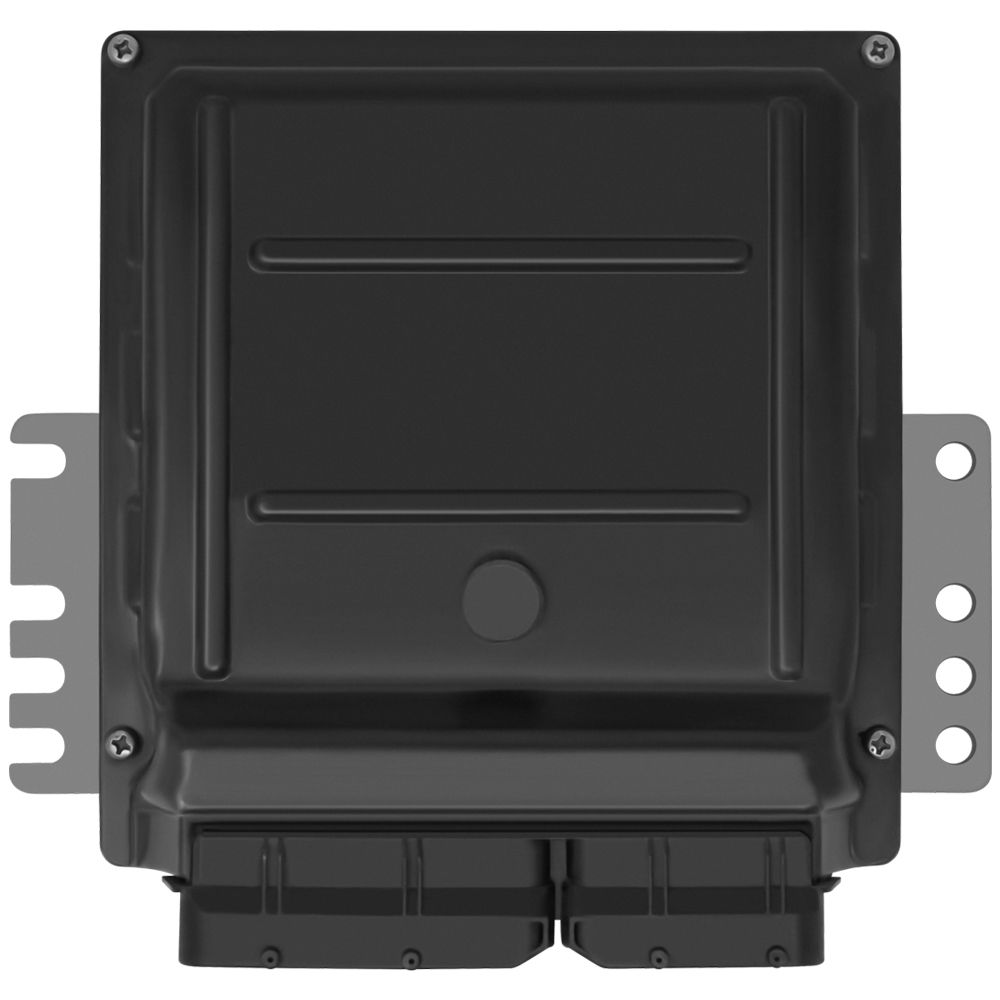
Flagship One stocks a refurbished, VIN-programmed PCM for the 2010 Nissan Titan with a lifetime warranty, free shipping and no core charge. The full Nissan Titan module lineup covers other engine configurations as well.
The 2010 Nissan Titan’s ECM is a critical component that, when functioning properly, ensures smooth engine performance and reliable starts. If you’re dealing with stalling, no-start conditions, or persistent trouble codes, the ECM may be the root cause. Replacing it involves careful installation and programming, but with the right approach, your Titan can regain its dependability. Whether you opt for a DIY fix or professional help, addressing ECM issues promptly keeps your vehicle running as it should.