
Last updated on August 25th, 2026 at 12:42 pm
The Powertrain Control Module and Engine Control Module in your 2010 Lincoln MKX manage engine timing, fuel delivery, transmission shifting, and emissions systems. Internal processor failures often stem from voltage spikes, moisture intrusion, or thermal stress.
If your 2010 Lincoln MKX has developed starting problems, runs poorly, or stores trouble codes that refuse to clear, the Powertrain Control Module or Engine Control Module may be the culprit. These vehicle-specific computers govern critical functions from idle speed to transmission shift points, and when they fail, your luxury crossover can become undrivable. The good news is that replacement is straightforward for a competent technician, and remanufactured units from reputable suppliers offer a cost-effective alternative to dealer pricing. This guide walks you through what these modules do, where they live, the labor involved, and what symptoms to watch for before they leave you stranded. You will learn whether replacement is necessary, what the procedure involves, and how to protect your investment going forward.
The 2010 Lincoln MKX relies on a single integrated control module—often called the PCM—that handles both engine and transmission management functions. This unit receives input from dozens of sensors throughout the powertrain and uses that data to calculate fuel injection timing, ignition advance, variable valve timing, torque converter lockup, and shift scheduling. The Engine Control Module portion focuses on emissions control, idle air control, and catalyst efficiency monitoring, while the transmission portion translates driver demand into shift firmness and line-pressure adjustments. Why does this matter? When the internal processor experiences a thermal shutdown or memory corruption, the module may enter a limp-home mode or refuse to communicate with diagnostic tools. In this generation of Lincoln crossover, the module is mounted in the engine bay on a bracket near the firewall, making replacement accessible but requiring careful connector handling. Replacement engine computers for the MKX must be matched to the specific transmission calibration and fuel strategy originally installed at the factory.
Flagship One keeps Lincoln MKX replacement engine computers in stock for exactly this failure pattern.
2010 Lincoln MKX
OEM programmed ECM for your 2010 Lincoln MKX — plug & play, no dealer visit.
Free shipping · Lifetime warranty
| Operation | Configuration | Book Time |
|---|---|---|
| Powertrain Control Module Relearn | All configurations | 0.5 hr |
| Powertrain Control Module R&R | All configurations | 0.4 hr |
| Engine Control Module R&R | All configurations | 0.4 hr |
| Engine Control Module Relearn | All configurations | 0.5 hr |
After installing a replacement PCM or ECM in your 2010 Lincoln MKX, the factory procedure requires a relearn procedure to synchronize the new module with your vehicle’s unique sensor calibrations and transmission characteristics. This procedure initializes the idle air control, learns the throttle position sensor endpoints, and establishes communication with the transmission control module. The book time for this relearn procedure is 0.5 hours per module. However, when you purchase a VIN-programmed replacement unit from Flagship One, the module arrives pre-configured with your specific vehicle identification number already burned into its memory. This means many of the initial programming steps that a dealer would perform are already completed before the unit ever reaches your shop. The result is a faster installation with less diagnostic time spent on security code synchronization, though the relearn procedure for sensor adaptation is still recommended to ensure optimal drivability and fuel economy.
Every VIN-programmed replacement unit from Flagship One arrives with these steps already completed.
When the PCM or ECM in your 2010 Lincoln MKX begins to fail, the symptoms often manifest in ways that mimic other common problems, which can make diagnosis challenging. A no-start condition where the engine cranking sounds normal but the vehicle refuses to run frequently points to a module that has lost its calibration or internal communication. Stalling shortly after startup, especially under idle or light load, can occur when the module fails to maintain proper idle air control or fuel enrichment during warmup. Misfire codes that appear across multiple cylinders—such as P0300 random/multiple cylinder misfire—may indicate the module is not properly timing injection events. Perhaps most telling is when a scan tool cannot establish communication with the vehicle, showing no connection to the PCM or ECM; this often confirms a module-internal failure rather than a simple wiring issue. Transmission shifting may become harsh, delayed, or the vehicle may become stuck in third gear as the module loses its ability to control line pressure and shift schedules. Code P0606, which is documented for this vehicle, indicates a processor communication fault within the control module itself, essentially telling you the brain has failed to maintain its internal housekeeping.
The 2010 Lincoln MKX can store module-internal trouble codes that point directly to PCM or ECM hardware failures rather than external sensor issues. These codes are generated by the module’s internal self-diagnostic routines and indicate specific failure modes within the processor or memory systems.
| Code | Meaning | Full Guide |
|---|---|---|
| P0606 | Module processor failure | Full P0606 guide → |
A used PCM may physically fit, but it will likely be locked to the previous vehicle’s VIN and security system. Without dealer-level programming tools, it cannot be reprogrammed for your vehicle. Additionally, you have no way of knowing the internal condition or how many miles it has endured.
Driving with a compromised PCM is not recommended. The vehicle may enter limp-home mode, leaving you with severely reduced power and harsh shifting. In worst cases, the engine may not start at all, leaving you stranded. Additionally, continuing to drive with active faults can damage catalytic converters or other emissions components.
If your scan tool cannot communicate with the module, or if you have code P0606 stored alongside multiple unrelated sensor codes, the module itself is likely faulty. A qualified technician can perform pinpoint tests on power and ground circuits to rule out wiring issues before condemning the module.
The physical replacement is straightforward using standard hand tools. However, a scan tool capable of performing the relearn procedure is necessary after installation. Basic diagnostic equipment can verify communication and clear any pending codes once the new module has adapted.
The vehicle will likely run, but idle may be rough, throttle response may feel delayed, and fuel economy may suffer. The module needs to learn your specific sensor characteristics and transmission clutch apply points to deliver the smooth operation the MKX is known for.
When your 2010 Lincoln MKX requires a replacement control module, you have two primary paths: a genuine dealer-ordered unit at significantly higher cost, or a remanufactured unit from a specialist supplier. Remanufactured units are rebuilt with upgraded internal components to address common failure modes and are tested to meet or exceed original specifications. The key difference between options lies in programming convenience—units that arrive pre-programmed with your VIN eliminate the need for dealer visits or aftermarket programming fees. Consider your budget, timeline, and whether you have access to a scan tool for the relearn procedure when making your decision.
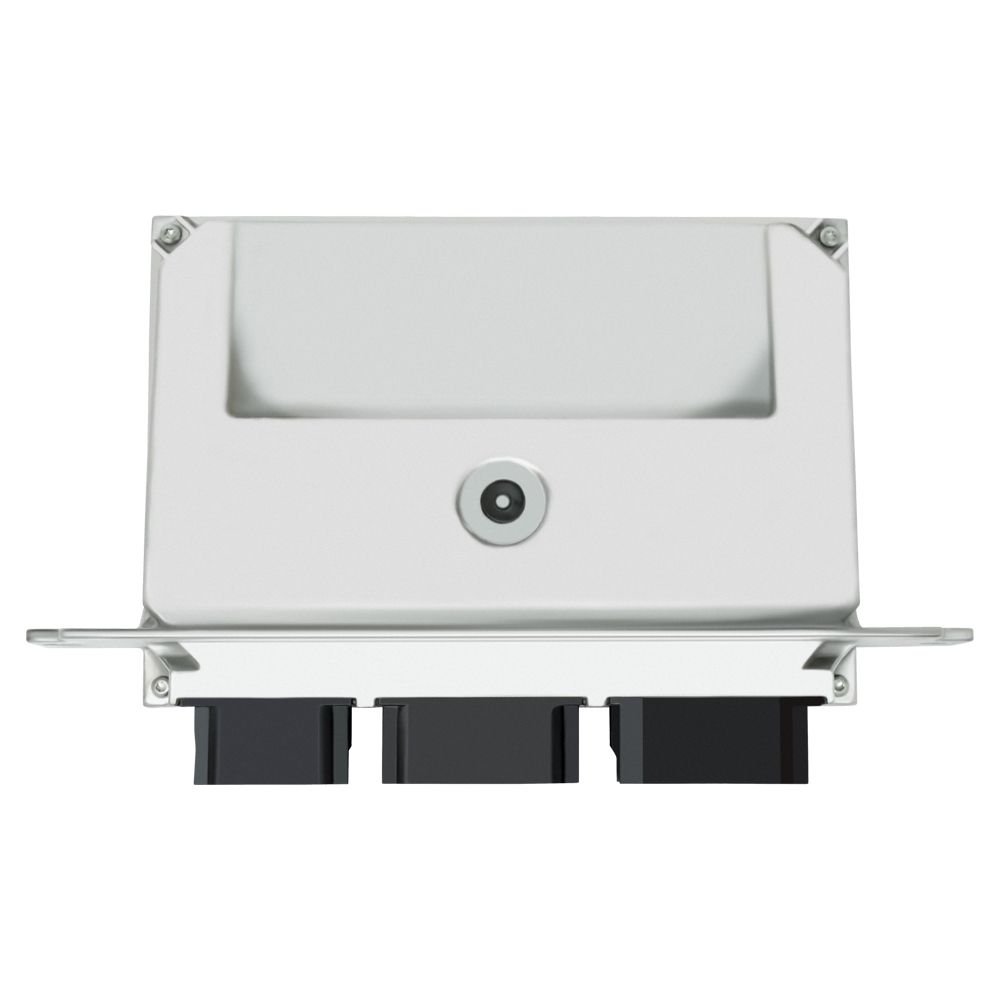
Flagship One stocks a refurbished, VIN-programmed PCM for the 2010 Lincoln MKX with a lifetime warranty, free shipping and no core charge. The full Lincoln MKX module lineup covers other engine configurations as well.
The 2010 Lincoln MKX is a capable luxury crossover, but its依赖 on sophisticated electronics means the PCM or ECM must be in proper working order for reliable operation. Whether you are diagnosing a no-start condition, clearing code P0606, or planning a preventive replacement, understanding the module’s role and the labor involved helps you make informed decisions. Protect your investment by addressing electrical issues promptly and maintaining clean connections throughout the engine compartment.