
Last updated on August 25th, 2026 at 12:59 pm
The Powertrain Control Module in your 2010 Audi TTS serves as the central nervous system for engine management. This computer controls fuel delivery, ignition timing, emissions systems, and turbocharger operation. Failure typically stems from heat exposure, voltage irregularities, or internal component breakdown, manifesting as drivability problems or no-start conditions.
Discovering that your 2010 Audi TTS has developed an engine computer issue represents one of the more complex diagnostics challenges any vehicle owner can face. The powertrain control module serves as the electronic brain managing your 2.0L turbocharged engine, and when this component begins to fail, the resulting symptoms can range from subtle drivability concerns to complete vehicle disablement. Understanding what this module does, where it resides, and what replacement involves empowers you to make informed decisions about repair options. This guide covers the operational role of the PCM in your TTS, common failure indicators, service procedures, and the practical advantages of choosing a pre-programmed replacement unit from Flagship One. Whether you are currently experiencing symptoms or preparing for proactive maintenance, the following information provides the technical foundation you need to navigate this repair intelligently.
The Powertrain Control Module in your 2010 Audi TTS functions as the primary electronic controller for your turbocharged 2.0L powerplant. This sophisticated computer processes data from dozens of sensors throughout the engine bay, making real-time adjustments to fuel injection quantity, ignition spark advance, and turbo boost pressure to maintain optimal performance under all driving conditions. Your TTS PCM also manages communication with other control units via the vehicle’s CAN bus network, including the S tronic dual-clutch transmission, anti-lock braking system, and electronic stability program. The module receives input from the mass airflow sensor, intake air temperature sensor, coolant temperature sensor, oxygen sensors, throttle position sensor, and numerous additional sources to calculate precise operating parameters. For replacement engine computers for the 2010 Audi TTS, these calculations include fuel trims, variable valve timing activation, and wastegate solenoid control for the IHI turbocharger. The PCM continuously monitors emissions control components, triggering the catalytic converter efficiency and oxygen sensor heaters when necessary to maintain compliance with federal standards. Operating within the severe thermal environment of the engine bay, the module contains protective circuitry designed to handle voltage transients, though heat cycling over years of service gradually degrades internal semiconductor components. When internal processing errors occur within the module’s memory architecture, your TTS may exhibit intermittent faults that defy consistent diagnosis, suggesting the need for replacement rather than continued repair attempts of the original unit.
Flagship One keeps Audi TTS replacement engine computers in stock for exactly this failure pattern.
2010 Audi TTS
OEM programmed ECM for your 2010 Audi TTS — plug & play, no dealer visit.
Free shipping · Lifetime warranty
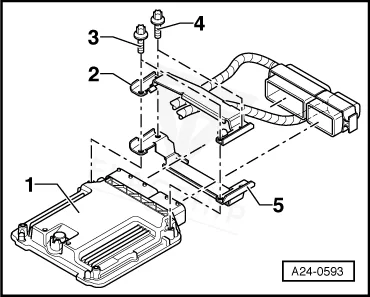
The Powertrain Control Module in your 2010 Audi TTS mounts in a location accessible from the driver’s side of the vehicle, typically positioned near the firewall and lower windshield area. Accessing the unit requires removal of the cowl panel assembly and potentially the wiper motor mechanism to create sufficient working clearance for module extraction. The physical replacement operation carries a book time of 1.3 hours according to service labor standards. Once the module is removed from its mounting bracket, disconnection of the electrical harness requires careful release of the connector locks to prevent damage to the wiring. Installation of the new or replacement unit involves securing the module to the factory mounting location, reconnecting the electrical harness with proper connector seating, and reassembling the cowl components in reverse order of removal. Torque specifications for mounting fasteners should be followed precisely to prevent vibration-induced damage to the sensitive electronic housing. After physical installation, your TTS requires initialization procedures before normal operation resumes. The engine control module relearn process takes approximately 0.5 hours, while the powertrain control module requires an additional 0.5 hours for adaptation procedures. These procedures synchronize your replacement module with the specific characteristics of your vehicle’s engine and related systems.
| Operation | Configuration | Book Time |
|---|---|---|
| Powertrain Control Module R&R | TT Quattro | 1.3 hr |
| Powertrain Control Module R&R | TTS Quattro | 1.3 hr |
| Powertrain Control Module Relearn | TT Quattro | 0.5 hr |
| Powertrain Control Module Relearn | TTS Quattro | 0.5 hr |
| Engine Control Module Relearn | TT Quattro | 0.5 hr |
| Engine Control Module Relearn | TTS Quattro | 0.5 hr |
| Engine Control Module Reset | TT Quattro | 0.3 hr |
| Engine Control Module Reset | TTS Quattro | 0.3 hr |
After completing the physical replacement of your Powertrain Control Module in the 2010 Audi TTS, the factory service procedure requires specific initialization steps using diagnostic equipment capable of interfacing with Audi’s onboard systems. The engine control module reset procedure, requiring approximately 0.3 hours of labor, establishes baseline values for fuel injection, throttle valve adaptation, and emissions-related functions. Your technician must then perform the engine control module relearn procedure at 0.5 hours book time, followed by the powertrain control module relearn at another 0.5 hours. These steps calibrate your replacement module to your specific TTS engine, accounting for minor variations in component tolerances. However, units from Flagship One arrive pre-configured with your vehicle identification number already programmed into the module’s memory. This means the adaptation and initialization procedures your technician performs will recognize your TTS as the original vehicle, eliminating the need for dealer-only programming that would otherwise be required when a fresh module lacks any prior configuration. Your installer can proceed directly to the standard relearn procedures rather than sourcing programming through official channels.
Every VIN-programmed replacement unit from Flagship One arrives with these steps already completed.
When the Powertrain Control Module in your 2010 Audi TTS begins to malfunction, you may notice several distinct warning signs indicating electronic rather than mechanical problems. Hard starting or complete no-start conditions often develop when the module fails to deliver correct spark timing commands to the ignition system or proper fuel delivery signals to the injectors. Intermittent stalling while driving, particularly at low speeds or during deceleration, suggests the module has stopped processing sensor data reliably. Illumination of the check engine light, sometimes accompanied by reduced turbo boost pressure or noticeably diminished performance, frequently accompanies PCM faults. Your TTS may also exhibit erratic shifting behavior if the transmission control portion of the module loses communication with the dual-clutch gearbox. In some cases, the scan tool may show no communication with the engine control system, preventing standard diagnostics until the module issue is resolved. Specific trouble codes such as Internal Memory Fault indicate internal processor or memory corruption within the module itself, a condition that typically requires replacement rather than repair. Multiple unrelated diagnostic trouble codes appearing simultaneously across different subsystems often point toward module-level failure rather than individual sensor problems.
Sensor failures typically trigger specific trouble codes pointing to that individual component, while PCM issues often produce multiple unrelated codes across different systems. A module internal code such as P0600-series trouble indicates problems within the computer itself rather than external sensors.
A used module from another vehicle would require VIN programming at a dealership or authorized facility to function properly. Without proper programming, your TTS would not start, and attempting to drive with an unprogrammed module could cause drivability problems.
Once your technician completes the relearn procedures, your 2010 Audi TTS should perform identically to pre-failure conditions. The adaptation procedures calibrate the replacement module to your specific engine’s characteristics, restoring factory drive quality.
If your original module failed due to voltage spikes, poor grounds, or wiring issues, a replacement module could suffer the same fate prematurely. Professional diagnosis should verify electrical system health before installing new components.
Physical removal and installation requires approximately 1.3 hours of labor, followed by 0.5 hours for engine control module relearn, 0.5 hours for powertrain control module relearn, and 0.3 hours for engine control module reset, totaling the labor operations specified in standard service times.
When your 2010 Audi TTS requires Powertrain Control Module service, you face a choice between repairing the original unit or sourcing a replacement. Repair carries uncertainty—you cannot always verify whether internal damage extends beyond what diagnostic equipment reveals. Replacement with a professionally rebuilt unit provides known-good condition with factory-grade programming already completed. Flagship One specializes in pre-programmed replacement modules for Audi vehicles, shipping units configured specifically for your TTS identification. This approach eliminates the inconvenience of arranging dealer programming after physical installation and typically costs less than original equipment pricing.
Flagship One stocks a refurbished, VIN-programmed PCM for the 2010 Audi TTS with a lifetime warranty, free shipping and no core charge. The full Audi TTS module lineup covers other engine configurations as well.
The Powertrain Control Module in your 2010 Audi TTS represents the electronic command center governing your turbocharged 2.0L engine’s operation. Understanding its role, recognizing failure symptoms, and knowing what replacement involves positions you to handle this repair confidently. Flagship One provides professionally programmed replacement modules backed by experienced technical support, ensuring your TTS returns to reliable service without the complications of unprogrammed parts or repeated diagnostic attempts.