
Last updated on August 25th, 2026 at 01:22 pm
In the 2009 Hyundai Azera, the Powertrain Control Module and Engine Control Module manage engine timing, fuel delivery, and transmission coordination. A failure typically disrupts sensor communication, leading to erratic idle, starting difficulty, or loss of power, and may trigger the check‑engine light with internal codes such as P0606.
When a 2009 Hyundai Azera begins to exhibit hard‑starting behavior, rough idle, or an illuminated malfunction indicator lamp, the underlying cause often traces back to the vehicle’s electronic control units. The Powertrain Control Module (PCM) and Engine Control Module (ECM) act as the central brains that interpret sensor data and command the engine and transmission to operate smoothly. Understanding how these modules function, what symptoms signal a problem, and the steps required to replace and program them can help you decide whether to pursue a repair or a refurbished replacement. This guide walks you through the module’s role in this specific model, typical failure signs, the factory‑approved service bulletin, and the practical labor involved, so you can make an informed decision for your Azera.
The 2009 Hyundai Azera relies on its PCM and ECM to translate sensor inputs into precise fuel injection timing, ignition sequencing, and transmission shift commands, ensuring optimal performance and emissions compliance. These modules continuously monitor engine speed, coolant temperature, throttle position, and a host of other parameters, adjusting output in real time to keep the powertrain operating within design limits. When the control logic encounters an unexpected condition, it may set internal diagnostic codes and alter operation to protect the engine. Because the Azera’s powertrain integrates both gasoline engine and automatic transmission, the PCM also coordinates shift timing and torque converter lockup, making its proper function critical for drivability. Access to reliable replacement parts, such as 2009 Hyundai Azera engine control module, helps maintain the vehicle’s intended performance characteristics.
2009 Hyundai Azera Powertrain and
OEM programmed replacements — plug & play, no dealer visit.
Find yours by year, make & model →
Free shipping · Lifetime warranty
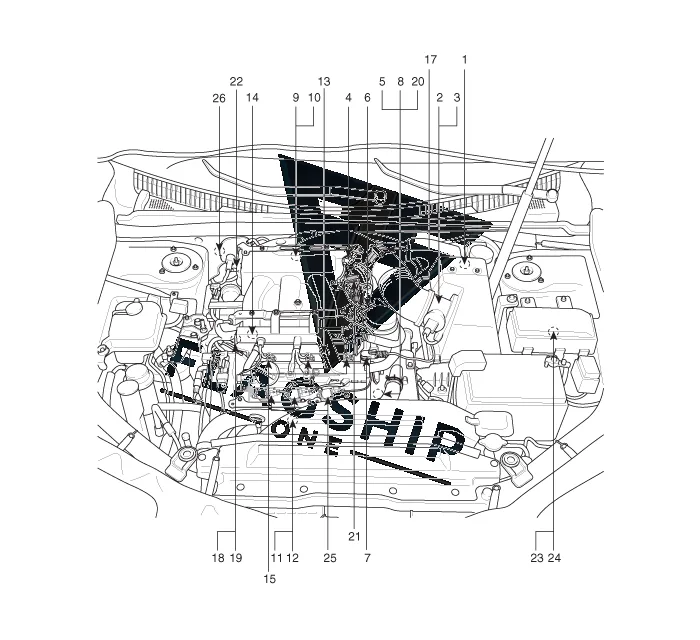
In the 2009 Hyundai Azera, the PCM and ECM are mounted within the engine compartment, typically secured to the firewall or near the intake manifold. Removal generally follows the same sequence for both units: disconnect the battery, unplug the electrical connectors, and unbolt the module using standard tools. The book labor time for removing and reinstalling each module is listed as 0.5 hours, reflecting the relatively straightforward access. After the new or refurbished unit is positioned and fastened, the same connectors are reattached, and the battery is reconnected. No specific torque values are provided, so standard hand‑tightening to ensure a secure fit is appropriate. Once the hardware is in place, the next step involves the required relearn procedure to synchronize the module with the vehicle’s existing sensors and actuators.
| Operation | Configuration | Book Time |
|---|---|---|
| Powertrain Control Module R&R | All configurations | 0.5 hr |
| Engine Control Module R&R | All configurations | 0.5 hr |
| Engine Control Module Relearn | All configurations | 0.5 hr |
After installing a new PCM or ECM in the 2009 Hyundai Azera, the factory procedure calls for an Engine Control Module relearn that takes about 0.5 hours, ensuring the unit properly calibrates to the engine’s idle and fuel trim settings. Flagship One units arrive pre‑loaded with the vehicle‑specific calibration, so the a VIN-programmed replacement unit eliminates the need for additional programming steps beyond the standard relearn, streamlining the installation process and reducing the chance of post‑install errors.
A failing PCM or ECM in a 2009 Hyundai Azera may manifest as a hard start when the engine is cold, rough idle that fluctuates with load, or a persistent check‑engine light that refuses to clear. Drivers often notice reduced power under acceleration, occasional stalling at idle, or erratic transmission shifting if the PCM loses communication with the transmission control unit. In some cases, the scan tool may report an internal fault such as P0606 sensor circuit fault, indicating that the module’s own circuitry is compromised. These symptoms typically worsen under load or temperature extremes, and they may be accompanied by additional codes that point to sensor mismatches or loss of communication with critical engine components.
The following internal diagnostic codes are documented for the 2009 Hyundai Azera and can help pinpoint module‑related issues:
| Code | Meaning | Full Guide |
|---|---|---|
| P0606 | Module processor failure | Full P0606 guide → |
A relevant service bulletin, 10‑FL‑001, addresses ECM software updates that resolve hard‑start conditions and rough idle, particularly when the MIL illuminates with code P161B. Applying the update may correct the symptom set without hardware replacement.
| Bulletin | Subject | What It Addresses |
|---|---|---|
| — | TSB • Fuel System • [10-FL-001] ECM UPDATE – MIL ON DTC P161B – HARD START/ROUGH IDLE COLD | — |
A rough idle often points to inconsistent fuel delivery or ignition timing, which can be caused by a malfunctioning ECM, a dirty throttle body, or a vacuum leak. Checking the ECM and performing the relearn procedure may resolve the issue.
The PCM is accessible without major disassembly, and the labor time is listed as 0.5 hours. However, proper safety precautions, correct connector handling, and the required relearn step are essential for a successful replacement.
Yes, the bulletin specifically addresses hard‑start and rough‑idle conditions linked to an ECM software issue. Updating the ECM per the bulletin may eliminate the symptoms without hardware replacement.
Code P0606 indicates a fault inside the control module’s circuitry, suggesting that the PCM or ECM may need replacement or reprogramming to restore normal operation.
Flagship One’s VIN‑programmed units come pre‑loaded with the correct calibration, so after the physical install you only need to complete the standard 0.5‑hour ECM relearn, without extra programming.
When the PCM or ECM in your 2009 Hyundai Azera shows signs of failure, you can either have the original unit repaired or opt for a refurbished replacement that matches factory specifications. Both approaches require the same removal time and a brief relearn procedure, but a pre‑programmed unit may simplify the post‑install steps. Evaluating the condition of the existing module and your comfort with the reinstall process will guide your decision.
Flagship One stocks a refurbished, VIN-programmed PCM for the 2009 Hyundai Azera with a lifetime warranty, free shipping and no core charge. The full Hyundai Azera module lineup covers other engine configurations as well.
The 2009 Hyundai Azera’s powertrain and engine control modules are vital to smooth operation, and addressing failures promptly can keep the vehicle reliable. Whether you choose repair or a VIN‑programmed replacement, the process remains straightforward, and the outcome restores the driving experience you expect.