
Last updated on August 25th, 2026 at 01:22 pm
The Engine Control Module (ECM) in your 2010 Hyundai Azera manages fuel delivery, ignition timing, and emissions systems. Failure may cause erratic engine behavior, poor performance, or stored trouble codes related to internal processor faults.
If your 2010 Hyundai Azera struggles with cold starts, rough idling, or an illuminated check engine light, the Engine Control Module (ECM) may be at fault. This component acts as the brain of your vehicle’s powertrain, regulating fuel injection, ignition timing, and emissions controls. When it malfunctions, you may notice poor drivability, reduced fuel efficiency, or stored trouble codes. Understanding the ECM’s role, replacement process, and programming requirements can help you address issues efficiently. This guide covers what the ECM does, where it’s located, common symptoms of failure, and steps to restore proper function without unnecessary delays.
In your 2010 Hyundai Azera, the Engine Control Module (ECM) processes data from sensors to optimize engine performance and emissions. It adjusts fuel delivery, ignition timing, and idle speed based on driving conditions. A faulty ECM may disrupt these functions, leading to hard starts, stalling, or poor acceleration. Replacing it involves installing one of the replacement engine computers for the Azera, which must be programmed to match your vehicle’s specifications. Without proper calibration, the new module may not communicate effectively with other systems, causing further drivability issues.
2010 Hyundai Azera
OEM programmed ECM for your 2010 Hyundai Azera — plug & play, no dealer visit.
Free shipping · Lifetime warranty
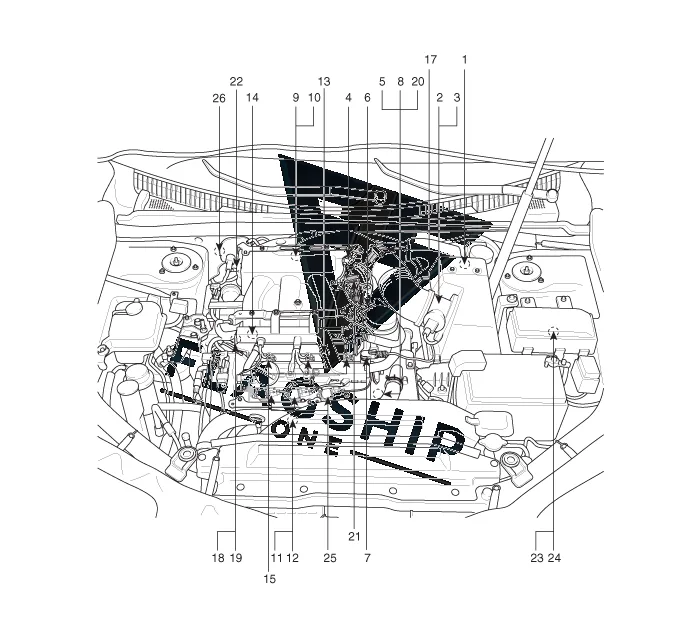
The ECM in your 2010 Hyundai Azera is typically mounted in the engine bay for easy access. Replacement involves disconnecting the battery, removing the electrical connector, and unbolting the module from its bracket. Labor time for removal and reinstallation is listed at 0.5 hours. After installation, the module must be secured properly to avoid vibration damage. While the physical swap is straightforward, programming is required to ensure the new ECM synchronizes with your vehicle’s systems.
| Operation | Configuration | Book Time |
|---|---|---|
| Powertrain Control Module R&R | All configurations | 0.5 hr |
| Engine Control Module R&R | All configurations | 0.5 hr |
| Engine Control Module Relearn | All configurations | 0.5 hr |
After installing a new ECM in your 2010 Hyundai Azera, the factory procedure requires a 0.5-hour relearn process to synchronize the module with the vehicle’s sensors and transmission. This step ensures proper communication between systems. However, a VIN-programmed replacement unit from Flagship One arrives pre-configured, eliminating the need for additional programming. This saves time and reduces the risk of calibration errors, allowing your vehicle to return to normal operation quickly.
A failing ECM in your 2010 Hyundai Azera may cause a range of symptoms, including hard starting, rough idle, or stalling. You might also notice poor acceleration, reduced fuel economy, or an illuminated check engine light. In some cases, the vehicle may enter a fail-safe mode, limiting engine power. If the module loses communication with the scan tool, diagnosing other issues becomes difficult. A common trouble code associated with ECM failure is internal processor fault, which indicates the module’s self-check has detected an error.
Your 2010 Hyundai Azera may store specific trouble codes when the ECM experiences internal faults. These codes help pinpoint the issue and guide repairs.
| Code | Meaning | Full Guide |
|---|---|---|
| P0606 | Module processor failure | Full P0606 guide → |
Hyundai issued a service bulletin (10-FL-001) addressing ECM-related issues in the 2010 Azera. The bulletin targets hard starts, rough idle when cold, and an illuminated check engine light with code P161B. The recommended solution involves updating the ECM software to resolve these symptoms and prevent further drivability concerns.
| Bulletin | Subject | What It Addresses |
|---|---|---|
| — | TSB • Fuel System • [10-FL-001] ECM UPDATE – MIL ON DTC P161B – HARD START/ROUGH IDLE COLD | — |
Cold-weather hard starts in your Azera may stem from a faulty ECM, particularly if accompanied by rough idle or code P161B. The module may struggle to regulate fuel delivery or ignition timing in low temperatures. An ECM update or replacement often resolves this issue.
While your Azera may still run with a P0606 code, the ECM’s internal fault can cause erratic behavior, including stalling or poor acceleration. Driving with this code risks further drivability issues or potential damage to other components. Addressing it promptly is recommended.
Signs of a failing ECM include hard starts, rough idle, stalling, or stored trouble codes like P0606 or P161B. If these symptoms persist after basic diagnostics, the ECM may require replacement. A scan tool can confirm communication with the module to rule out other issues.
If your 2010 Hyundai Azera exhibits ECM-related symptoms, you have options for repair. A factory ECM replacement involves programming and relearn procedures, which can add time and complexity. Alternatively, a pre-programmed replacement unit ensures immediate compatibility, reducing downtime and potential calibration errors. Consider your vehicle’s needs and the benefits of a ready-to-install solution.
Flagship One stocks a refurbished, VIN-programmed PCM for the 2010 Hyundai Azera with a lifetime warranty, free shipping and no core charge. The full Hyundai Azera module lineup covers other engine configurations as well.
The ECM in your 2010 Hyundai Azera plays a critical role in engine performance and drivability. Addressing issues like hard starts, rough idle, or stored codes promptly can prevent further complications. Whether you opt for an update, repair, or replacement, ensuring the module functions correctly will keep your Azera running smoothly.