
Last updated on August 25th, 2026 at 02:25 pm
The engine control module (ECM) in your 2009 Chevrolet Impala manages fuel delivery, ignition timing, and emissions systems. Failures may cause rough running, no-start conditions, or stored trouble codes related to internal memory or sensor circuits.
If your 2009 Chevrolet Impala is experiencing unexplained stalling, rough idle, or warning lights, the engine control module (ECM) may be the culprit. This critical component oversees engine performance, fuel efficiency, and emissions compliance. When it fails, symptoms can range from subtle drivability issues to complete no-start conditions. Understanding the ECM’s role, location, and replacement process helps you make informed decisions about repairs. This guide covers what the ECM does, how to recognize failures, and what to expect during replacement—including why choosing a pre-programmed unit can simplify the process.
The engine control module in your 2009 Chevrolet Impala acts as the brain of the engine, continuously adjusting fuel injection, ignition timing, and emissions controls based on sensor inputs. Without a functioning ECM, the engine may run poorly or fail to start at all. This module also stores adaptive learning data, which helps optimize performance over time. If it malfunctions, you may notice symptoms like hesitation, poor fuel economy, or stored trouble codes. When replacement becomes necessary, replacement engine computers for the Impala are available to restore proper operation without the need for extensive reprogramming.
In the 2009 Chevrolet Impala, the ECM is positioned next to the air cleaner assembly, making it relatively accessible for replacement. The factory procedure involves disconnecting the battery, removing the air cleaner housing, and unbolting the module from its mount. Labor time for removing and reinstalling the ECM is typically 1.1 hours. After installation, a relearn procedure of 0.5 hours is often required to synchronize the module with the vehicle’s systems. No specialized tools are needed beyond basic hand tools, but care should be taken to avoid damaging connectors during removal.
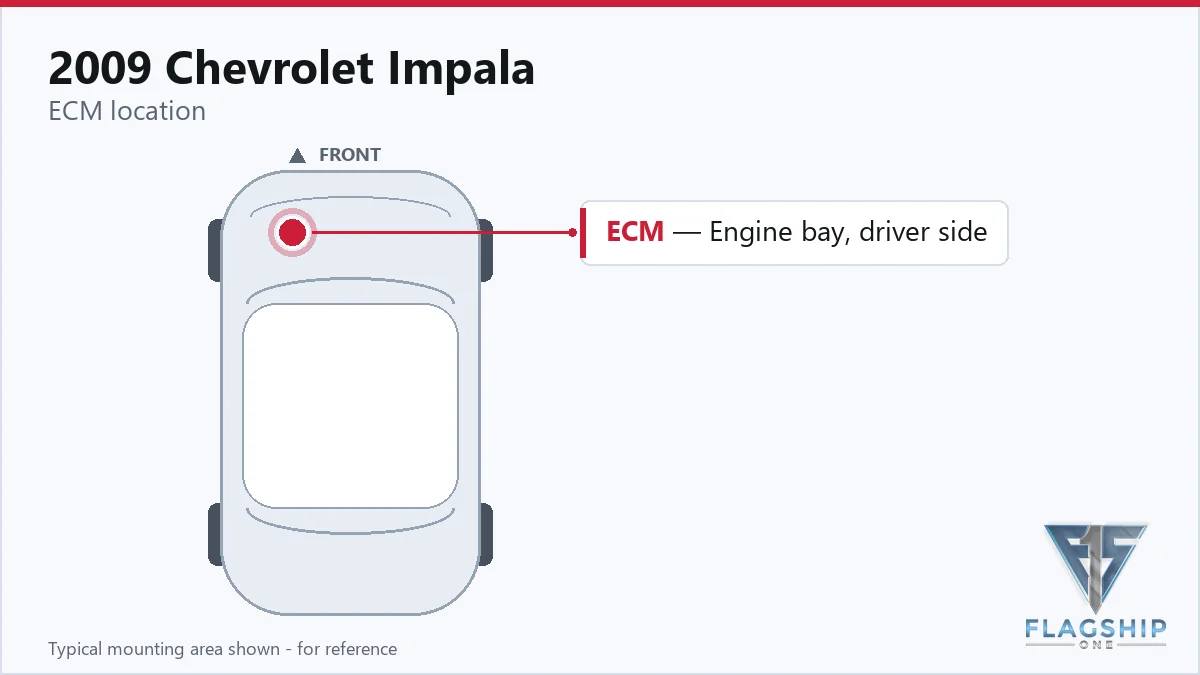
Work with the ignition off, and treat the module as static-sensitive: avoid touching the connector pins at any point.
| Operation | Configuration | Book Time |
|---|---|---|
| Engine Control Module R&R | All configurations | 1.1 hr |
| Engine Control Module Relearn | All configurations | 0.5 hr |
| Engine Control Module Reset | All configurations | 0.3 hr |
| Powertrain Control Module R&R | 3.5L | 1.1 hr |
| Powertrain Control Module R&R | 3.9L | 1.1 hr |
| Powertrain Control Module R&R | 5.3L | 1.1 hr |
| Powertrain Control Module Relearn | All configurations | 0.5 hr |
2009 Chevrolet Impala
OEM programmed ECM for your 2009 Chevrolet Impala — plug & play, no dealer visit.
Free shipping · Lifetime warranty
Before removing the ECM in your 2009 Chevrolet Impala, the factory procedure requires using a scan tool to capture the module’s data. This step preserves critical vehicle settings, such as fuel trims and adaptive learning values. After installing a new module, a relearn process of 0.5 hours is typically needed to ensure proper communication with the engine and transmission. However, a VIN-programmed replacement unit arrives ready to install, eliminating the need for post-install programming and reducing downtime.
A failing ECM in your 2009 Chevrolet Impala may cause a variety of symptoms, including intermittent stalling, rough idle, or a no-start condition. You might also notice poor fuel economy, hesitation under acceleration, or warning lights on the dashboard. In some cases, the vehicle may enter a reduced-power mode to prevent further damage. Internal module faults often trigger trouble codes like an internal control module memory error, which can help diagnose the issue. If your scan tool fails to communicate with the ECM, that may also indicate a module failure.
The 2009 Chevrolet Impala’s ECM can generate several internal trouble codes when it malfunctions. These codes typically point to issues with the module’s memory, processor, or communication circuits. Addressing them promptly can prevent further drivability problems.
Factory service bulletin #08288A addresses an ECM-related update for 2009 Chevrolet Impala models. This bulletin involves reprogramming the ECM to resolve a P1400 diagnostic trouble code, which may improve onboard diagnostics and emissions compliance. The update applies to both inventory and customer vehicles and was issued in September 2008. If your Impala is experiencing this code, following the bulletin’s procedure may resolve the issue without module replacement.
| Bulletin | Subject | What It Addresses |
|---|---|---|
| — | Service Update for Inventory and Customer Vehicles-ECM DTC P1400 OBD Enhancement Calibration – | — |
Common signs include stalling, rough idle, or a no-start condition. You may also see warning lights or trouble codes like P0601. If your scan tool cannot communicate with the ECM, that may indicate a module failure. Testing other components first can help rule out simpler issues.
Replacement is possible if you have basic mechanical skills and tools. The ECM is located near the air cleaner assembly, and the process involves disconnecting the battery and removing the module. However, a relearn procedure is typically required afterward, which may require a scan tool.
The relearn procedure ensures the new ECM synchronizes with the vehicle’s sensors and systems. This step helps restore proper engine performance, fuel efficiency, and emissions compliance. Without it, the vehicle may run poorly or trigger additional trouble codes.
If your 2009 Chevrolet Impala’s ECM has failed, you have options for replacement. A new or refurbished module can restore proper engine function, but labor and programming costs can add up. Choosing a VIN-programmed unit simplifies the process by eliminating the need for post-install programming, saving you time and potential frustration.
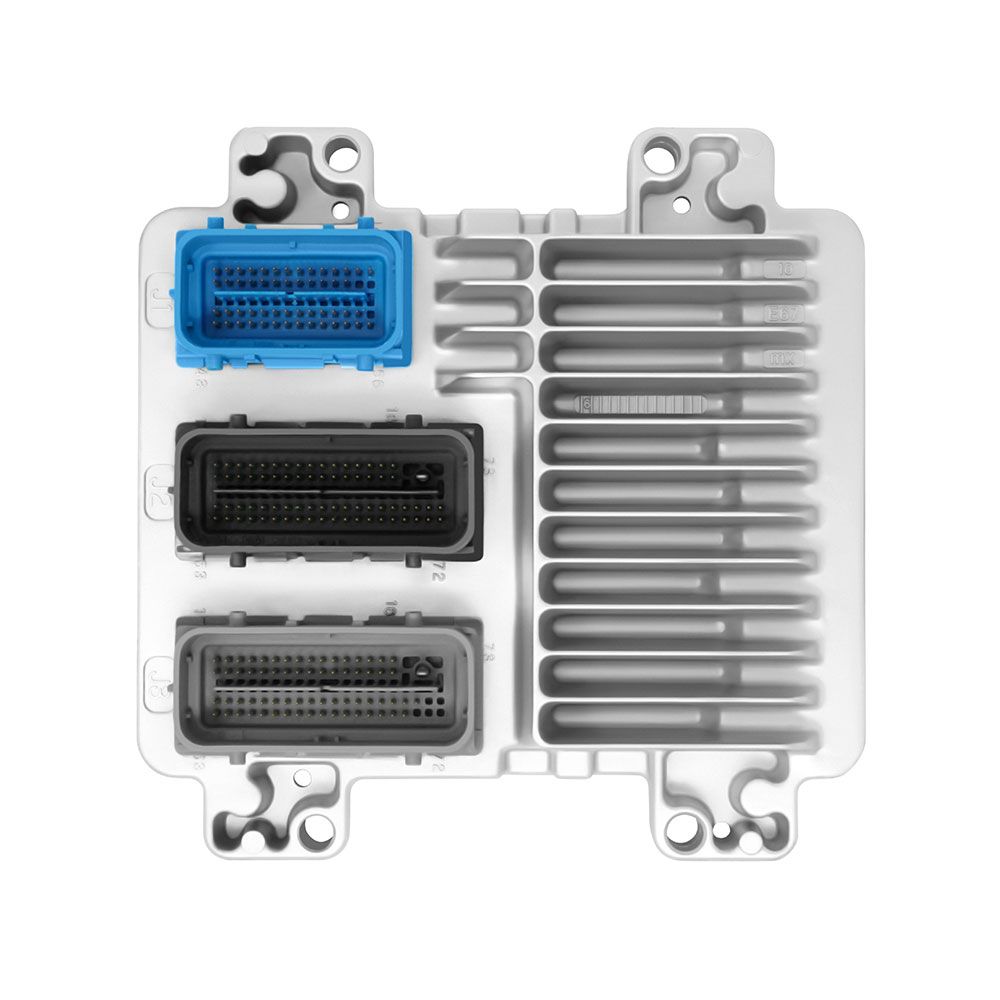
Flagship One stocks a refurbished, VIN-programmed PCM for the 2009 Chevrolet Impala with a lifetime warranty, free shipping and no core charge. The full Chevrolet Impala module lineup covers other engine configurations as well.
The ECM in your 2009 Chevrolet Impala plays a critical role in engine performance and drivability. Recognizing failure symptoms early and understanding the replacement process can help you avoid prolonged downtime. Whether you opt for a repair or a pre-programmed replacement, addressing ECM issues promptly ensures your Impala runs smoothly and reliably.