
Last updated on August 25th, 2026 at 02:26 pm
The engine control module (ECM) in your 2007 Chevrolet Impala manages fuel delivery, ignition timing, and emissions systems. Failures may cause no-start conditions, erratic idling, or internal memory faults that trigger warning lights.
If your 2007 Chevrolet Impala is experiencing unexplained stalling, rough idling, or a check engine light with internal control module codes, the engine control module (ECM) may be failing. This small but critical computer manages fuel injection, ignition timing, and emissions systems, ensuring smooth operation. Replacing it involves more than just swapping parts—factory procedures require careful data handling to avoid drivability issues. Understanding the process, labor times, and programming requirements helps you make an informed decision about repairs or replacements.
The engine control module in your 2007 Chevrolet Impala acts as the brain of the engine, continuously adjusting fuel delivery, ignition timing, and emissions controls based on sensor inputs. Without a properly functioning ECM, your vehicle may struggle to start, run inefficiently, or even fail emissions tests. When replacement becomes necessary, you’ll need replacement engine computers for the Impala that are compatible with your 3.5L engine. These modules must be programmed to match your vehicle’s specific configuration to avoid drivability issues or fault codes after installation.
The ECM in your 2007 Chevrolet Impala is located next to the air cleaner assembly, making it relatively accessible compared to some vehicles. The factory removal procedure involves disconnecting the battery, carefully unplugging the wiring harness, and removing the module from its mounting bracket. Labor time for removal and replacement is typically 1.1 hours, according to book estimates. After installation, the new module must be secured properly to avoid vibration or moisture intrusion, which could lead to premature failure.
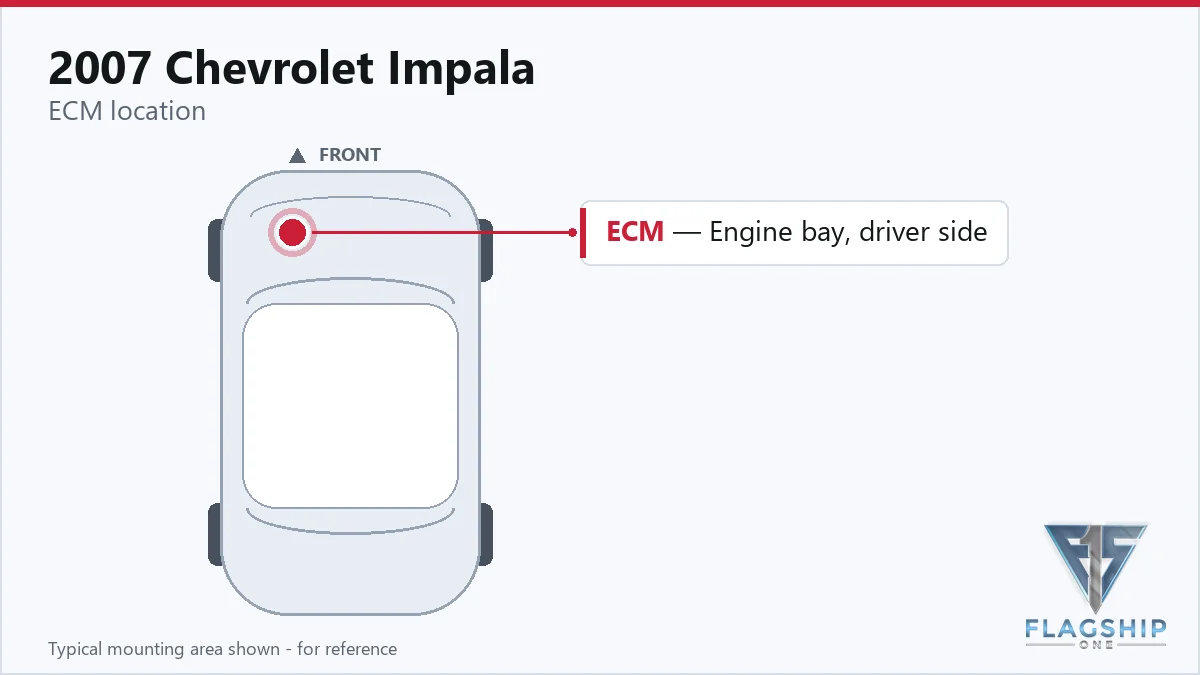
Work with the ignition off, and treat the module as static-sensitive: avoid touching the connector pins at any point.
| Operation | Configuration | Book Time |
|---|---|---|
| Engine Control Module R&R | All configurations | 1.1 hr |
| Engine Control Module Relearn | All configurations | 0.5 hr |
| Engine Control Module Reset | All configurations | 0.3 hr |
| Powertrain Control Module R&R | 3.5L | 1.1 hr |
| Powertrain Control Module R&R | 3.9L | 1.1 hr |
| Powertrain Control Module R&R | 5.3L | 1.1 hr |
| Powertrain Control Module Relearn | All configurations | 0.5 hr |
2007 Chevrolet Impala
OEM programmed ECM for your 2007 Chevrolet Impala — plug & play, no dealer visit.
Free shipping · Lifetime warranty
Before removing the original ECM, the factory procedure requires using a scan tool to capture the module’s data, which must then be restored into the new unit. This step ensures that your 2007 Chevrolet Impala retains its specific fuel maps, transmission settings, and emissions calibrations. However, when you install a VIN-programmed replacement unit, these steps are already completed, saving you time and reducing the risk of programming errors. Always ensure the ignition is off when connecting or disconnecting the ECM to prevent damage to internal components.
A failing ECM in your 2007 Chevrolet Impala may cause a variety of symptoms, including intermittent stalling, rough idling, or a no-start condition. You might also notice poor fuel economy, hesitation during acceleration, or the check engine light illuminating with internal module codes. One common fault is an internal control module memory checksum error, which indicates corruption in the ECM’s memory. If your scan tool fails to communicate with the module, that’s another strong sign of ECM failure. Addressing these issues promptly can prevent further drivability problems.
The 2007 Chevrolet Impala’s ECM may log specific internal trouble codes when it begins to fail. These codes typically indicate memory corruption, communication errors, or sensor reference voltage issues within the module itself.
General Motors issued service bulletin #06162C in September 2007, addressing an update for the Virtual Flex Fuel Sensor (VFFS) reprogramming on inventory and customer vehicles. This bulletin applies to the 2007 Chevrolet Impala and requires an ECM reprogramming to correct potential drivability or fuel system issues related to E85 compatibility. If your vehicle exhibits symptoms tied to flex-fuel operation, this update may resolve them.
| Bulletin | Subject | What It Addresses |
|---|---|---|
| — | Service Update for Inventory and Customer Vehicles-E85 Virtual Flex Fuel Sensor (VFFS) Update-R | — |
While the ECM is accessible, replacement requires capturing and restoring module data using a scan tool. If you’re not comfortable with programming procedures, it’s best to have a professional handle the installation to avoid drivability issues.
The relearn procedure ensures the new ECM synchronizes with your vehicle’s sensors and transmission. Skipping this step may result in poor performance, shifting issues, or fault codes. Factory labor time for this process is typically 0.5 hours.
A used ECM may not be programmed to your vehicle’s specific VIN, which can cause compatibility issues. It’s safer to use a VIN-programmed replacement unit to ensure proper operation and avoid potential fault codes.
If your 2007 Chevrolet Impala is experiencing ECM-related issues, you have options. A repair shop can attempt to reflash or replace the module, but labor and programming costs can add up. Alternatively, a VIN-programmed replacement unit eliminates the need for post-install programming, saving time and reducing the risk of errors. Consider your budget and urgency when deciding between a repair or replacement.
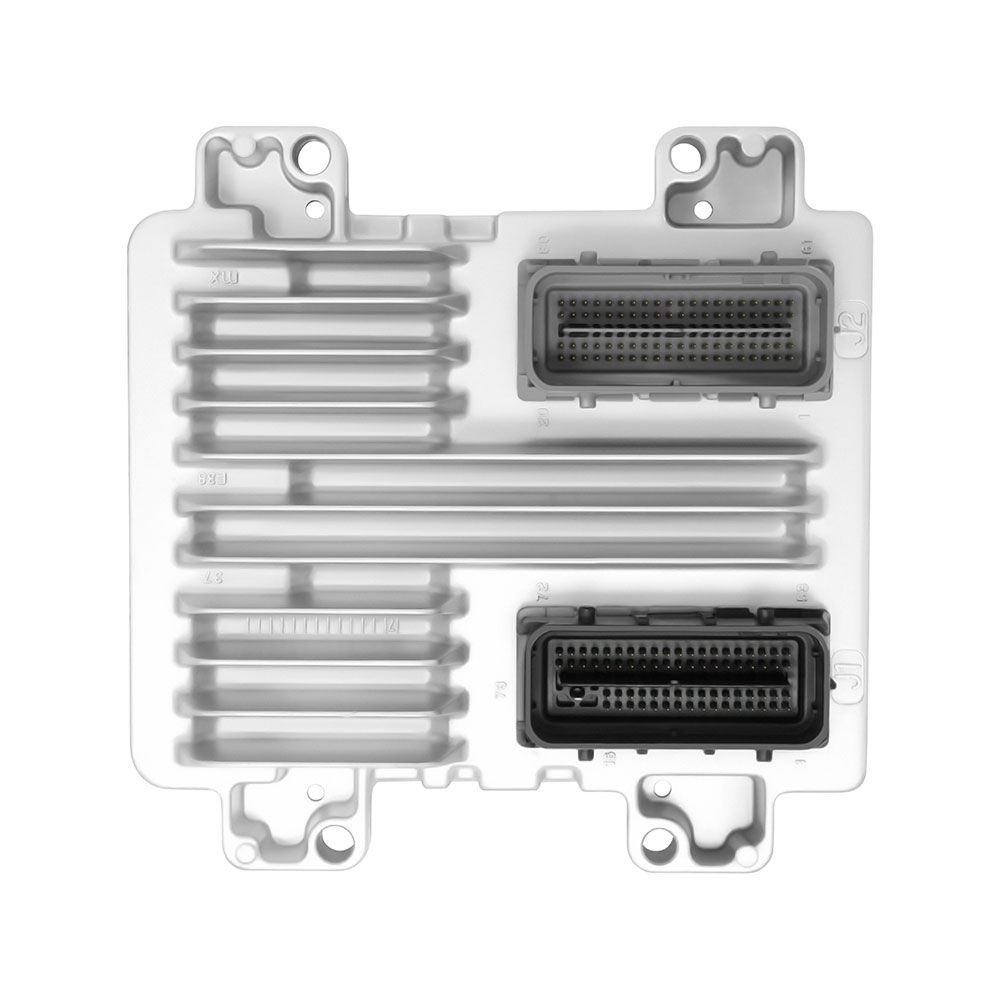
Flagship One stocks a refurbished, VIN-programmed PCM for the 2007 Chevrolet Impala with a lifetime warranty, free shipping and no core charge. The full Chevrolet Impala module lineup covers other engine configurations as well.
The ECM in your 2007 Chevrolet Impala plays a vital role in engine performance and drivability. If you’re facing symptoms like stalling, misfires, or internal module codes, addressing the issue promptly can restore smooth operation. Whether you opt for a repair or a VIN-programmed replacement, understanding the process helps you make the best choice for your vehicle.