
Last updated on August 25th, 2026 at 01:35 pm
In the 2006 Ford Freestyle, the powertrain and engine control modules manage engine timing, fuel delivery, and transmission coordination. Failure of either unit can trigger multiple diagnostic codes, cause loss of power, and prevent the vehicle from starting or shifting properly.
When a 2006 Ford Freestyle begins to illuminate the MIL and logs a series of processor‑related codes, the underlying cause often traces back to the vehicle’s control modules. Understanding how the powertrain control module (PCM) and engine control module (ECM) operate in this specific model helps you decide whether to repair or replace them. This guide explains where the modules reside, what labor is involved, the programming steps required, and how to avoid future issues, giving you a clear path forward.
The powertrain control module in a 2006 Ford Freestyle oversees the interaction between the engine and transmission, adjusting shift timing and fuel management to meet driving demands. The engine control module performs similar duties for the engine alone, handling ignition timing, emissions controls, and sensor integration. Both units are critical for smooth operation, and a malfunction can trigger a range of diagnostic codes. Replacement options include replacement powertrain modules for the Freestyle that meet OEM specifications and maintain system integrity.
Both the powertrain control module and the engine control module are mounted within the engine compartment of the 2006 Ford Freestyle. Access typically involves removing a few fasteners and disconnecting the wiring harnesses before the unit can be extracted. The factory book time lists 1.4 hours for each removal and reinstall, reflecting the steps needed to reach the module, swap it, and secure the new component.
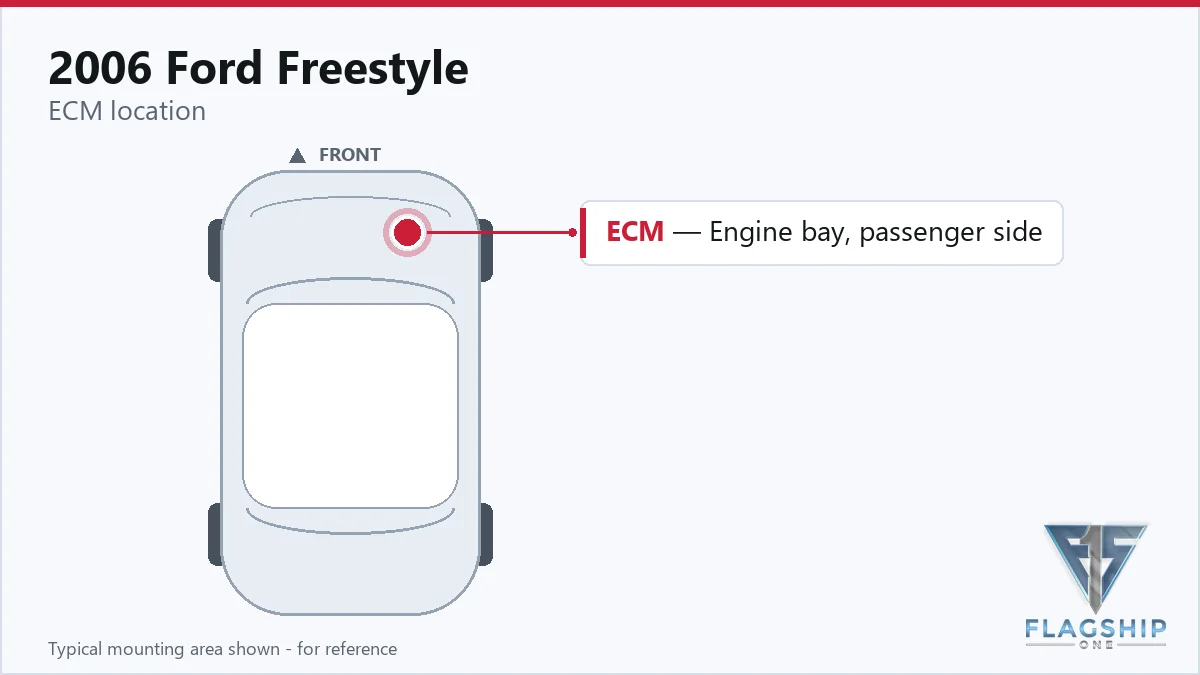
Work with the ignition off, and treat the module as static-sensitive: avoid touching the connector pins at any point.
| Operation | Configuration | Book Time |
|---|---|---|
| Powertrain Control Module R&R | All configurations | 1.4 hr |
| Engine Control Module R&R | All configurations | 1.4 hr |
2006 Ford Freestyle Powertrain and
OEM programmed replacements — plug & play, no dealer visit.
Find yours by year, make & model →
Free shipping · Lifetime warranty
After installing a new module in a 2006 Ford Freestyle, the factory procedure requires reprogramming the passive anti‑theft system (PATS) to recognize the replacement. Flagship One provides a VIN-programmed replacement unit that arrives already calibrated, so the reprogramming step is completed before the part reaches the shop.
A failing control module in a 2006 Ford Freestyle may present as a no‑start condition, intermittent stalling, loss of power, or erratic shifting. Diagnostic scans often reveal multiple processor codes, such as processor fault or communication failures like U0100. You may also notice the check engine light staying illuminated and the vehicle running rough under load.
The following internal trouble codes are documented for the 2006 Ford Freestyle’s control modules:
Technical Service Bulletin 07‑04‑07 addresses fuel‑rail pressure sensor circuit performance that can trigger a MIL with DTC P0191. Bulletin 08‑09‑07 covers a range of sensor codes (P0106, P0109, P2111, P2112, P2072) that also result in MIL illumination and require specific diagnostic attention.
| Bulletin | Subject | What It Addresses |
|---|---|---|
| 07-04-07 | FUEL RAIL PRESSURE SENSOR CIRCUIT PERFORMANCE – MIL ON WITH DTC P0191 | — |
| 08-09-07 | DTCS P0106, P0109, P2111, P2112, AND / OR P2072 – MIL ON | — |
The factory book time estimates about 1.4 hours of labor for the powertrain control module replacement.
Yes, the passive anti‑theft system (PATS) must be reprogrammed after the engine control module is installed.
Bulletins 07‑04‑07 and 08‑09‑07 cover fuel‑rail pressure sensor performance and several sensor codes that can cause a MIL.
When a control module fails in your 2006 Ford Freestyle, you can choose a repair that restores the original part or opt for a refurbished replacement that meets factory specifications. Both approaches address the underlying issue, but a Flagship One refurbished unit offers the added benefit of pre‑programmed calibration, simplifying the post‑install steps.
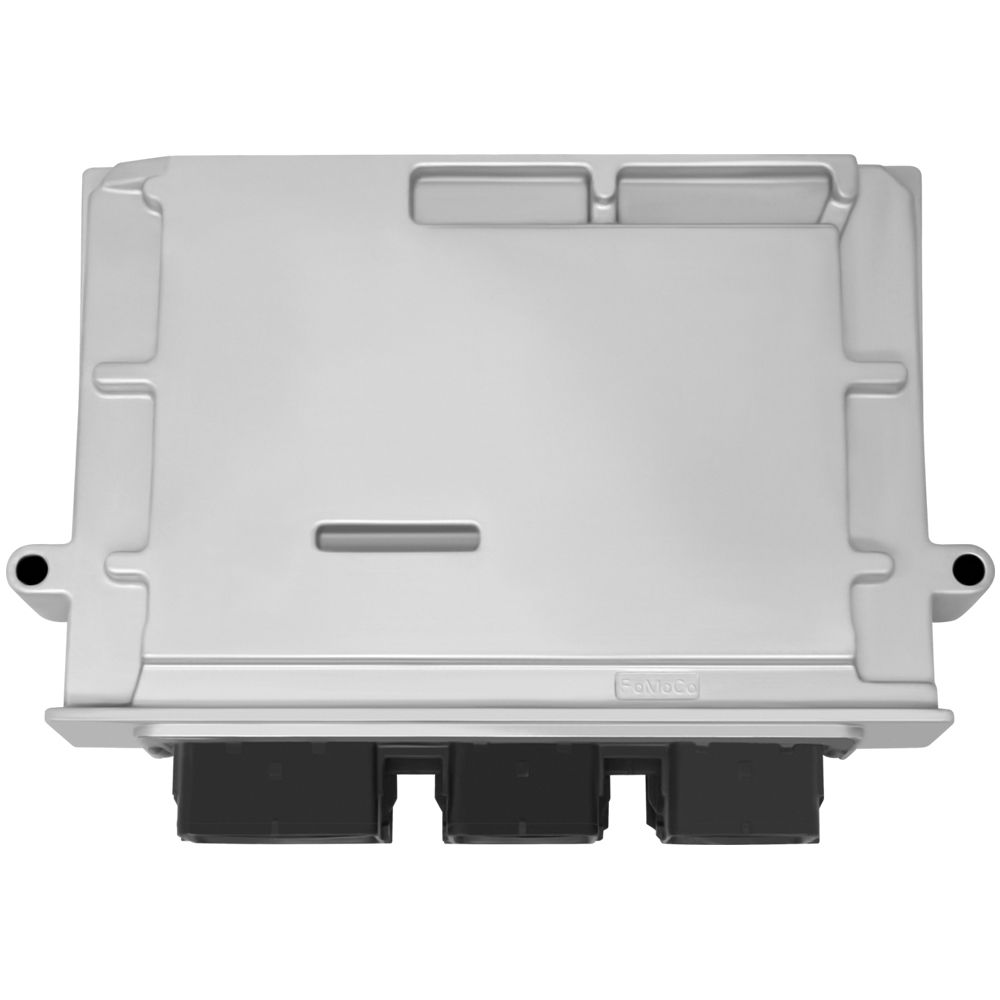
Flagship One stocks a refurbished, VIN-programmed PCM for the 2006 Ford Freestyle with a lifetime warranty, free shipping and no core charge. The full Ford Freestyle module lineup covers other engine configurations as well.
For owners of a 2006 Ford Freestyle, replacing a faulty powertrain or engine control module can restore reliable performance and clear diagnostic trouble codes. Consider a Flagship One refurbished unit to reduce downtime and ensure the necessary programming is already completed.