
Last updated on August 25th, 2026 at 12:03 pm
The powertrain control module (PCM) in your 2004 Toyota Tacoma PreRunner with the 3.4L engine manages fuel injection, ignition timing, and emissions. When it fails, the engine may not start, run poorly, or trigger diagnostic trouble codes. Replacement requires programming to match your vehicle’s VIN and configuration.
If your 2004 Toyota Tacoma PreRunner with the 3.4L engine is experiencing hard starting, stalling, or a persistent check engine light, the powertrain control module (PCM) or engine control module (ECM) may be at fault. These terms are often used interchangeably for the computer that manages your engine’s fuel delivery, ignition timing, and emissions controls. Understanding what this module does and how to address a failure can save you time and money. This guide covers the symptoms of a failing PCM/ECM, its location in your Tacoma PreRunner, the labor involved in replacement, and the critical programming step that follows. You will also learn how a pre-programmed replacement unit from Flagship One can simplify the repair by eliminating the need for a dealer visit. Whether you are a DIY owner or working with a shop, this information helps you make an informed decision about restoring your truck’s performance and reliability.
2004 Toyota Tacoma PreRunner
OEM programmed ECM for your 2004 Toyota Tacoma PreRunner — plug & play, no dealer visit.
Free shipping · Lifetime warranty
The powertrain control module in your 2004 Toyota Tacoma PreRunner is the central computer that controls engine operation. It receives input from sensors such as the oxygen sensor, throttle position sensor, and crankshaft position sensor, then adjusts fuel injector pulse width, ignition timing, and idle speed to maintain optimal performance and emissions. For the 3.4L V6 engine, the module also manages the variable valve timing system and coordinates with the transmission control unit for smooth shifting. When the module fails, it can no longer process sensor data correctly, leading to poor drivability or a no-start condition. The module is designed to last the life of the vehicle, but heat, vibration, and electrical surges can cause internal component failure. If you need a replacement, you will be looking for replacement engine computers for the Tacoma that are specifically calibrated for the 3.4L engine and your vehicle’s VIN. Using the wrong module can result in incorrect fuel maps and drivability issues.
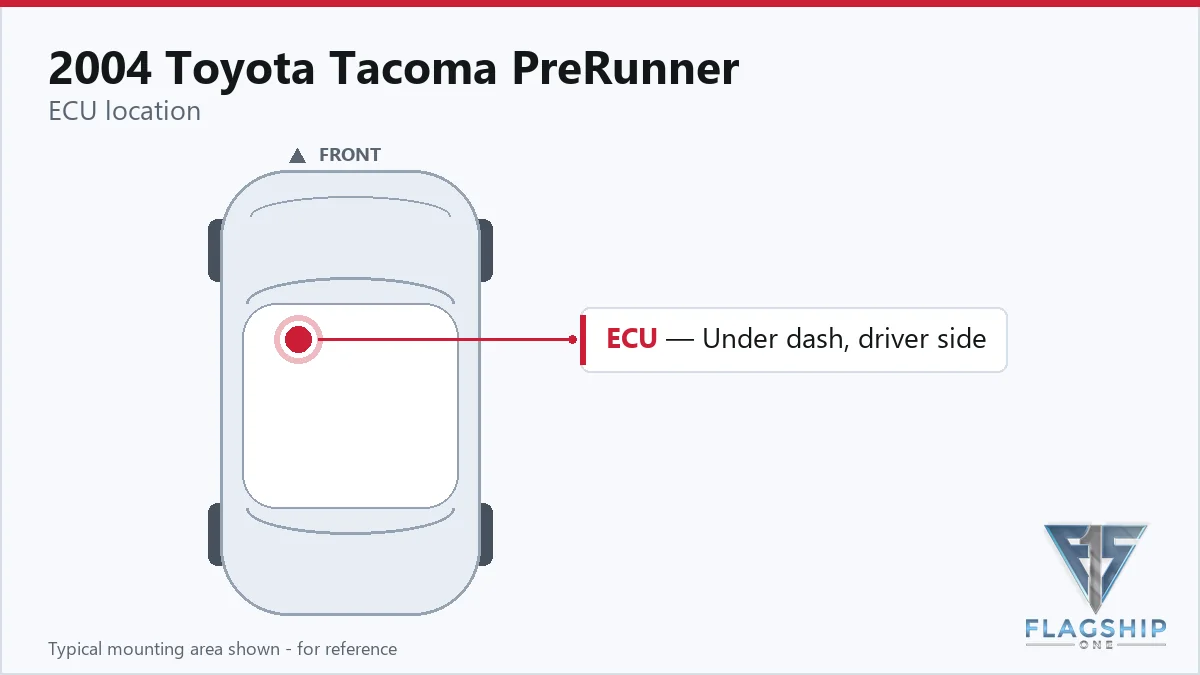
According to the factory wiring guide, the engine ECU in your 2004 Toyota Tacoma PreRunner is located in the instrument panel. This typically means it is mounted behind the dashboard, often on the passenger side near the glove box or behind the center console. Accessing the module requires removing trim panels and possibly the glove box assembly. The book time for removal and replacement of the powertrain control module is 0.7 hours. This labor estimate covers disconnecting the battery, unbolting the module, disconnecting the wiring harness connectors, and installing the replacement unit. After the new module is installed, a relearn procedure is necessary, which adds 0.5 hours of labor. The relearn process allows the module to adapt to the engine’s specific characteristics and clear any stored adaptive values. It is important to follow the factory procedure to ensure proper operation.
| Operation | Configuration | Book Time |
|---|---|---|
| Powertrain Control Module R&R | All configurations | 0.7 hr |
| Powertrain Control Module Relearn | All configurations | 0.5 hr |
| Engine Control Module Relearn | All configurations | 0.5 hr |
| Engine Control Module R&R | All configurations | 0.7 hr |
After installing a new or replacement PCM/ECM in your 2004 Toyota Tacoma PreRunner, the factory procedure requires a relearn process that takes 0.5 hours. This step involves using a scan tool to initialize the module and allow it to learn idle parameters, fuel trim values, and other adaptive settings. Without this relearn, the engine may run poorly or set trouble codes. Flagship One eliminates this step by supplying a VIN-programmed replacement unit that arrives with your vehicle’s specific calibration already loaded. The module is programmed with the correct VIN, immobilizer data (if applicable), and all necessary software updates. This means you can install the unit and, in most cases, start the engine immediately without needing a dealer visit or a separate programming session. The 0.5-hour relearn labor is no longer required, saving you time and expense.
A failing PCM/ECM in your 2004 Toyota Tacoma PreRunner can produce a range of symptoms. The most common is a no-start condition where the engine cranks but does not fire, because the module is not sending the correct fuel or spark signals. You may also experience intermittent stalling while driving, as the module loses communication with sensors. Misfire codes such as P0300 or random cylinder misfires can appear, even if the ignition and fuel systems are healthy. Another sign is a check engine light that stays on with generic communication fault codes like U0100 (lost communication with ECM). The vehicle may also exhibit poor acceleration, surging, or a rough idle. In some cases, the scan tool cannot connect to the module at all, indicating an internal failure. Transmission shifting issues can occur if the PCM also controls the transmission, as it does in many Tacoma models. If you notice any of these symptoms, diagnosing the module should be a priority.
Common signs include a no-start condition, stalling, misfire codes that won’t clear, and a check engine light with communication fault codes. If the scan tool cannot connect to the module, it is likely failed.
Yes, if you are comfortable removing interior trim to access the module behind the instrument panel. The book time is 0.7 hours for R&R. However, you will need to perform a relearn procedure after installation unless you use a pre-programmed unit.
In many Toyota vehicles, the terms are used interchangeably. The powertrain control module (PCM) typically controls both engine and transmission, while the engine control module (ECM) focuses on the engine. For your 3.4L, the module is often called the ECM in factory documentation.
A used module must be programmed with your vehicle’s VIN and immobilizer data. Without proper programming, the engine may not start or may run poorly. A pre-programmed unit from Flagship One is a more reliable option.
The factory book time for the relearn procedure is 0.5 hours. This involves using a scan tool to initialize the module and allow it to adapt to the engine. With a VIN-programmed unit, this step is not needed.
When your 2004 Toyota Tacoma PreRunner’s PCM/ECM fails, you have two main options: have a shop repair the original module or replace it with a new or refurbished unit. Repair may be possible for some internal faults, but replacement often provides a more reliable long-term solution. For your 3.4L engine, choosing a module that is pre-programmed to your VIN ensures a straightforward installation without the need for dealer programming.
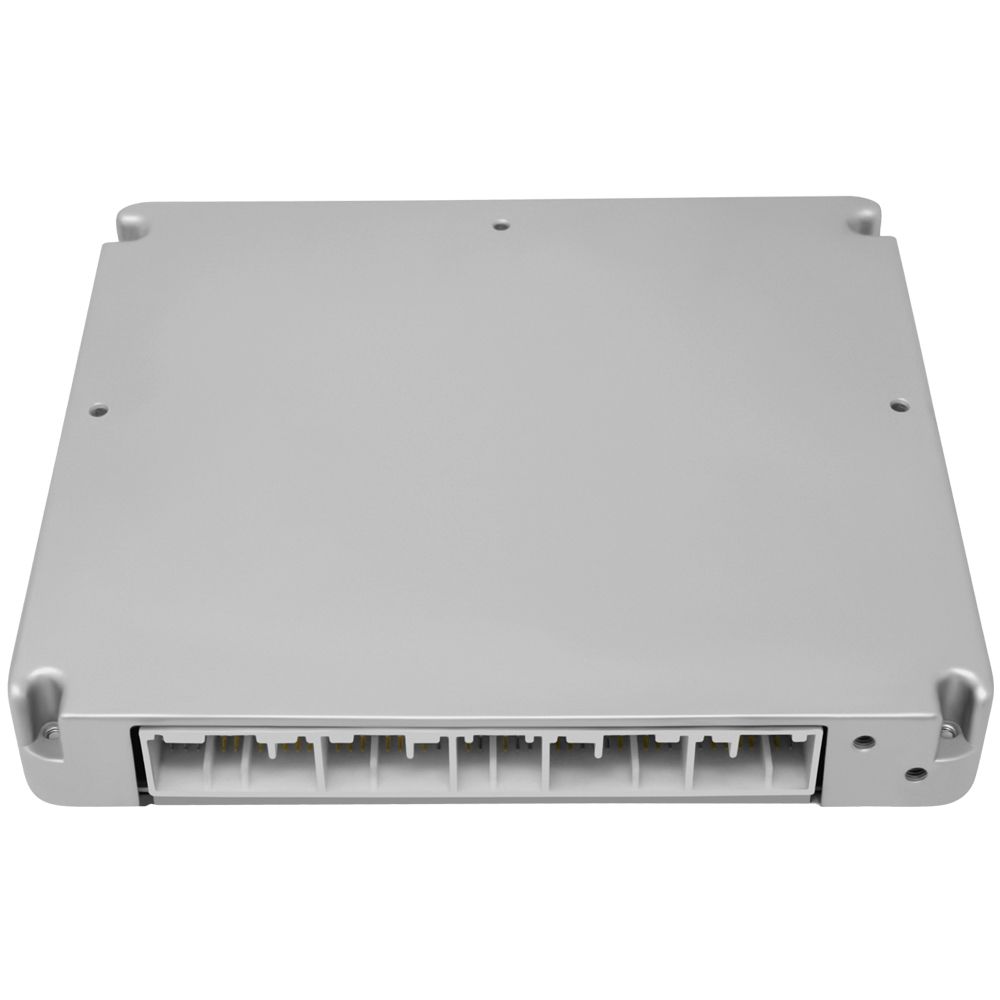
Flagship One stocks a refurbished, VIN-programmed PCM for the 2004 Toyota Tacoma PreRunner with a lifetime warranty, free shipping and no core charge. The full Toyota Tacoma PreRunner module lineup covers other engine configurations as well.
The PCM/ECM in your 2004 Toyota Tacoma PreRunner is a critical component that controls engine performance. Recognizing the symptoms of failure and understanding the replacement process can help you get your truck back on the road quickly. Whether you choose a repair or a replacement, a VIN-programmed unit from Flagship One simplifies the job by eliminating the factory relearn step.