
Last updated on August 25th, 2026 at 01:59 pm
The Powertrain Control Module (PCM) in your 2004 Mazda 3 is the central computer managing engine operation, fuel delivery, emissions controls, and transmission shifting. When this module fails internally, your vehicle may not start, run poorly, or display warning lights.
If your 2004 Mazda 3 has stopped running or is running poorly due to an internal Powertrain Control Module failure, you face a decision between repair or replacement. The PCM serves as the brain of your vehicle’s powertrain, controlling everything from fuel injection timing to emissions monitoring. This guide explains what the module does, typical failure symptoms, labor requirements, and your replacement options so you can make an informed repair decision.
The Powertrain Control Module in your 2004 Mazda 3 (2.3L) functions as the central processing unit for your vehicle’s engine and transmission systems. This computer receives input from dozens of sensors throughout the motor and uses that data to calculate fuel delivery, ignition timing, variable valve timing, and transmission shift points in real time. When the PCM suffers an internal hardware failure—often indicated by module-specific trouble codes—it loses the ability to process these critical functions properly. Your vehicle may crank but not start, run roughly, stall unexpectedly, or display a check engine light that cannot be cleared. Unlike sensor failures that trigger specific fault codes, module-internal failures like processor or memory errors indicate the computer itself has compromised circuitry and must be replaced. Finding replacement engine computers for the 2004 Mazda 3 requires sourcing a unit programmed with your vehicle’s specific VIN and configuration.
Flagship One keeps Mazda 3 replacement engine computers in stock for exactly this failure pattern.
The Powertrain Control Module on your 2004 Mazda 3 is typically located in the engine compartment, mounted on the firewall or near the battery tray area depending on your specific configuration. Replacement involves first disconnecting the negative battery terminal to prevent electrical damage, then removing the module’s mounting hardware and electrical connectors. The labor guide specifies 0.6 hours for the remove-and-reinstall procedure, followed by a separate 0.5-hour relearn procedure to allow the new module to adapt to your vehicle’s unique engine characteristics. This relearn process is essential—without it, the PCM may not properly calibrate fuel delivery and idle speed, potentially causing drivability issues. Torque specifications for mounting hardware should reference factory procedures if available.
Work with the ignition off, and treat the module as static-sensitive: avoid touching the connector pins at any point.
| Operation | Configuration | Book Time |
|---|---|---|
| Powertrain Control Module R&R | All configurations | 0.6 hr |
| Powertrain Control Module Relearn | All configurations | 0.5 hr |
| Engine Control Module R&R | All configurations | 0.6 hr |
| Engine Control Module Relearn | All configurations | 0.5 hr |
2004 Mazda 3
OEM programmed ECM for your 2004 Mazda 3 — plug & play, no dealer visit.
Free shipping · Lifetime warranty
After installing a replacement PCM in your 2004 Mazda 3, the factory procedure requires performing a module relearn or initialization process that allows the new computer to establish communication with your vehicle’s sensors and adapt its calibration to your specific engine. This post-install procedure typically takes approximately 0.5 hours according to labor guides. Flagship One units arrive pre-programmed with your vehicle’s specific VIN, so the typical dealer initialization steps are already completed before the module ships. This means you can install the unit and proceed directly to the relearn procedure without additional programming equipment or dealer visits—saving both time and programming costs associated with a virgin replacement unit.
Every VIN-programmed replacement unit from Flagship One arrives with these steps already completed.
When the PCM fails internally on your 2004 Mazda 3, several distinct symptoms typically emerge. The most common presentation is a no-start condition where the engine cranks normally but receives no fuel or spark due to the PCM failing to output control signals. You may also experience intermittent stalling, rough idle, or hesitation during acceleration—symptoms that often worsen as the module’s internal circuitry degrades further. Diagnostic trouble codes specific to the PCM itself will likely be present, including processor and memory faults. In some cases, the scan tool may show no communication with the module, or may display codes indicating loss of calibration data. Transmission shifting may become erratic or the vehicle may get stuck in a single gear because the PCM also controls shift logic. If you notice a lit check engine light that cannot be cleared after clearing codes, or if multiple unrelated codes appear simultaneously, internal PCM failure becomes increasingly likely.
The 2004 Mazda 3’s Powertrain Control Module can store several module-internal trouble codes indicating various types of internal computer failures. These codes differ from sensor-specific faults in that they point directly to compromised PCM circuitry rather than a faulty external component. The following codes have been documented for this vehicle:
Factory service bulletins for the 2004-2005 Mazda3 document specific MIL illumination concerns related to the PCM system. Bulletin 01 003/06 covers MIL illumination with trouble code P0456 on certain 2004-2005 model year vehicles. Additionally, a separate bulletin addresses MIL illumination with DTC P0606 stored in the PCM, noting that some vehicles may exhibit this condition along with a potential slow battery drainage issue. These bulletins indicate that Mazda acknowledged specific PCM-related concerns during this model year production run, and diagnosis should include checking for these specific trouble codes when addressing check engine light complaints.
| Bulletin | Subject | What It Addresses |
|---|---|---|
| — | Mazda Tips: MIL Illumination P0606 | s Some vehicles may have a Malfunction Indicator Lamp (MIL) illuminated and DTC P0606 stored in the Powertrain Control Module (PCM). Note: There could also be… |
| — | 01 003/06 2004 2005 Mazda3 MIL Illumination P0456 | — |
No. The replacement PCM must be programmed with your specific vehicle identification number and configuration. A unit from a different vehicle will not communicate properly with your Mazda’s sensors and may cause additional drivability issues.
Installation is straightforward for experienced DIYers, but the relearn procedure is necessary after replacement. Some specialized scan tools can perform this, though a professional shop may be needed if you lack the proper equipment.
The 2004 Mazda 3 uses an integrated Powertrain Control Module that handles both engine and transmission functions. This differs from some vehicles that use separate Engine Control Module and Transmission Control Module units.
If your 2004 Mazda 3 requires a replacement PCM, you have two primary options: repairing your existing module or purchasing a refurbished unit. Repairs involve returning your original PCM for circuit board fixes, while refurbished units come pre-programmed with your VIN and ready to install. Consider your timeline, budget, and whether your original module has additional damage when choosing. Flagship One offers VIN-programmed replacement units specifically configured for the 2004 Mazda 3, eliminating the need for dealer programming appointments.
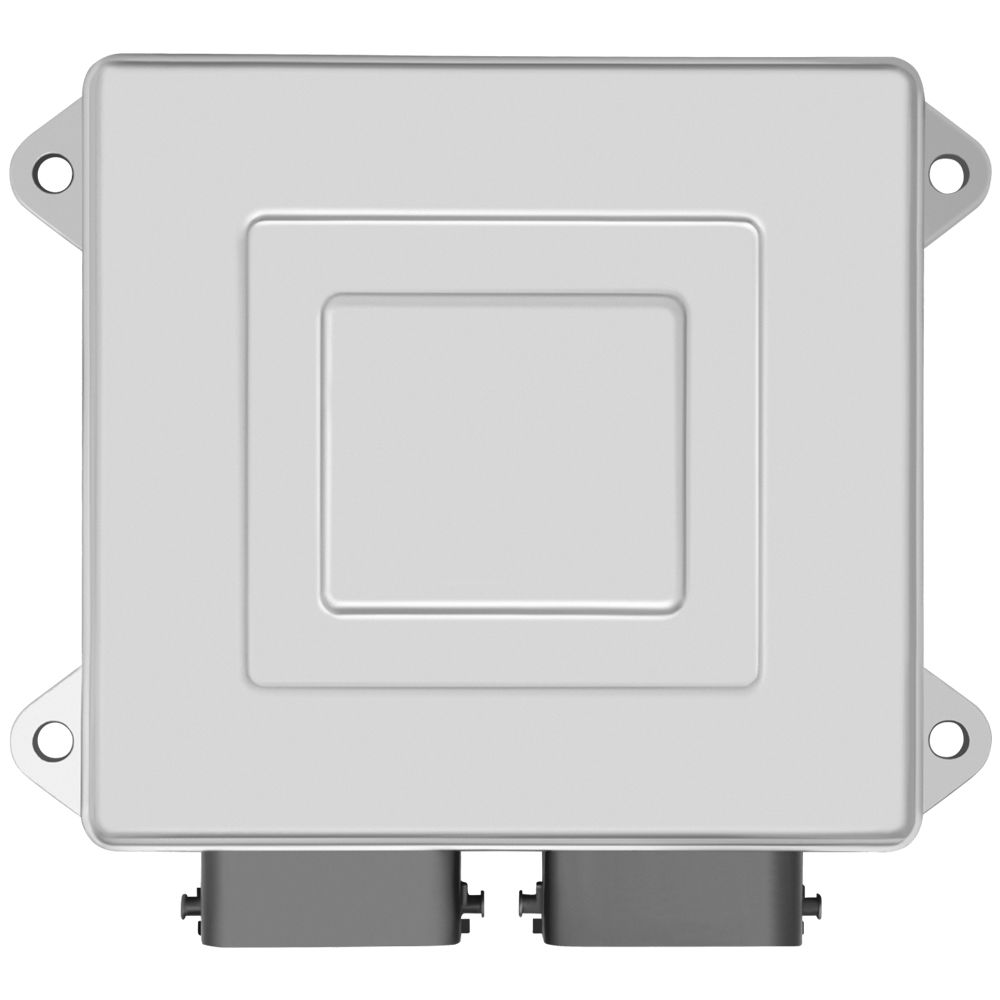
Flagship One stocks a refurbished, VIN-programmed PCM for the 2004 Mazda 3 with a lifetime warranty, free shipping and no core charge. The full Mazda 3 module lineup covers other engine configurations as well.
The Powertrain Control Module is the central nervous system of your 2004 Mazda 3, and internal failure requires prompt attention to restore reliable operation. Whether you choose repair or replacement, understanding the labor involved and programming requirements helps you plan the repair properly. With the right replacement unit and proper relearn procedure, your Mazda can return to normal operation.