
Last updated on August 25th, 2026 at 01:36 pm
The powertrain control module (PCM) in your 2004 Ford Taurus manages engine and transmission functions. Failures may cause erratic performance, no-start conditions, or stored trouble codes related to ignition, fuel, or emissions systems.
If your 2004 Ford Taurus is experiencing unexplained stalling, a no-start condition, or persistent check-engine lights, the powertrain control module (PCM) may be the culprit. This critical component oversees engine and transmission performance, and when it fails, symptoms can range from subtle drivability issues to complete immobilization. Understanding its role, location, and replacement process helps you make informed decisions about repairs. You’ll also learn what to expect during installation and how a pre-programmed replacement can simplify the job.
The powertrain control module in your 2004 Ford Taurus acts as the brain for engine and transmission functions. It processes data from sensors to regulate fuel delivery, ignition timing, and emissions systems, ensuring optimal performance. When it malfunctions, you may notice poor acceleration, rough idling, or transmission shifting problems. Replacing it requires replacement engine computers for the Taurus, which are designed to integrate seamlessly with the vehicle’s existing systems. A faulty PCM can disrupt multiple systems, so addressing issues promptly is key to avoiding further complications.
Engine computer (ECM/PCM)
OEM programmed replacements — plug & play, no dealer visit.
Find yours by year, make & model →
Free shipping · Lifetime warranty
In the 2004 Ford Taurus, the PCM is located near the intake manifold, requiring removal of components to access it. The factory procedure involves disconnecting the battery, unbolting the module, and carefully disconnecting its wiring harness. Labor times for replacement vary: 1.0 hours for powertrain control module R&R, 0.5 hours for the relearn procedure, or 0.5 to 0.8 hours for engine control module R&R, depending on the specific task. No torque specifications are provided, but ensuring secure connections and proper alignment during reinstallation is critical to avoid future issues.
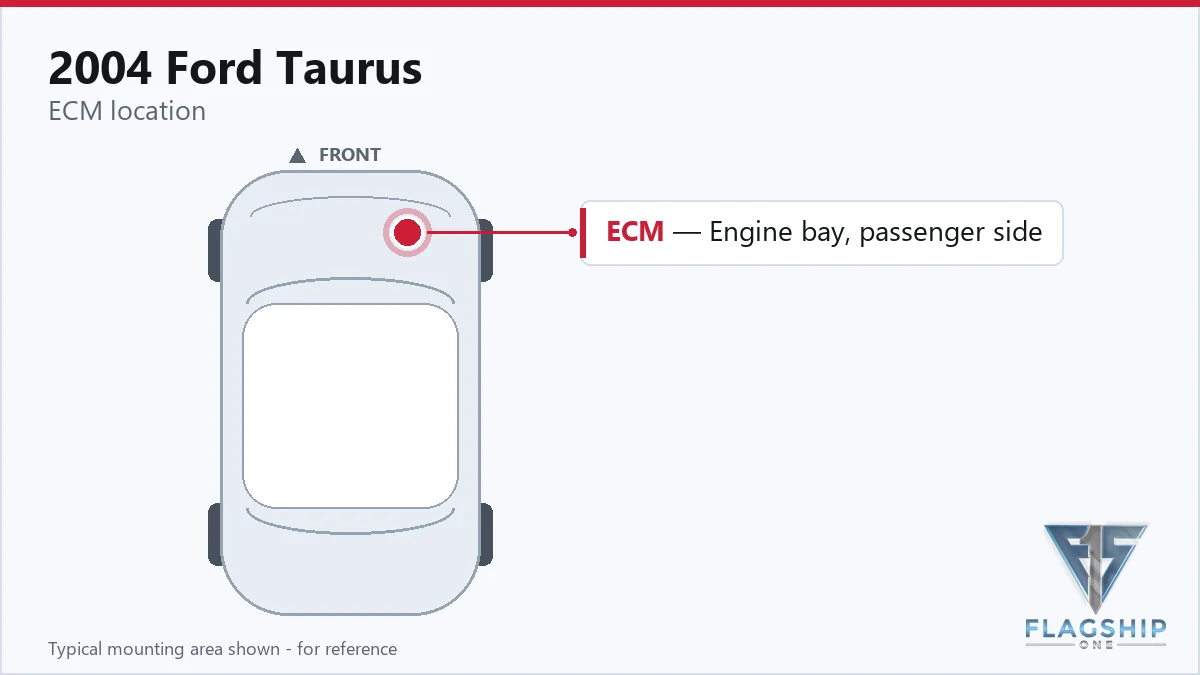
Work with the ignition off, and treat the module as static-sensitive: avoid touching the connector pins at any point.
| Operation | Configuration | Book Time |
|---|---|---|
| Powertrain Control Module R&R | All configurations | 1.0 hr |
| Powertrain Control Module Relearn | All configurations | 0.5 hr |
| Engine Control Module R&R | GAS | 0.5 hr |
| Engine Control Module R&R | GAS | 0.8 hr |
| Engine Control Module R&R | FLEX | 0.4 hr |
After replacing the PCM in your 2004 Ford Taurus, the factory procedure typically requires a 0.5-hour relearn process to synchronize the module with the vehicle’s systems. This step ensures proper communication with sensors and actuators. However, a VIN-programmed replacement unit from Flagship One arrives ready to install, eliminating the need for additional programming. This saves time and reduces the risk of calibration errors, allowing you to get your vehicle back on the road more quickly.
A failing PCM in your 2004 Ford Taurus may cause a range of symptoms, including intermittent stalling, a no-start condition, or erratic shifting. You might also notice the check-engine light illuminating, often accompanied by misfire codes or other engine-related faults. In some cases, the vehicle may enter a fail-safe mode, limiting performance to prevent further damage. If the module loses communication, your scan tool may be unable to retrieve data. One common fault is P035X:multiple ignition coil circuit codes, which can appear even without noticeable drivability issues.
Ford issued a service bulletin (#06-16-04) addressing a condition where the 2004 Taurus with the 3.0L 4V engine may illuminate the check-engine light with multiple ignition coil-related codes (P035X). Despite the codes, the vehicle may not exhibit any noticeable drivability symptoms. The bulletin provides diagnostic steps to confirm whether the PCM or coil packs are the root cause, helping avoid unnecessary part replacements.
| Bulletin | Subject | What It Addresses |
|---|---|---|
| 06-16-04 | 3.0L 4V – MIL ON WITH MULTIPLE COIL DTC’S (P035X) WITH NO DRIVEABILITY SYMPTOMS | — |
Common signs include a no-start condition, stalling, or the check-engine light illuminating with multiple codes. If your scan tool can’t communicate with the PCM, that’s another strong indicator. However, these symptoms can also stem from other issues, so proper diagnosis is essential.
Replacement is possible if you’re comfortable working with electrical components and have basic tools. The module is located near the intake manifold, so some disassembly is required. However, the factory relearn procedure may still be necessary unless you use a pre-programmed unit.
The relearn procedure ensures the new PCM synchronizes with the vehicle’s sensors and actuators. Without it, the engine or transmission may not perform optimally. This step is typically required unless the replacement module is pre-programmed to your VIN.
If your 2004 Ford Taurus is showing signs of PCM failure, you have options. A repair shop can diagnose and replace the module, though labor and programming costs can add up. Alternatively, a pre-programmed replacement unit eliminates the need for additional steps, reducing downtime and ensuring a smoother installation process.
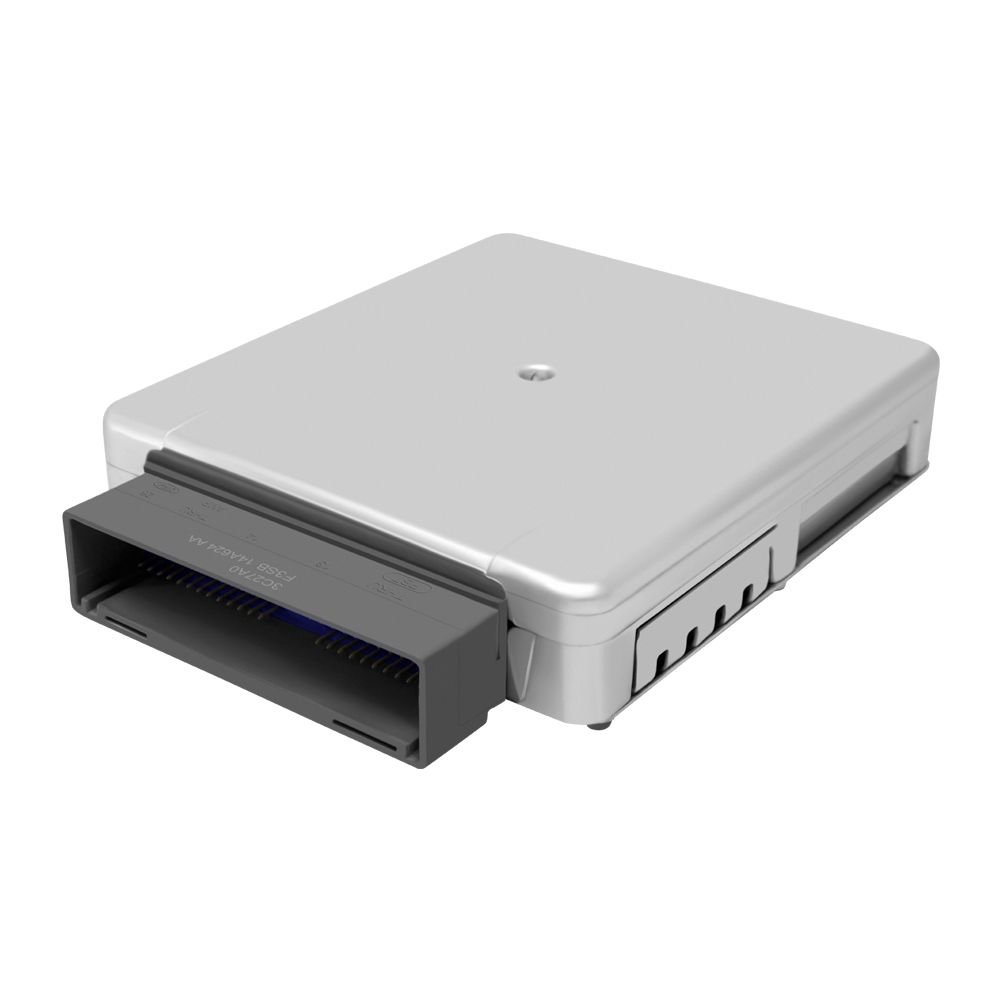
Flagship One stocks a refurbished, VIN-programmed PCM for the 2004 Ford Taurus with a lifetime warranty, free shipping and no core charge. The full Ford Taurus module lineup covers other engine configurations as well.
The 2004 Ford Taurus relies on its PCM to manage critical engine and transmission functions. If you’re experiencing symptoms like stalling, misfires, or a no-start condition, addressing the module promptly can restore performance. Whether you opt for a repair or a pre-programmed replacement, understanding the process helps you make the best choice for your vehicle.