
Last updated on August 25th, 2026 at 12:23 pm
The Powertrain Control Module (PCM) in the 2004 Chevrolet Monte Carlo manages engine and transmission functions. Failure may cause drivability issues, internal fault codes, or prevent the vehicle from starting. Replacement requires careful handling to avoid electrostatic damage.
If your 2004 Chevrolet Monte Carlo suddenly refuses to start, stalls unexpectedly, or throws cryptic engine codes, the Powertrain Control Module (PCM) may be the culprit. This critical computer manages everything from fuel delivery to transmission shifting, and when it fails, your vehicle’s performance suffers. Replacing the PCM isn’t just about swapping a part—it involves careful handling to avoid damage, precise installation steps, and programming to restore full functionality. Understanding the process helps you avoid unnecessary delays and ensures your Monte Carlo runs as intended. Whether you’re diagnosing symptoms or preparing for a replacement, knowing what to expect can save time and frustration.
The Powertrain Control Module (PCM) in the 2004 Chevrolet Monte Carlo acts as the brain of the vehicle’s engine and transmission systems. It continuously monitors sensors to adjust fuel injection, ignition timing, and shift points for optimal performance. Without a functioning PCM, your Monte Carlo may struggle to start, idle roughly, or shift unpredictably. The module also stores critical data like engine oil life, which defaults to 100% if not properly transferred during replacement. Because the PCM integrates so many functions, its failure can lead to a range of symptoms, from subtle drivability issues to complete immobilization. When replacing the module, you’ll need replacement engine computers for the Monte Carlo that match the vehicle’s specifications to avoid compatibility problems or additional programming steps.
The PCM in the 2004 Chevrolet Monte Carlo is located next to the air cleaner assembly, making it relatively accessible compared to some vehicles. To replace it, you’ll need to disconnect the battery and carefully remove the module’s electrical connectors, taking care not to touch the pins or circuit board to prevent electrostatic damage. The factory procedure specifies turning the ignition off during installation or removal to avoid voltage spikes. Once the old module is removed, the new one can be installed in its place. Labor estimates for the replacement process are typically 1.2 hours, with an additional 0.5 hours allocated for the relearn procedure. No specialized tools are required beyond basic hand tools, but following the correct steps is essential to avoid damaging the new module.
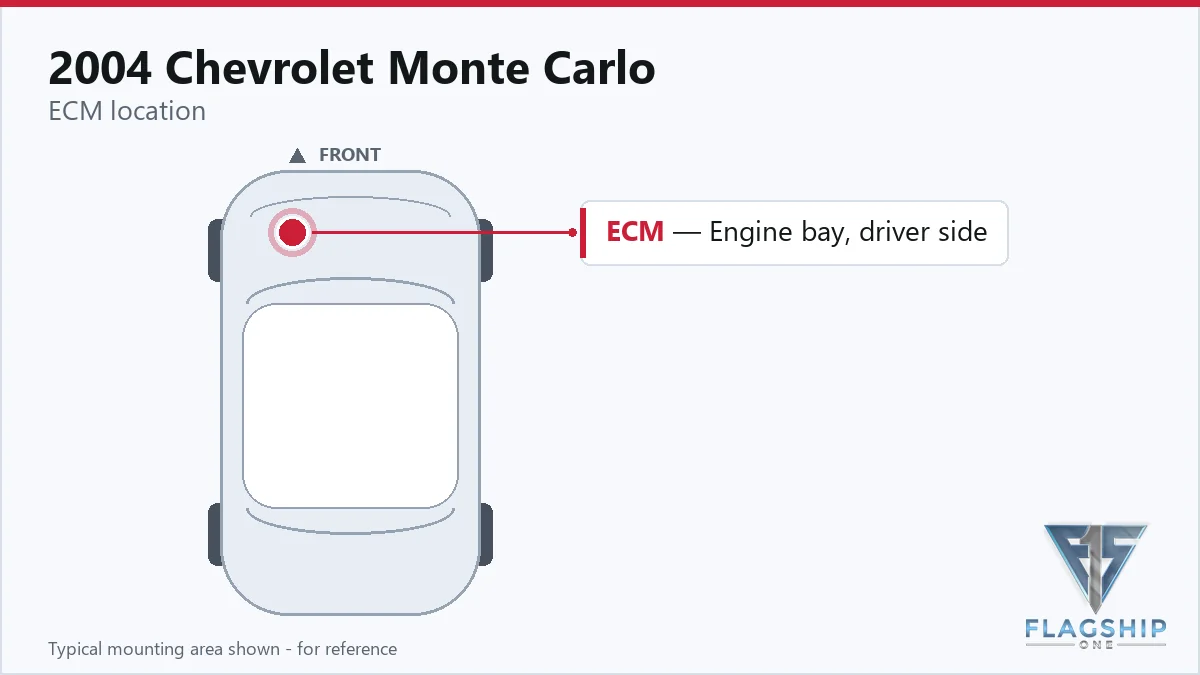
Work with the ignition off, and treat the module as static-sensitive: avoid touching the connector pins at any point.
| Operation | Configuration | Book Time |
|---|---|---|
| Engine Control Module R&R | All configurations | 1.2 hr |
| Engine Control Module Relearn | All configurations | 0.5 hr |
| Powertrain Control Module R&R | All configurations | 1.2 hr |
| Powertrain Control Module Relearn | All configurations | 0.5 hr |
2004 Chevrolet Monte Carlo
OEM programmed ECM for your 2004 Chevrolet Monte Carlo — plug & play, no dealer visit.
Free shipping · Lifetime warranty
After installing a new PCM in your 2004 Chevrolet Monte Carlo, the factory procedure requires a relearn process to synchronize the module with the vehicle’s systems. This includes reprogramming the remaining engine oil life, which defaults to 100% if not properly set. The relearn typically takes about 0.5 hours and ensures the PCM communicates correctly with the engine and transmission. However, if you opt for a VIN-programmed replacement unit, these steps are already completed before the module arrives. This eliminates the need for post-install programming, saving time and reducing the risk of errors during the process. The pre-programmed unit is ready to install, allowing you to focus on the mechanical aspects of the replacement without additional software setup.
A failing PCM in the 2004 Chevrolet Monte Carlo can manifest in several ways, often mimicking other mechanical or electrical issues. Common symptoms include intermittent stalling, especially at idle or during deceleration, and difficulty starting the engine. You may also notice the transmission shifting erratically or harshly, as the PCM controls shift timing. Another telltale sign is the illumination of the check engine light, often accompanied by internal fault codes like control module memory checksum error. In some cases, the vehicle may enter a reduced-power mode to prevent further damage. If your scan tool fails to communicate with the PCM, that’s a strong indication of module failure. These symptoms can worsen over time, so addressing them promptly can prevent more severe drivability issues or even a no-start condition.
The 2004 Chevrolet Monte Carlo may log specific internal trouble codes when the PCM begins to fail. These codes are distinct from sensor or mechanical faults and typically indicate issues within the module itself. Identifying them early can help diagnose the problem before it leads to more serious symptoms.
Common signs include stalling, no-start conditions, erratic shifting, or a check engine light with internal fault codes. If your scan tool can’t communicate with the PCM, that’s a strong indicator of module failure. Symptoms may worsen over time, so early diagnosis is key.
Replacement is possible if you’re comfortable with basic automotive electrical work. The module is located near the air cleaner assembly, and the process involves disconnecting the battery and carefully handling the connectors. However, programming the new unit requires specialized tools unless you use a pre-programmed module.
The engine oil life will default to 100%, which may lead to premature or delayed oil changes. While this won’t immediately harm the engine, it can affect long-term maintenance scheduling. Pre-programmed units retain the correct oil life data, eliminating this issue.
PCM failure can result from voltage spikes, corrosion, or internal component degradation over time. Poor electrical connections or exposure to moisture may also contribute. Regular maintenance of the vehicle’s electrical system can help extend the module’s lifespan.
A used PCM may work, but it must be programmed to your vehicle’s VIN and specifications. Without proper programming, it may not communicate correctly with the engine or transmission, leading to drivability issues or fault codes.
If your 2004 Chevrolet Monte Carlo is experiencing PCM-related issues, you have options for replacement. A new or refurbished module can restore full functionality, but programming is critical to avoid post-install complications. Pre-programmed units eliminate the need for additional software steps, allowing you to focus on the mechanical replacement. Whether you choose to tackle the job yourself or leave it to a professional, ensuring the module is correctly matched to your vehicle is essential for reliable performance.
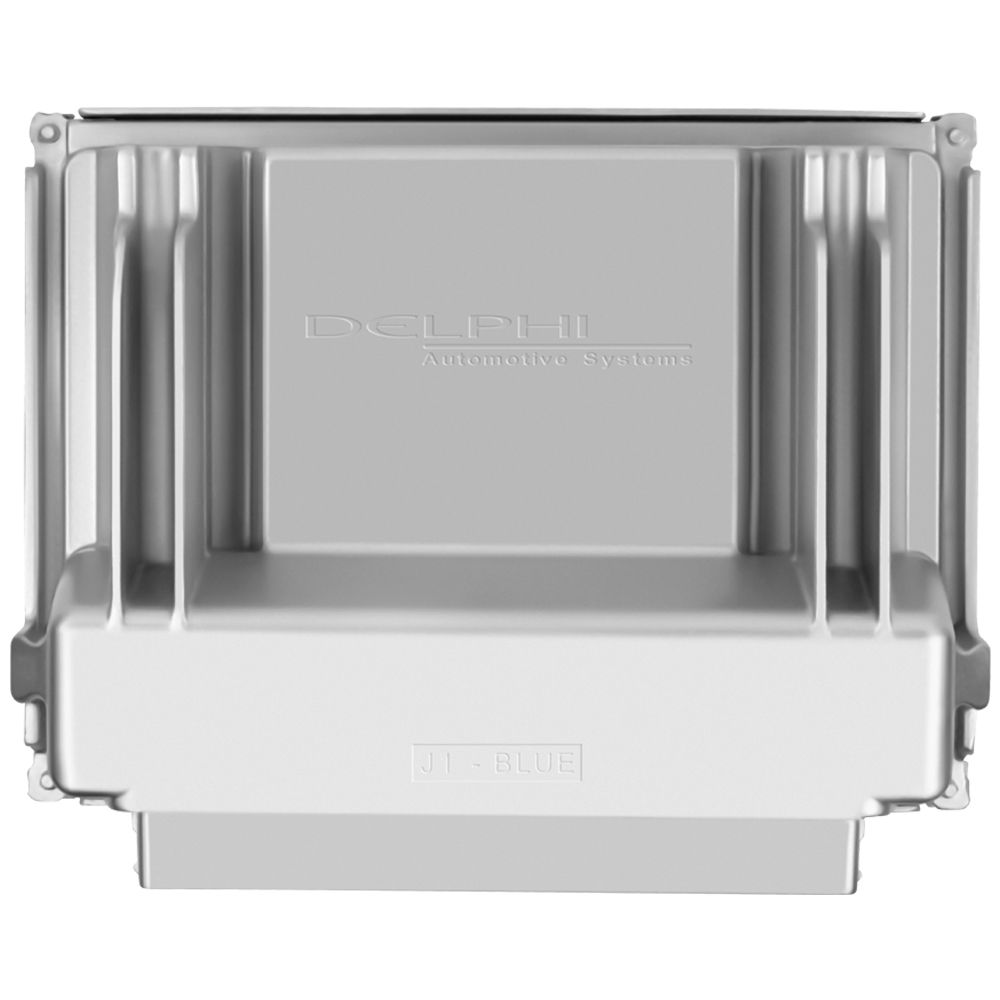
Flagship One stocks a refurbished, VIN-programmed PCM for the 2004 Chevrolet Monte Carlo with a lifetime warranty, free shipping and no core charge. The full Chevrolet Monte Carlo module lineup covers other engine configurations as well.
The Powertrain Control Module is a vital component in your 2004 Chevrolet Monte Carlo, and its failure can lead to frustrating drivability issues. Understanding the symptoms, replacement process, and programming requirements helps you make informed decisions about repairs. Whether you opt for a DIY approach or professional installation, using a pre-programmed module can simplify the process and get your Monte Carlo back on the road reliably.