
Last updated on August 25th, 2026 at 01:36 pm
The Powertrain Control Module (PCM) in a 2003 Ford Mustang 3.8L is the central computer managing engine combustion, transmission shift points, and emissions systems. When this unit fails, it often leaves the vehicle inoperable due to its critical role in starting and running the engine.
If your 2003 Ford Mustang with the 3.8-liter V6 engine has developed starting problems, running issues, or is displaying multiple diagnostic trouble codes, the Powertrain Control Module may be the culprit. The PCM serves as the brain of your vehicle’s powertrain, and when this computer fails, it can leave you stranded or dealing with frustrating drivability symptoms that no amount of routine maintenance will resolve. This guide explains what the PCM does in your specific Mustang, the symptoms of failure, what replacement involves, and whether repair or remanufactured replacement is the right choice for your situation. Whether you are diagnosing a persistent check engine light or dealing with a vehicle that simply will not start, understanding the role of this critical module helps you make informed decisions about the repair path forward.
The Powertrain Control Module in your 2003 Ford Mustang 3.8L is the primary computer responsible for managing the engine and automatic transmission as a unified system. Unlike older vehicles that used separate processors for engine and transmission control, the 2003 Mustang integrates these functions into a single module, allowing the computer to optimize shift timing based on real-time engine load, throttle position, and sensor data. This unit receives input from dozens of sensors throughout the engine bay and uses that information to control fuel injection, ignition timing, variable valve timing (where equipped), emissions control devices, and transmission clutch apply patterns. The PCM also monitors its own internal circuits for faults, storing diagnostic codes when it detects problems with its memory or processing systems. Because this computer handles such a wide range of critical functions, a failing or corrupted PCM can manifest in dozens of different ways, from hard no-start conditions to subtle shifting irregularities that are difficult to diagnose without proper scan tool data. Replacement engine computers for the 2003 Mustang must be programmed with the specific calibration for your vehicle’s powertrain combination to ensure proper operation of all controlled systems.
Flagship One keeps Ford Mustang replacement engine computers in stock for exactly this failure pattern.
2003 Ford Mustang
OEM programmed ECM for your 2003 Ford Mustang — plug & play, no dealer visit.
Free shipping · Lifetime warranty
The factory service procedure for the 2003 Ford Mustang 3.8L requires technicians to access the Powertrain Control Module behind the cowl side trim panel on the passenger side of the vehicle. This location places the module in the interior cabin, protected from direct engine heat but still subject to the thermal cycling and humidity that affects all vehicle electronics over time. The removal process involves removing the passenger-side kick panel and the trim piece that covers the forward corner of the cabin, then disconnecting the electrical harness before withdrawing the module from its mounting location. Book time for the Powertrain Control Module replacement procedure is 0.5 hours for the actual removal and installation, with an additional 0.5 hour allocated for the relearn procedure that must be performed after the new module is installed. If your vehicle requires an Engine Control Module R&R procedure instead of the standard PCM replacement, the book time increases to 1.0 hour for the physical replacement. These labor times reflect the straightforward access behind the trim panel but do not include diagnostic time needed to confirm the module is the root cause of the complaint.
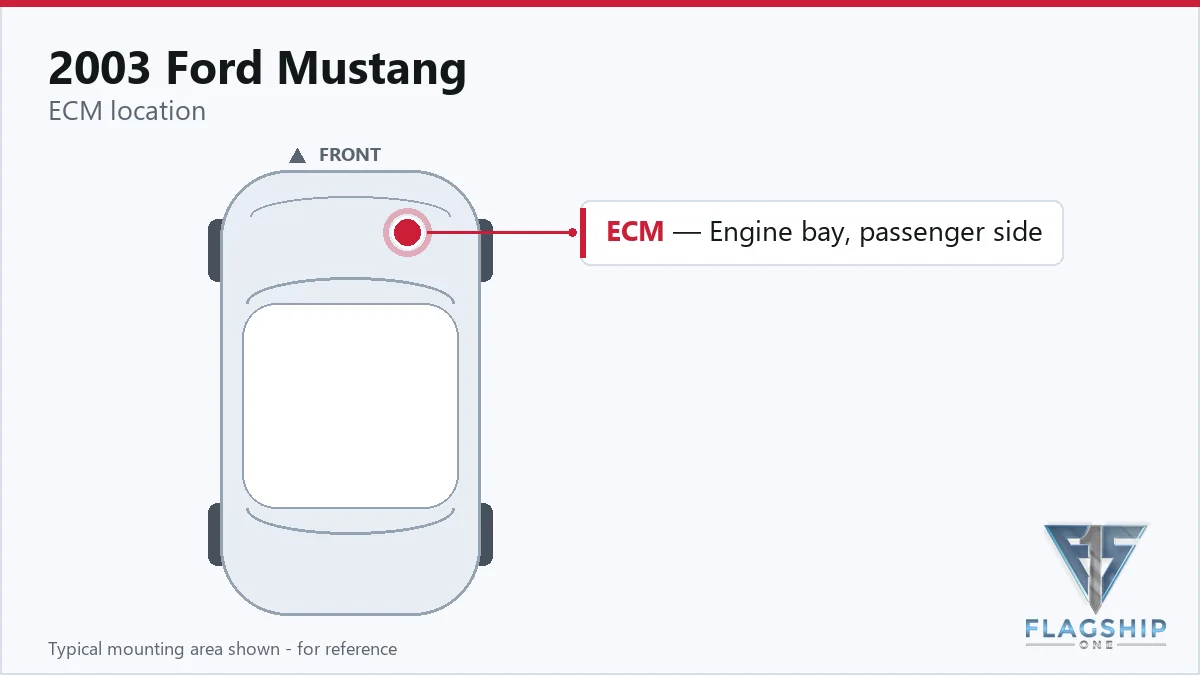
Work with the ignition off, and treat the module as static-sensitive: avoid touching the connector pins at any point.
| Operation | Configuration | Book Time |
|---|---|---|
| Powertrain Control Module R&R | All configurations | 0.5 hr |
| Powertrain Control Module Relearn | All configurations | 0.5 hr |
| Engine Control Module R&R | All configurations | 1.0 hr |
After installing a replacement PCM in your 2003 Ford Mustang 3.8L, the factory procedure requires performing a relearn procedure to allow the new module to adapt to your specific vehicle’s sensors and calibration. This relearn process establishes communication between the new computer and the existing modules throughout the vehicle, allowing the PCM to learn proper fuel trims, transmission adaptive tables, and other vehicle-specific parameters. The relearn procedure typically involves a specific driving cycle or scan tool procedure that must be completed within a certain timeframe after installation. When you purchase a VIN-programmed replacement unit from a reputable supplier like Flagship One, the module arrives pre-programmed with your specific vehicle’s identification number and calibration data. This means the basic programming that the dealer would normally perform using Ford’s diagnostic software is already completed before the module ships, saving you the cost and hassle of having the vehicle programmed at a shop or dealership after the physical installation.
Every VIN-programmed replacement unit from Flagship One arrives with these steps already completed.
A failing Powertrain Control Module in a 2003 Ford Mustang 3.8L can produce a wide variety of symptoms that often lead technicians on a costly diagnostic wild goose chase before the root cause is identified. The most dramatic symptom is a hard no-start condition where the engine cranking normally but receives no fuel or spark because the PCM has failed to output the necessary control signals. Less severe failures may cause intermittent stalling, particularly at idle or under light load conditions, where the engine runs roughly and may die unexpectedly. Misfire codes in multiple cylinders frequently appear when the PCM’s internal processing becomes corrupted, as the computer can no longer accurately calculate fuel delivery or ignition timing for each combustion event. Communication failures between the PCM and scan tools are another common indicator of module internal problems, where the diagnostic tool cannot establish a link with the vehicle’s primary computer. Transmission shifting issues such as harsh engagements, delayed shifts, or failure to shift into certain gears can also originate from a failing PCM, since the transmission control portion of the module is integral to the same unit. Many of these symptoms can also be caused by simpler problems like faulty sensors or wiring issues, making proper diagnosis critical before committing to module replacement.
The PCM must match your specific vehicle’s powertrain combination. The 2003 Mustang 3.8L with automatic transmission uses a different calibration than a manual transmission vehicle. Using a VIN-programmed unit ensures the correct identification and calibration are loaded.
The physical removal and installation is straightforward for someone with basic mechanical skills, as the module is accessible behind interior trim. However, you will need a way to perform the relearn procedure afterward, which may require a scan tool or the services of a professional shop.
Yes, a failed PCM can prevent the engine from starting even when cranking speed is normal. However, many other issues can cause a no-start condition. Proper diagnosis should verify that the PCM is receiving power and ground, then checking for diagnostic communication before concluding the module is at fault.
Remanufactured units are rebuilt with updated internal components designed to address common failure modes in the original design. When sourced from a quality supplier, these units typically provide several years or more of reliable service, though actual lifespan varies based on vehicle usage and environmental conditions.
Repairing an existing PCM requires specialized equipment and expertise to diagnose and rework internal circuit boards, making it impractical for most owners. Replacement with a remanufactured unit that arrives pre-programmed with your VIN is typically the more practical and cost-effective approach.
When your 2003 Ford Mustang 3.8L requires PCM replacement, you have two primary options: purchasing a new unit from the dealer at significant cost, or choosing a remanufactured replacement that arrives VIN-programmed and ready to install. For many owners, the remanufactured path offers substantial savings while providing a unit that has been rebuilt to address the common failure modes known to affect these modules. The key is sourcing from a supplier that programs each unit with your specific vehicle’s identification before shipping, eliminating the need for dealer programming fees after installation.
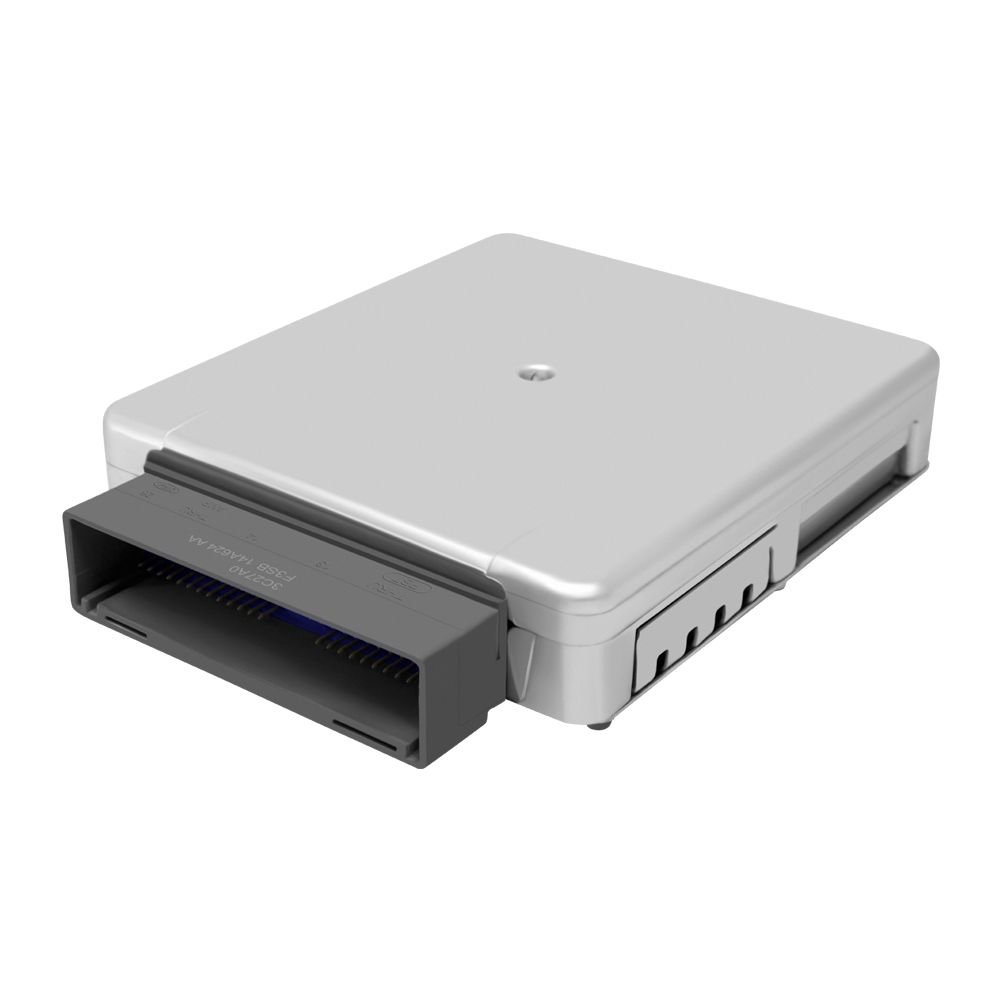
Flagship One stocks a refurbished, VIN-programmed PCM for the 2003 Ford Mustang with a lifetime warranty, free shipping and no core charge. The full Ford Mustang module lineup covers other engine configurations as well.
The Powertrain Control Module is an essential component of your 2003 Ford Mustang 3.8L, and failure of this computer can leave your vehicle stranded or running poorly. Understanding the symptoms, replacement process, and programming requirements helps you navigate the repair with confidence. Whether you choose dealer parts or a quality remanufactured unit, addressing PCM issues promptly restores your Mustang’s reliability and gets you back on the road.