
Last updated on August 25th, 2026 at 01:36 pm
In the 2003 Ford Mustang Mach 1, the Powertrain Control Module (PCM) and Engine Control Module (ECM) act as the vehicle’s brain, interpreting sensor data to manage fuel delivery, ignition timing, and transmission shifting. Failure of either module can cause loss of engine power, stalling, or complete no‑start conditions because the computer can no longer command critical systems.
When a 2003 Ford Mustang Mach 1 begins to exhibit no‑start symptoms, random stalling, or erratic shifting, the electronic control modules are often the culprits. Understanding how the Powertrain Control Module (PCM) and Engine Control Module (ECM) operate in this specific model can help you diagnose the issue and decide whether a repair or replacement is the better path. This guide walks you through what these computers do, where they live, the labor involved in swapping them, and how a VIN‑programmed replacement from Flagship One can streamline the process. By the end, you’ll know the typical time commitments, the necessary post‑install steps, and practical ways to protect these components from future failure.
The PCM in the 2003 Ford Mustang Mach 1 consolidates engine and transmission control functions, processing inputs from dozens of sensors to adjust fuel injection, spark timing, and shift points. It also stores diagnostic trouble codes that help pinpoint issues. Similarly, the ECM focuses on engine‑only management, handling ignition timing and emissions controls. Together, they ensure the powertrain runs smoothly and meets emissions standards. When either module fails, the vehicle may lose power, refuse to start, or exhibit shifting problems because the computer cannot issue proper commands. Maintaining reliable operation of these units is essential for drivability and emissions compliance. The replacement PCM for the Mustang often shares the same housing as the ECM, making access and removal comparable in effort.
2003 Ford Mustang Mach 1
OEM programmed ECM for your 2003 Ford Mustang Mach 1 — plug & play, no dealer visit.
Free shipping · Lifetime warranty
In the 2003 Mustang Mach 1, the control modules sit behind the cowl side trim, accessible by removing that trim piece. The factory removal procedure indicates that the PCM can be taken out in about half an hour of labor, while the ECM typically requires one hour. During removal, you’ll disconnect the electrical connectors, unbolt the mounting hardware, and extract the unit from its cradle. Reinstallation follows the reverse order, ensuring connectors seat fully and fasteners are torqued to factory specifications if provided. The location behind the trim means you may need to detach additional interior panels to gain clear access, but the book times already account for those steps.
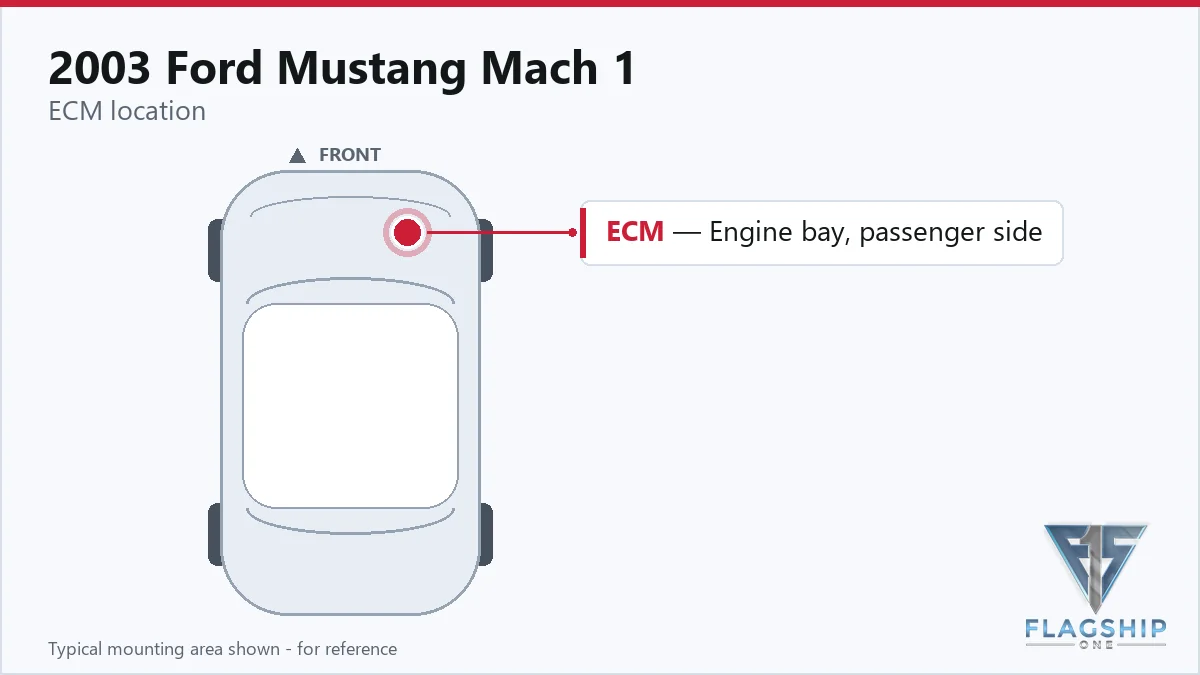
Work with the ignition off, and treat the module as static-sensitive: avoid touching the connector pins at any point.
| Operation | Configuration | Book Time |
|---|---|---|
| Powertrain Control Module R&R | All configurations | 0.5 hr |
| Powertrain Control Module Relearn | All configurations | 0.5 hr |
| Engine Control Module R&R | All configurations | 1.0 hr |
After installing a new PCM or ECM in the Mustang, the factory service manual requires a relearn procedure that takes roughly half an hour for the PCM and an additional half hour for the ECM. Flagship One provides units that arrive pre‑programmed to match your vehicle’s VIN, so the a VIN-programmed replacement unit eliminates the need for those relearn steps. This means you can complete the swap and have the vehicle ready to run without additional programming time, reducing overall shop labor and minimizing the chance of programming errors.
Typical signs of a failing PCM or ECM in the 2003 Mustang include an engine that cranks but does not start, intermittent stalling at idle, rough acceleration, or loss of power during gear shifts. You may also see the check engine light illuminated with codes related to timing or sensor communication. In many cases, the diagnostic scanner will report a PCM timing error indicating that the module is unable to synchronize internal processes. Other symptoms can include a lack of response from the scan tool, as the computer may not communicate on the data bus, and unexpected transmission behavior such as harsh shifting or failure to engage certain gears.
The replacement requires about half an hour of labor and access behind the cowl side trim. If you are comfortable working with electrical connectors and have the proper tools, a DIY swap is possible, but you must still perform the relearn procedure unless you use a pre‑programmed unit.
The PCM integrates both engine and transmission control, while the ECM focuses solely on engine functions such as ignition timing and emissions. Both communicate with the same sensor network, but the PCM also manages shift logic.
Standard socket and screwdriver sets are sufficient for the fasteners behind the cowl side trim. No proprietary tools are listed in the factory removal procedure.
Yes, a Flagship One unit that is VIN‑programmed comes ready to operate, eliminating the factory‑required relearn step for the PCM and reducing overall labor time.
If the engine cranks but does not fire and you see communication errors or specific codes like P0601, the ECM may be at fault. A scan tool can confirm whether the ECM is responding to diagnostic requests.
When faced with a faulty PCM or ECM in your 2003 Ford Mustang Mach 1, you can choose between a repair that follows the factory removal and relearn steps or a refurbished, VIN‑programmed replacement that streamlines the process. Considering labor times of half an hour for the PCM and one hour for the ECM, a pre‑programmed unit may save you both time and potential re‑programming errors, while still delivering reliable performance.
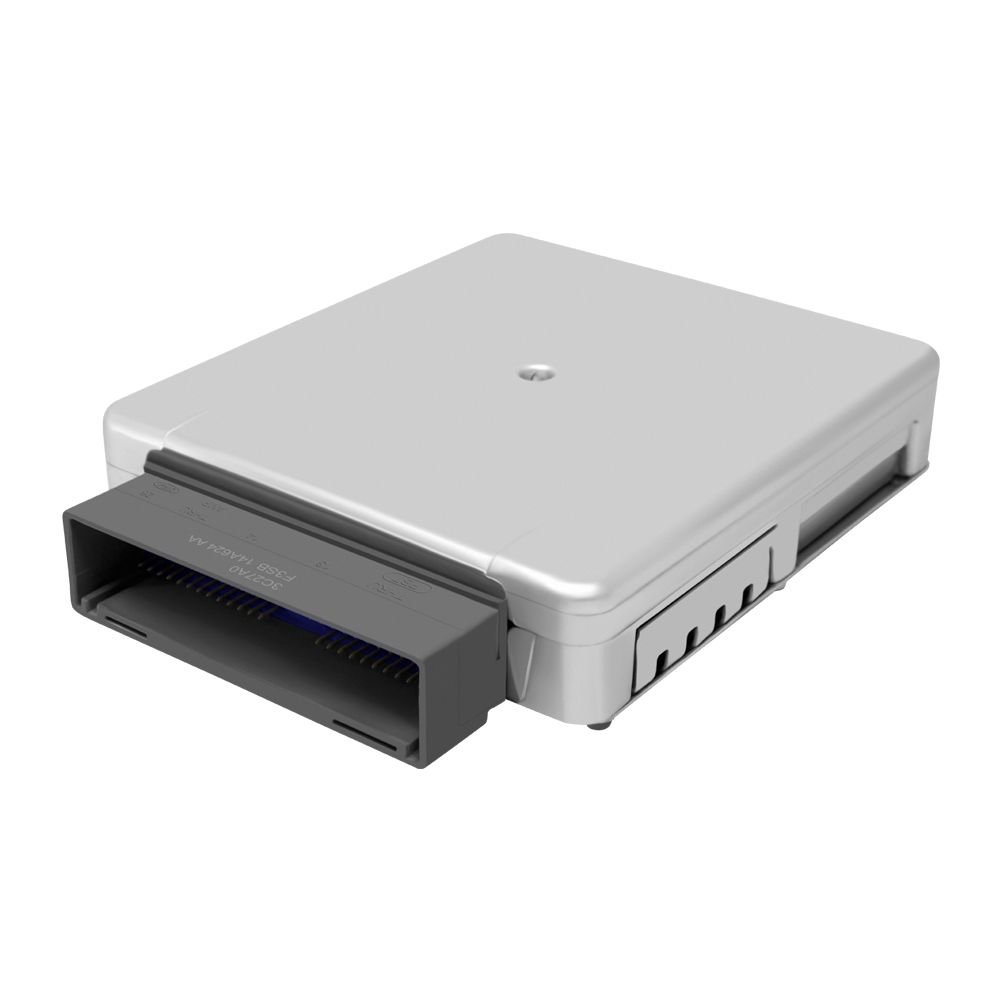
Flagship One stocks a refurbished, VIN-programmed PCM for the 2003 Ford Mustang Mach 1 with a lifetime warranty, free shipping and no core charge. The full Ford Mustang Mach 1 module lineup covers other engine configurations as well.
The 2003 Ford Mustang Mach 1 relies on its PCM and ECM for smooth powertrain operation. Understanding the location, labor requirements, and post‑install steps helps you make an informed decision about repair or replacement. A VIN‑programmed unit from Flagship One can simplify the job, but proper maintenance remains key to longevity.