
Last updated on August 25th, 2026 at 02:00 pm
The Powertrain Control Module on your 1999 Mazda B2500 is the central computer managing engine timing, fuel delivery, emission controls, and transmission shifting. When this unit fails, your vehicle may not run at all or may run poorly with multiple diagnostic trouble codes present.
If your 1999 Mazda B2500 with the 2.5L engine will not start, runs poorly, or displays multiple check engine lights, the Powertrain Control Module may be the culprit. This comprehensive guide explains what the PCM does in your specific truck, how replacement works, what the factory relearn procedure requires, and what you can do to protect the module long-term. Whether you are diagnosing a no-start condition or planning a preventive replacement, this article provides the technical information you need to make informed decisions about your vehicle’s engine computer. You will learn where the module is located, what symptoms indicate failure, how the programming process works, and which factory service bulletins apply to your 1999 B Series truck.
The Powertrain Control Module in your 1999 Mazda B2500 serves as the brain of the engine management system. This computer receives input from dozens of sensors throughout the engine and transmission, then uses that information to calculate optimal fuel delivery, ignition timing, and transmission shift points in real time. The module controls the idle air control system, the evaporative emissions system, and the automatic transmission shift scheduler. Without proper communication from the PCM, your 2.5L engine cannot maintain idle speed, achieve cold start enrichment, or meet federal emission requirements. The B2500 uses a PCM that integrates engine and transmission control functions into a single unit, which is why replacement engine computers for the Mazda B2500 must be programmed to communicate with your specific vehicle’s drivetrain. Failure of this module often leaves the vehicle stranded because the engine may not start at all, or if it does start, it may run roughly, stall unexpectedly, or exhibit erratic shifting behavior.
1999 Mazda B2500
OEM programmed ECM for your 1999 Mazda B2500 — plug & play, no dealer visit.
Free shipping · Lifetime warranty
Work with the ignition off, and treat the module as static-sensitive: avoid touching the connector pins at any point.
| Operation | Configuration | Book Time |
|---|---|---|
| Powertrain Control Module R&R | B2500 | 0.5 hr |
| Powertrain Control Module R&R | B3000 | 0.5 hr |
| Powertrain Control Module R&R | B4000 | 0.5 hr |
| Powertrain Control Module Relearn | B2500 | 0.5 hr |
| Powertrain Control Module Relearn | B3000 | 0.5 hr |
| Powertrain Control Module Relearn | B4000 | 0.5 hr |
| Engine Control Module R&R | B2500 | 0.5 hr |
| Engine Control Module R&R | B3000 | 0.5 hr |
After installing a replacement PCM in your 1999 Mazda B2500, the factory procedure requires a relearn or initialization process to allow the new module to adapt to your specific vehicle’s engine and transmission characteristics. This relearn procedure is assigned 0.5 hour of labor time in the factory specifications. The process typically involves key-on engine-off cycles, idle stabilization periods, and possibly a road test to allow the PCM to calibrate its learned values for fuel delivery and shift quality. One important consideration for do-it-yourselfers is that a VIN-programmed replacement unit from Flagship One arrives pre-programmed with your specific vehicle’s VIN and configuration data, which means the relearn procedure may be simplified or accelerated compared to a blank replacement unit that would require dealer-level programming equipment. However, even with a pre-programmed unit, the vehicle will likely need to go through basic idle adaptation and sensor reset procedures to ensure all systems operate correctly.
When the Powertrain Control Module fails on a 1999 Mazda B2500, the vehicle may exhibit a range of symptoms depending on whether the failure is complete or partial. A complete PCM failure often results in a no-start condition where the engine cranks but receives no fuel injector or ignition commands from the module. Partial failures commonly manifest as intermittent stalling, especially at idle or under light loads, because the module may incorrectly calculate air-fuel ratios. Many owners report multiple diagnostic trouble codes appearing simultaneously, including codes related to sensor faults that are actually caused by the PCM being unable to process sensor signals properly. Common failure symptoms include hard starting or no-start, rough idle that fluctuates, hesitation or misfire during acceleration, unexpected transmission shifting problems such as harsh shifts or failure to shift into overdrive, and a dead scan-tool connection where generic OBD-II readers cannot communicate with the vehicle’s computer. The check engine light may illuminate constantly or flash depending on the severity of the fault. In some cases, the vehicle may start and run well enough to drive but will display multiple emission-related codes that clear temporarily only to return.
Several factory service bulletins apply to the 1999 B Series trucks including your B2500. Bulletin 01 005/99 addresses base PCM calibration information for the 1999 model year. Another bulletin, identified as Mazda Tips for 3.0L models, explains that reflash is not possible due to PCM hardware limitations on vehicles from 1998 through 2000, which may indicate that replacement rather than reprogramming is the approved repair method for certain failures. Bulletin K016/98 covers MIL illumination with diagnostic trouble codes P0705, P0708, P1704, and P1705 on 1997-99 B Series vehicles, noting that these codes may illuminate due to various causes requiring thorough diagnosis before replacing the PCM. These bulletins collectively indicate that while PCM failures do occur on these trucks, proper troubleshooting procedures should be followed to verify the module is indeed the root cause.
| Bulletin | Subject | What It Addresses |
|---|---|---|
| — | 01 005/99 1999 B Series Base PCM Calibration Information | — |
| — | Mazda Tips: 3.0 L No Reflash Due To PCM Hardware (1998 2000) | — |
| — | K016/98 1997 99 B Series MIL Illumination With Dt Cs P0705, P0708, P1704 And P1705 | — |
Not necessarily. The B2500 uses a specific PCM calibration for the 2.5L engine, which differs from the B3000 and B4000 modules used with larger engines. Using an incorrect module may cause the engine to run poorly or not start at all. Always verify that the replacement unit is programmed for your specific engine and transmission combination.
Technically yes, the physical replacement is straightforward for someone with basic mechanical skills and takes approximately 0.5 hour of labor according to book times. However, if you are not using a pre-programmed unit from a supplier like Flagship One, you would need access to dealer programming equipment to complete the relearn procedure. The additional relearn time adds another 0.5 hour to the job.
This can be challenging because failing sensors often produce symptoms similar to PCM failure. The factory caution specifically recommends inspecting all input systems, output systems, and the PCM itself before concluding the module is at fault. A qualified technician will check sensor data with a scan tool, verify reference voltages at the PCM connectors, and rule out grounds and power supplies before recommending replacement.
Driving with a compromised PCM may result in poor fuel economy, reduced engine performance, failed emission tests, and potential damage to catalytic converters from uncontrolled fuel ratios. In severe cases, the vehicle may simply refuse to start, leaving you stranded. It is generally not advisable to ignore PCM-related symptoms on this vehicle.
Yes, the Powertrain Control Module on the 1999 B2500 integrates transmission control functions. This is why shifting problems such as harsh engagements, failure to shift into overdrive, or stuck gears can accompany engine performance issues when the PCM fails. The module calculates shift points based on throttle position, vehicle speed, and engine load inputs.
When your 1999 Mazda B2500 requires a new engine computer, you have two primary options: a new OEM unit from the dealer or a quality refurbished replacement from a specialist supplier. Dealer units come blank and require programming fees on top of the part cost, while Flagship One provides VIN-programmed replacement units that arrive ready to install. For a 1999 truck with the 2.5L engine, a programmed replacement can save you significant time and money compared to the dealer route. Consider your budget, timeline, and comfort level with the replacement process when making your decision.
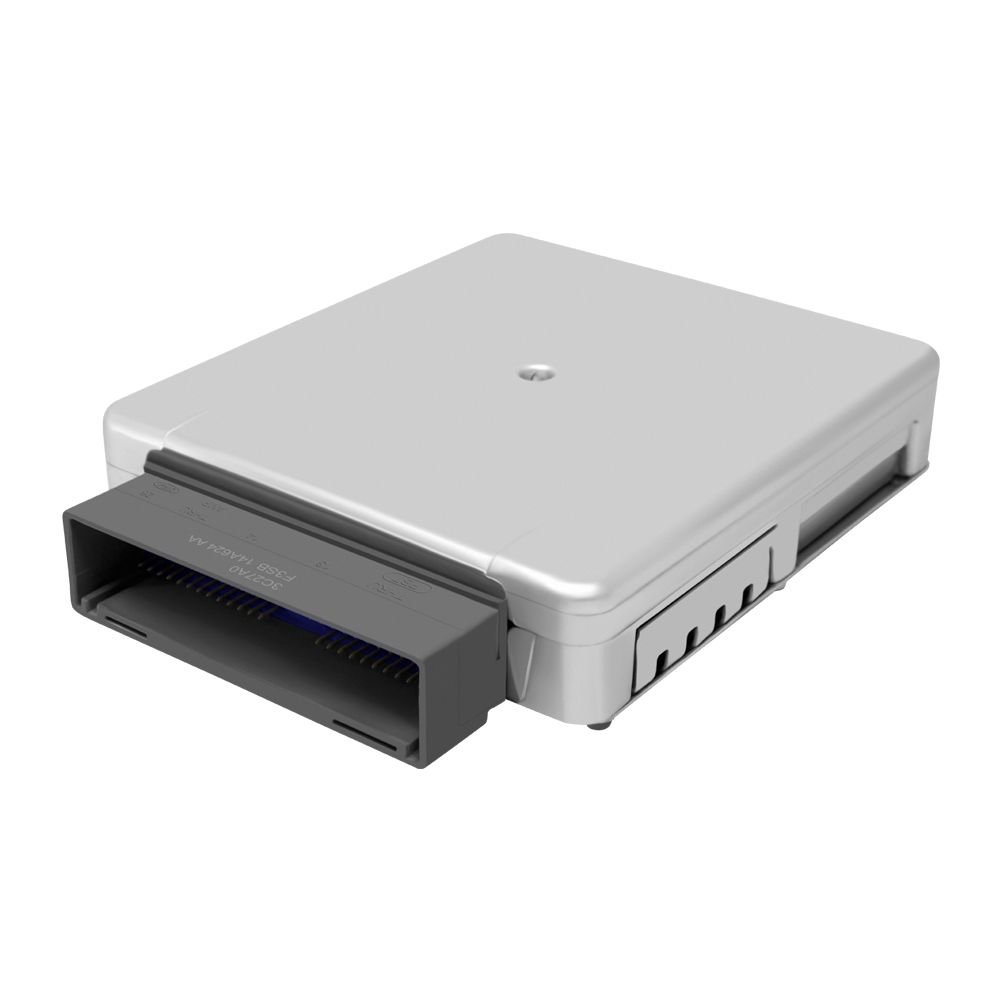
Flagship One stocks a refurbished, VIN-programmed PCM for the 1999 Mazda B2500 with a lifetime warranty, free shipping and no core charge. The full Mazda B2500 module lineup covers other engine configurations as well.
The Powertrain Control Module in your 1999 Mazda B2500 is a critical component that manages engine and transmission functions for the 2.5L powertrain. When symptoms of failure appear, prompt diagnosis following factory guidelines will help determine whether replacement is truly needed. A pre-programmed replacement unit from a reputable supplier can get your truck back on the road efficiently without the added expense of dealer programming. Protect your investment by addressing charging system issues promptly and keeping electrical connections clean.