
Last updated on August 25th, 2026 at 02:00 pm
The Powertrain Control Module (PCM) on your 1998 Mazda B2500 is the central computer managing engine operation, transmission shifting, and emissions systems. When this unit fails, your vehicle may experience starting issues, poor idle quality, or trigger diagnostic trouble codes that prevent normal driving.
If your 1998 Mazda B2500 won’t start, runs poorly, or displays a check engine light that refuses to clear, the Powertrain Control Module may be the culprit. The PCM serves as the brain of your vehicle’s powertrain, coordinating fuel delivery, ignition timing, and transmission operation to keep your truck running smoothly. Understanding what this module does, how it fails, and what your replacement options are can save you considerable time and expense when diagnosing driveability issues. This guide walks you through the PCM’s role in your specific truck, common failure symptoms to watch for, the replacement procedure, and why choosing a properly programmed replacement unit matters for getting back on the road quickly. Whether you’re a DIY mechanic or discussing options with a professional, the information here helps you make informed decisions about your 1998 Mazda B2500’s powertrain control system.
The Powertrain Control Module in your 1998 Mazda B2500 is the primary computer responsible for managing the engine and automatic transmission as a unified system. Unlike some vehicles that separate these functions into distinct units, your B2500 uses a single PCM that processes inputs from numerous sensors throughout the engine compartment and uses that information to control fuel injectors, ignition coils, the idle air control motor, and transmission shift solenoids. This unit also monitors emissions control components and reports diagnostic information through the on-board diagnostics system, which is why a failing PCM often triggers check engine light codes that seem unrelated to any obvious mechanical problem. The PCM receives power through the ignition switch and relies on multiple ground points to complete its electrical circuits, with loose grounds representing a documented failure mode on these trucks. When the internal processor or memory within the PCM becomes corrupted or the unit suffers heat damage from repeated voltage spikes, it may stop communicating with scan tools entirely or default to a limp-home mode that severely limits performance. Replacement engine computers for the B2500 must be matched to your specific vehicle’s configuration to ensure proper operation of the 2.5L engine and automatic transmission combination.
Flagship One keeps Mazda B2500 replacement engine computers in stock for exactly this failure pattern.
Engine computer (ECM/PCM)
OEM programmed replacements — plug & play, no dealer visit.
Find yours by year, make & model →
Free shipping · Lifetime warranty
The PCM on your 1998 Mazda B2500 is located in the engine compartment, typically mounted on the firewall or inner fender well where it remains accessible yet protected from direct road debris. Accessing the module requires opening the hood and removing any cosmetic covers or intake components that may obstruct the mounting location. The replacement procedure involves disconnecting the battery negative terminal first as a safety precaution, then unplugging the electrical harness connectors from the old PCM by releasing the locking tabs and carefully pulling the connectors straight outward. Mounting bolts secure the unit to its bracket, and these should be removed using standard hand tools. The factory labor time for PCM removal and reinstallation on the B2500 is 0.5 hours according to published book times, though actual time varies based on technician experience and working conditions. After installing the new or remanufactured PCM, the vehicle requires a relearn procedure to allow the new module to adapt to your specific engine’s characteristics, with this additional step adding another 0.5 hours to the total job. Torque specifications for mounting hardware should reference factory service procedures, and all connectors must click securely into place before reassembly is considered complete.
Work with the ignition off, and treat the module as static-sensitive: avoid touching the connector pins at any point.
| Operation | Configuration | Book Time |
|---|---|---|
| Powertrain Control Module R&R | B2500 | 0.5 hr |
| Powertrain Control Module R&R | B3000 | 0.5 hr |
| Powertrain Control Module R&R | B4000 | 0.5 hr |
| Powertrain Control Module Relearn | B2500 | 0.5 hr |
| Powertrain Control Module Relearn | B3000 | 0.5 hr |
| Powertrain Control Module Relearn | B4000 | 0.5 hr |
| Engine Control Module R&R | B2500 | 0.5 hr |
| Engine Control Module R&R | B3000 | 0.5 hr |
After installing a replacement PCM in your 1998 Mazda B2500, the factory procedure requires a relearn or initialization process so the new module can establish communication with the engine sensors and transmission control system. This step is necessary because each PCM contains unique calibration data that must be matched to your vehicle’s specific engine displacement, transmission gearing, and equipment options. Without completing this procedure, the engine may run roughly or the transmission may shift improperly until the adaptation values are learned. Flagship One addresses this requirement by shipping their replacement units VIN-programmed with the correct calibration for your specific vehicle, meaning the programming steps that would normally be performed by a dealer or tuning facility are already completed before the unit arrives. When you install a VIN-programmed replacement unit, the vehicle typically starts and runs without additional programming, though some technicians still perform a brief relearn procedure to ensure all adaptive values reset properly. This pre-programming option significantly reduces the time and expense of PCM replacement compared to purchasing a blank unit that requires dealer-level programming equipment.
Every VIN-programmed replacement unit from Flagship One arrives with these steps already completed.
A failing Powertrain Control Module on your 1998 Mazda B2500 can manifest in several ways that often lead to misdiagnosis if the technician doesn’t consider the PCM as a potential cause. The most dramatic symptom is a no-start condition where the engine cranking normally but receives no fuel or spark, or the vehicle starts briefly then dies as soon as the primitive default programming in a failing module gives up. Stalling while driving, especially at idle or during low-speed maneuvers, indicates the PCM may not be maintaining proper idle air control or fuel delivery adjustments. Misfire codes including P0300 through P0304, or transmission-related codes like those documented in Mazda bulletin K016/98 (P0705, P0708, P1704, P1705) frequently appear when the PCM’s internal processing becomes unreliable. A dead scan tool connection, where no communication is possible with any control module, strongly suggests the PCM has suffered an internal failure rather than a simple sensor or wiring problem. Other symptoms include erratic throttle response, failure of the transmission to shift properly, illumination of the check engine light without any detectable mechanical issues, and in some cases complete shutdown of the vehicle while underway. If your B2500 exhibits any combination of these symptoms and standard sensor and wiring checks reveal no problems, the PCM deserves serious consideration as the root cause.
Mazda has published several service bulletins relevant to the powertrain control system on 1997-99 B Series trucks including your 1998 B2500. Technical Service Bulletin K016/98 addresses check engine light illumination caused by diagnostic trouble codes P0705 (Transmission Range Sensor Circuit Malfunction), P0708 (Transmission Range Sensor Circuit High Input), P1704 (4×4 Switch Circuit Malfunction), and P1705 (Transfer Case Index Switch Circuit Malfunction), indicating that the PCM may register false faults from the drivetrain indication system. Another bulletin documents driveability problems stemming from loose ECU ground connections, which can cause rough idle and poor performance that mimics PCM failure. Additionally, Mazda Tips guidance from the 1998-2000 period notes that certain PCM hardware units cannot be reflashed due to hardware limitations, making replacement the only viable repair option when calibration updates would otherwise be applied.
| Bulletin | Subject | What It Addresses |
|---|---|---|
| — | Mazda Tips: 3.0 L No Reflash Due To PCM Hardware (1998 2000) | — |
| — | Mazda Tips: Driveability Problems: Ecu Ground Loose | s If a customer complains of rough idle, or poor |
| — | K016/98 1997 99 B Series MIL Illumination With Dt Cs P0705, P0708, P1704 And P1705 | — |
No. The PCM must be matched to your specific vehicle’s configuration including engine size, transmission type, and equipment options. A unit from a different model year or engine combination will not operate correctly and may cause additional problems.
The physical replacement is straightforward for someone with basic mechanical skills, requiring basic hand tools and about an hour of labor. However, if you purchase a non-programmed unit, you will need access to dealer programming equipment or a professional tuning service to complete the installation.
Start by checking for diagnostic trouble codes with a scan tool. If the scan tool cannot communicate with any module, or if codes persist after replacing the indicated sensors, the PCM becomes the likely culprit. A professional diagnostic can isolate the issue before committing to replacement.
Driving with a compromised PCM can result in unpredictable engine behavior including stalling, loss of power, poor fuel economy, and transmission shifting problems. In extreme cases, the vehicle may stop running entirely, potentially leaving you stranded.
Quality remanufactured units that have been properly tested and come with a warranty can be a cost-effective alternative to new OEM parts. The key is purchasing from a reputable supplier that programs the unit to your specific VIN before shipping.
When your 1998 Mazda B2500 requires PCM replacement, you have two primary paths forward: purchasing a new OEM unit at significantly higher cost, or choosing a quality remanufactured replacement that arrives VIN-programmed for your specific vehicle. The remanufactured option typically provides substantial savings while delivering comparable reliability when sourced from an established supplier with proper testing protocols. Given the 0.5-hour R&R time plus 0.5-hour relearn procedure, the total labor investment remains reasonable regardless of which unit you select. Consider your budget, warranty preferences, and how quickly you need your truck back on the road when making this decision.
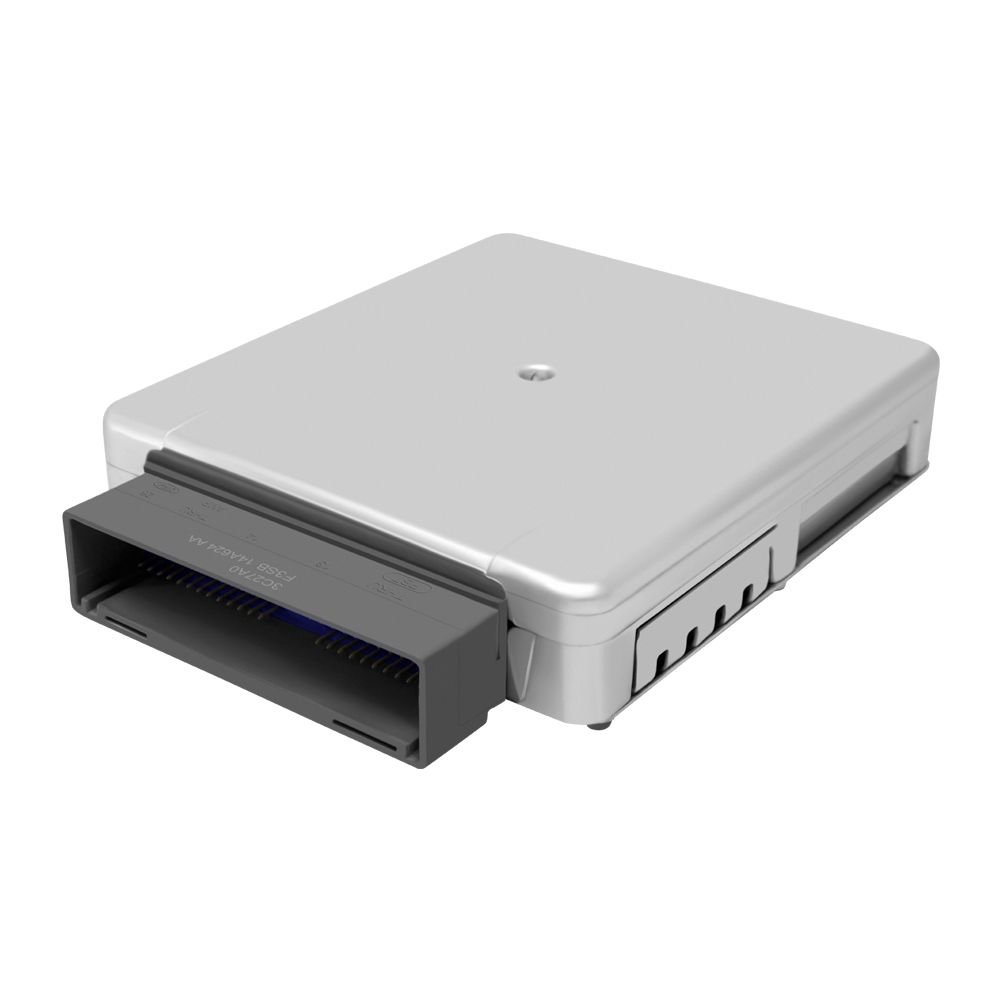
Flagship One stocks a refurbished, VIN-programmed PCM for the 1998 Mazda B2500 with a lifetime warranty, free shipping and no core charge. The full Mazda B2500 module lineup covers other engine configurations as well.
The Powertrain Control Module in your 1998 Mazda B2500 represents a critical component that, when functioning properly, keeps your truck running smoothly through integrated management of engine and transmission systems. Recognizing failure symptoms early and understanding the replacement process helps you avoid misdiagnosis and unnecessary repairs. Whether you choose OEM or remanufactured, a properly programmed replacement unit gets your B2500 back on the road with confidence.