
Last updated on August 25th, 2026 at 12:16 pm
The Powertrain Control Module in a 1999 Dodge Dakota manages engine and transmission functions. A malfunction can cause loss of power, erratic shifting, or complete no‑start conditions, often triggering diagnostic codes and disabling vehicle operation.
When a 1999 Dodge Dakota begins to exhibit intermittent power loss, unexpected gear shifts, or a total lack of engine start, the Powertrain Control Module often lies at the heart of the problem. Understanding how this electronic brain functions, where it resides, and what steps are required to replace or relearn it can save you time and unnecessary expense. This guide walks you through the PCM’s role in your Dakota, the practicalities of removal and installation, the factory‑required programming sequence, and the common symptoms that point to a failing unit. By the end, you’ll know how to diagnose the issue, what labor is involved, and why a VIN‑programmed replacement from Flagship One may simplify the repair.
The Powertrain Control Module in the 1999 Dodge Dakota acts as the central command center for the engine and transmission, interpreting sensor data to control fuel delivery, ignition timing, and gear shifts. It constantly monitors inputs such as throttle position, vehicle speed, and exhaust temperature, then issues commands to actuators to maintain optimal performance and emissions compliance. Because it coordinates both powertrain systems, any fault can immediately affect drivability, fuel economy, and emissions output. Maintaining a functional PCM is essential for reliable operation, especially under varying load conditions. The module’s reliability is tied to clean electrical connections and stable power supply, making regular inspection worthwhile. replacement powertrain control modules are engineered to match the original’s specifications and communication protocols, ensuring seamless integration with the vehicle’s existing wiring harness.
1999 Dodge Dakota
OEM programmed ECM for your 1999 Dodge Dakota — plug & play, no dealer visit.
Free shipping · Lifetime warranty
In the 1999 Dodge Dakota the Powertrain Control Module is mounted within the engine compartment, accessible from the top of the engine bay. Removal typically requires disconnecting the electrical connector, unbolting the mounting hardware, and extracting the unit. The factory labor guide assigns 0.5 hours for both removal and reinstallation, reflecting the straightforward access path. Reinstalling the PCM follows the reverse order: secure the mounting bolts, reconnect the harness, and verify that the connector seats fully. No torque specifications are provided in the source material, so standard hand‑tightening to a snug fit is recommended. After the unit is physically in place, the vehicle will need a relearn procedure to synchronize the new PCM with the engine and transmission control strategies.
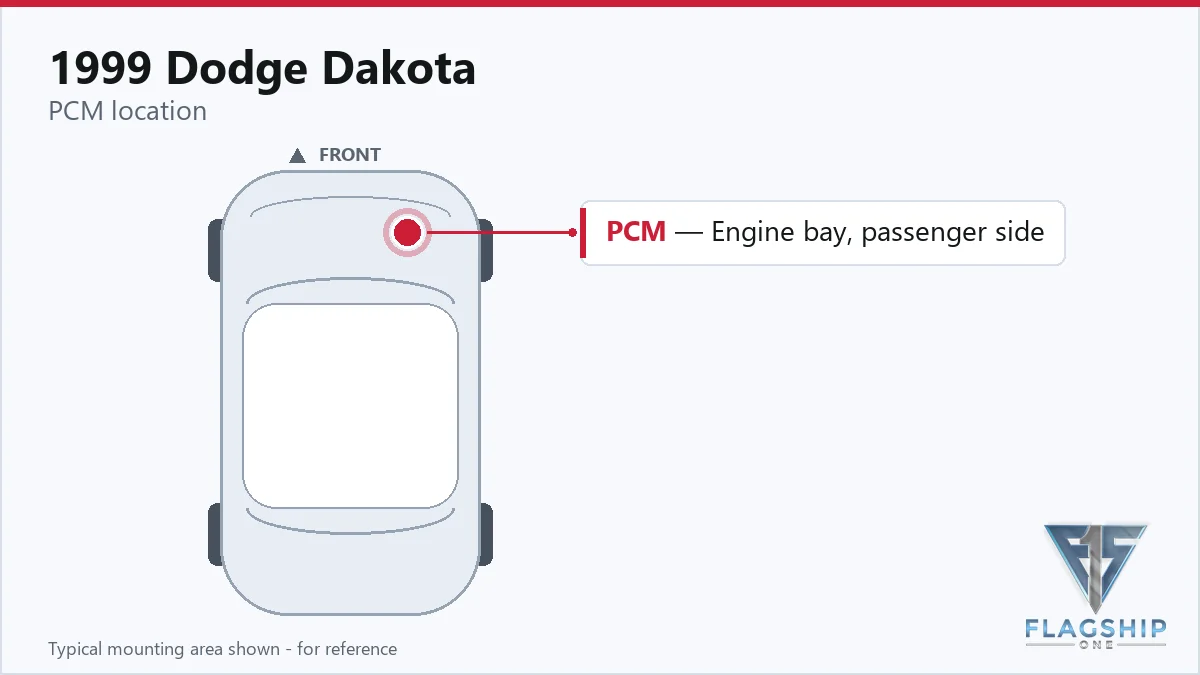
Work with the ignition off, and treat the module as static-sensitive: avoid touching the connector pins at any point.
| Operation | Configuration | Book Time |
|---|---|---|
| Engine Control Module Relearn | All configurations | 0.5 hr |
| Engine Control Module R&R | All configurations | 0.5 hr |
| Powertrain Control Module Relearn | All configurations | 0.5 hr |
| Powertrain Control Module R&R | All configurations | 0.5 hr |
After installing a new PCM in a 1999 Dodge Dakota, the factory procedure calls for using the DRB scan tool to reprogram the module with the vehicle’s original VIN and mileage. This step ensures the replacement matches the factory‑issued calibration and emissions data. Flagship One supplies units that arrive already VIN‑programmed, so the reprogramming step is effectively completed before the part reaches your shop. You still need to perform the standard relearn cycles for the engine and powertrain control modules, each taking roughly 0.5 hours of labor, to finalize communication with the vehicle’s other control units. a VIN-programmed replacement unit eliminates the need for on‑site VIN entry, reducing the chance of data entry errors.
A failing PCM in a 1999 Dodge Dakota often triggers a range of drivability issues. You may notice the engine refusing to start, frequent stalling at idle, or sudden loss of power under load. Transmission symptoms can include harsh shifting, slipping, or the vehicle remaining stuck in a single gear. Diagnostic scans frequently reveal communication errors between the PCM and other modules, and you might see related trouble codes appear on the scan tool. In some cases, the check engine light illuminates without a clear code, prompting further investigation. These symptoms typically worsen under extreme temperatures or when the battery voltage drops, reflecting the PCM’s reliance on stable electrical input.
Service bulletin #18-037-05 addresses flash programming failures and provides recovery steps using the DRBIII® tool. This bulletin guides technicians through troubleshooting the reprogramming process when the PCM does not accept new software, ensuring a reliable flash update.
| Bulletin | Subject | What It Addresses |
|---|---|---|
| 18-037-05 | 18-037-05 Flash Programming Failure Recovery Using DRBIII® | — |
The vehicle may start but will likely experience erratic performance, such as poor acceleration, gear‑shift problems, or frequent stalling. Continuing to drive can cause additional wear on other components.
Standard hand tools are sufficient for removing and installing the module. However, a DRB scan tool is required for the VIN and mileage programming step if the replacement is not pre‑programmed.
The factory labor guide assigns about half an hour for each relearn—engine control module and powertrain control module—so expect roughly one hour total for both procedures.
A properly refurbished PCM that has been tested and VIN‑programmed can perform identically to a new unit, provided it meets the original specifications and passes functional verification.
The bulletin notes that communication errors during the DRBIII® flash process can prevent successful software updates, often due to voltage drops or connector issues.
When a PCM in your 1999 Dodge Dakota needs attention, you can choose between a brand‑new factory unit or a Flagship One refurbished replacement. Both options require the same removal, install, and relearn steps, but a VIN‑programmed replacement can streamline the programming phase. Evaluate cost, warranty, and lead time to decide which path best fits your repair schedule and budget.
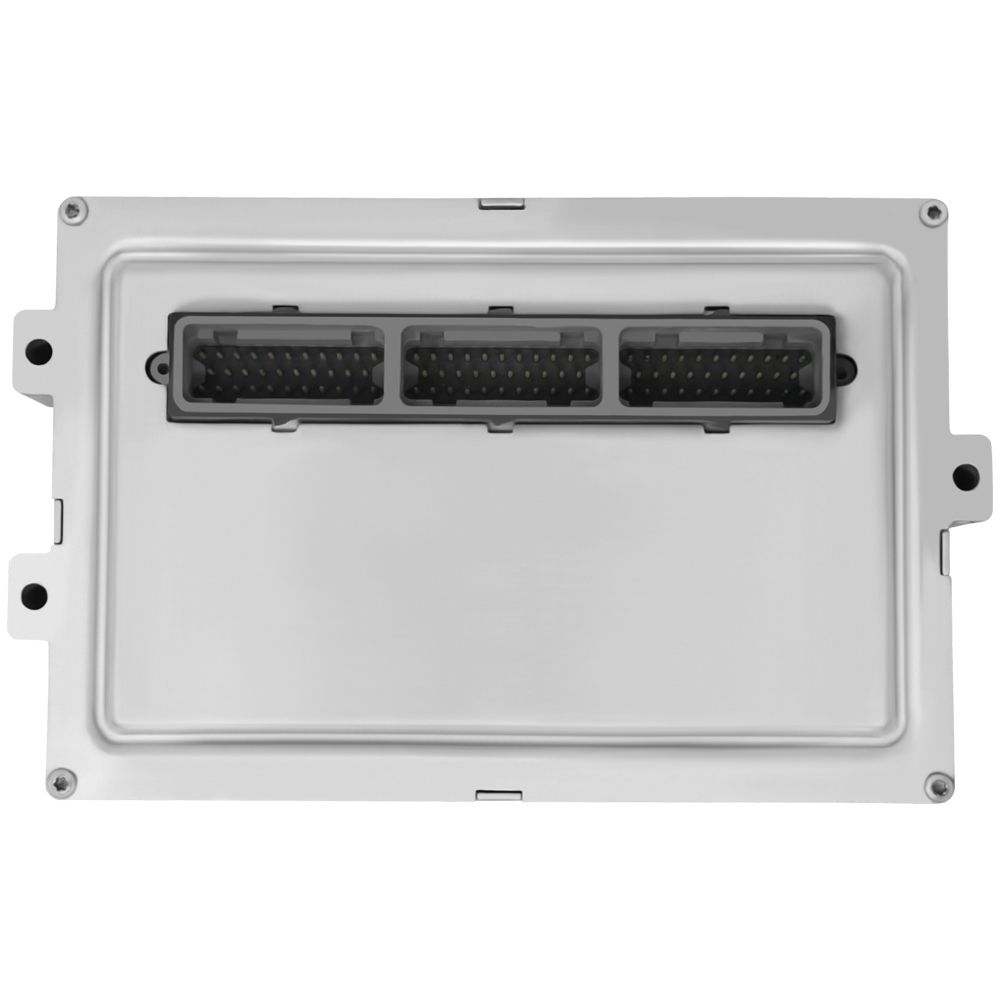
Flagship One stocks a refurbished, VIN-programmed PCM for the 1999 Dodge Dakota with a lifetime warranty, free shipping and no core charge. The full Dodge Dakota module lineup covers other engine configurations as well.
The Powertrain Control Module is vital to the operation of your 1999 Dodge Dakota. Whether you opt for a new or a Flagship One refurbished unit, following the proper removal, programming, and relearn procedures will restore reliable performance. Consider the options and choose the solution that aligns with your needs.