
Last updated on August 25th, 2026 at 02:37 pm
The Engine Control Module (ECM), also called the Digital Motor Electronics (DME) unit in BMW terminology, is the primary computer governing your 1.9L engine’s fuel delivery, ignition timing, and emissions systems. When this unit fails, the engine may run poorly or not at all.
If your 1998 BMW 3 Series is displaying a Check Engine Light, experiencing intermittent stalling, or refusing to start altogether, the Engine Control Module (ECM) may be the culprit. The ECM—known in BMW terminology as the Digital Motor Electronics (DME) unit—serves as the brain of your 1.9L engine, continuously monitoring and adjusting fuel delivery, ignition timing, and emissions control systems to maintain optimal performance. Module failures in this vintage of BMW 3 Series are not uncommon, and when the ECM malfunctions, it can store fault codes that illuminate the Check Engine Light and compromise drivability. This guide explains what the Engine Control Module does in your specific vehicle, where it is located, the labor involved in replacement, the programming requirements after installation, and the common symptoms that suggest ECM failure. You will also find practical guidance on preventing premature module failure and understanding when replacement versus repair makes sense for your vehicle.
The Engine Control Module in your 1998 BMW 3 Series is a sophisticated computer that manages the operation of the 1.9L four-cylinder engine. This replacement engine computers for the 1998 BMW 3 Series processes input from numerous sensors throughout the engine bay, including the mass airflow sensor, coolant temperature sensor, oxygen sensors, and throttle position sensor, using this data to calculate the precise fuel injection duration and ignition spark timing for each operating condition. The module also controls the idle air control valve, evaporative emissions system, and transmission shift points in automatic-equipped vehicles. When the ECM functions properly, it maintains smooth idle, adequate power delivery, good fuel economy, and compliant emissions output. However, internal electrical failures within the module’s circuitry can occur due to age, heat cycling, voltage spikes from jump-starting, or poor ground connections. When the ECM fails, it may default to a limp-home mode, fail to communicate with diagnostic scan tools, or cease functioning entirely, leaving your vehicle inoperable. The module stores diagnostic trouble codes internally that can be retrieved with a BMW-specific scanner or generic OBD-II tool, and these codes often point to module internal failures rather than sensor or wiring issues.
1998 BMW 3 Series
OEM programmed replacements — plug & play, no dealer visit.
Find yours by year, make & model →
Free shipping · Lifetime warranty
The Engine Control Module on your 1998 BMW 3 Series is located in the engine compartment, typically mounted on the firewall on the passenger side of the vehicle. Access requires removing the engine cover and potentially the air intake ducting to reach the unit. The ECM is housed in a metal casing with a multi-pin electrical connector that plugs into the vehicle’s wiring harness. Replacement involves disconnecting the battery negative terminal first, unplugging the electrical connector, removing the mounting bolts, installing the new or refurbished unit, and reconnecting the harness. The book time for ECM R&R on this vehicle is 0.4 hours, though this may vary slightly depending on the exact location and any corrosion or damage to the connector that complicates removal. After installation, the mounting bolts should be torqued to specification and the battery reconnected. It is advisable to verify that the new module initializes properly by checking for communication with a scan tool before considering the repair complete.
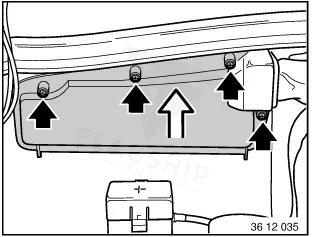
Work with the ignition off, and treat the module as static-sensitive: avoid touching the connector pins at any point.
| Operation | Configuration | Book Time |
|---|---|---|
| Engine Control Module R&R | All configurations | 0.4 hr |
| Powertrain Control Module R&R | All configurations | 0.4 hr |
| Powertrain Control Module Relearn | All configurations | 0.5 hr |
After replacing the Engine Control Module in your 1998 BMW 3 Series, the factory procedure requires a relearn or adaptation process to be performed using BMW diagnostic software or a compatible scan tool. This procedure allows the new ECM to learn the specific characteristics of your engine’s sensors and fuel system, ensuring proper idle quality, throttle response, and emissions compliance. The book time for this powertrain control module relearn procedure is 0.5 hours. The relearn process may involve monitoring live data parameters, clearing learned adaptive values, and allowing the engine to complete a driving cycle so the module can recalibrate to your vehicle’s unique conditions. Flagship One units arrive VIN-programmed, meaning the replacement ECM is pre-programmed with your specific vehicle identification number and configuration data, which eliminates the need for manual VIN programming at installation. This pre-programming significantly reduces the post-install procedure, as the module will be recognized by your vehicle’s systems immediately upon startup without requiring additional dealer-level software intervention.
Every VIN-programmed replacement unit from Flagship One arrives with these steps already completed.
When the Engine Control Module in your 1998 BMW 3 Series begins to fail, you may notice several telltale signs that indicate the module requires attention. A no-start condition is one of the most common symptoms of ECM failure, where the engine cranking normally but receiving no fuel delivery or spark because the module fails to process the start command. Intermittent stalling while driving or at idle can occur when the module momentarily loses its ability to maintain proper fuel mixture or idle air control. Misfire codes such as P0300 (random/multiple cylinder misfire detected) or specific cylinder misfire codes may be stored in the ECM memory, even when the spark plugs and fuel injectors are functioning correctly. The Check Engine Light may illuminate solidly or flash depending on the severity of the fault, and many owners report that the light comes on and stays on after a period of driving. In some cases, the scan tool may fail to communicate with the ECM entirely, or communication may be intermittent, indicating an internal electrical fault within the module. Transmission shifting issues can also manifest because the ECM controls shift solenoids in automatic models, leading to harsh engagements or failure to shift out of gear. If your vehicle exhibits any combination of these symptoms, particularly following a battery jump-start or electrical system disturbance, the ECM should be considered a prime suspect.
Factory service bulletins for the 1998 BMW 3 Series address Check Engine Light illumination related to ECM and DME faults. These bulletins recommend diagnostic procedures to verify whether the fault lies within the Engine Control Module itself or in external wiring and sensors. When internal ECM faults are confirmed, replacement of the module is the specified remedy. The bulletins emphasize the importance of using BMW-specific diagnostic procedures rather than generic OBD-II code clearing to ensure proper resolution of Check Engine Light concerns.
| Bulletin | Subject | What It Addresses |
|---|---|---|
| — | Check Engine Light Illuminated, Faults Stored in DME/ECM | — |
| — | Engine Control Module Codes | — |
A used ECM from a salvage vehicle may be an option, but it will likely require dealer-level programming to match your vehicle’s VIN and configuration. Additionally, you will not know the history of the used unit or whether it is prone to imminent failure.
While the engine may start and run in a basic fashion, the new ECM will need to perform a relearn procedure to adapt to your specific engine’s characteristics. Flagship One replacement units arrive pre-programmed with your VIN, which simplifies the process considerably.
Diagnostic trouble codes that indicate internal ECM failures, such as communication errors or memory check sum failures, point to module problems. Codes related to specific sensors or circuits may indicate external issues, but persistent codes despite sensor replacement can also suggest ECM involvement.
A failing ECM can cause your vehicle to stall unexpectedly, fail to start, or operate in a reduced-power limp-home mode. In some cases, the vehicle may run but exhibit poor fuel economy, rough idle, or transmission shifting problems that worsen over time.
Repairing the original ECM is generally not cost-effective for this vehicle model year. Replacement with a refurbished or new unit that arrives VIN-programmed typically provides a more reliable solution with a warranty, avoiding the uncertainty of internal component repairs.
When your 1998 BMW 3 Series requires Engine Control Module attention, you have two primary paths forward. You may choose to have a repair facility install a refurbished ECM and perform the required relearn procedure, or you can opt for a replacement unit from Flagship One that arrives pre-programmed with your specific VIN, reducing the post-install complexity. Consider your budget, the module’s failure severity, and whether you have access to a qualified BMW technician when making your decision. A properly functioning ECM is essential for your vehicle’s drivability, emissions compliance, and long-term reliability.
Flagship One stocks a refurbished, VIN-programmed PCM for the 1998 BMW 3 Series with a lifetime warranty, free shipping and no core charge. The full BMW 3 Series module lineup covers other engine configurations as well.
The Engine Control Module in your 1998 BMW 3 Series is a critical component that governs your engine’s operation, and failure can leave you stranded or facing costly repairs. Understanding the symptoms, replacement process, and programming requirements helps you make informed decisions about your vehicle’s care. Whether you choose replacement or repair, addressing ECM issues promptly restores your BMW’s performance and dependability.