
Last updated on August 25th, 2026 at 12:55 pm
In the 1996 Chrysler Cirrus, the Powertrain Control Module (PCM) and Engine Control Module (ECM) manage engine timing, fuel delivery, and transmission shift logic. Failure of either unit can trigger loss of power, erratic shifting, or illumination of the malfunction indicator lamp, often requiring a relearn to synchronize the new hardware with the vehicle’s existing sensors and calibrations.
When a 1996 Chrysler Cirrus experiences unexpected engine or transmission behavior, the underlying cause may involve the vehicle’s control computers. Understanding how the Powertrain Control Module and Engine Control Module operate, and what steps are required after they are replaced, can help you evaluate repair options and avoid unnecessary downtime. This guide outlines the function of these modules, typical labor estimates, the programming steps mandated by the factory, and practical advice for keeping the electronics reliable.
The Powertrain Control Module in a 1996 Chrysler Cirrus acts as the central brain for both the engine and automatic transmission, interpreting sensor data to adjust fuel injection, ignition timing, and shift timing. The Engine Control Module focuses on engine-specific parameters, ensuring optimal performance across temperature and load conditions. Both modules must retain calibrated settings that match the vehicle’s hardware, so any replacement triggers a need to re-establish those relationships. Maintaining accurate control logic is essential for emissions compliance and smooth operation. replacement powertrain control modules for the 1996 Chrysler Cirrus are designed to fit the same connectors and mounting points, but they still require the factory’s post‑install procedures to function correctly.
1996 Chrysler Cirrus
OEM programmed ECM for your 1996 Chrysler Cirrus — plug & play, no dealer visit.
Free shipping · Lifetime warranty
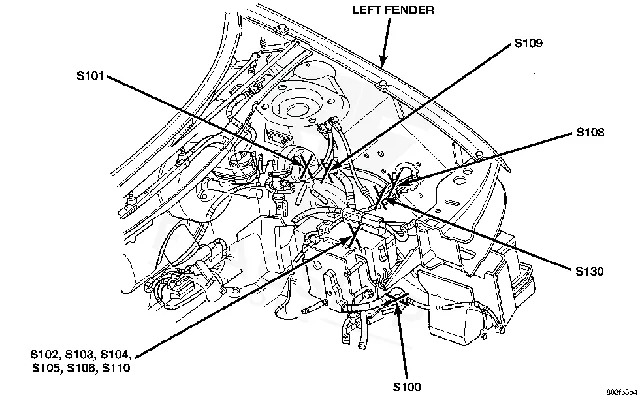
In the 1996 Chrysler Cirrus, the PCM is mounted near the firewall on the passenger side, while the ECM resides close to the engine block, attached to the intake manifold. Access typically involves disconnecting the battery, removing a few fasteners, and unplugging the connector harnesses. The labor guide lists 0.4 hours for removal and reinstall of each unit, reflecting the relatively straightforward access once the covers are removed. After the hardware is secured, reconnect the electrical plugs, restore the battery, and verify that all fasteners are torqued to the manufacturer’s specification, if provided.
Work with the ignition off, and treat the module as static-sensitive: avoid touching the connector pins at any point.
| Operation | Configuration | Book Time |
|---|---|---|
| Powertrain Control Module Relearn | All configurations | 0.5 hr |
| Powertrain Control Module R&R | All configurations | 0.4 hr |
| Engine Control Module Relearn | All configurations | 0.5 hr |
| Engine Control Module R&R | All configurations | 0.4 hr |
After installing a new PCM or ECM in a 1996 Chrysler Cirrus, the factory procedure calls for a relearn of the control module, which takes about 0.5 hours for each module. The relearn process ensures that the replacement unit learns the vehicle’s sensor characteristics and adapts its control strategies accordingly. Flagship One supplies a VIN-programmed replacement unit that arrives already matched to the vehicle’s identification, so the relearn steps are completed at the factory and typically do not need to be repeated in the shop.
Common indications that the PCM or ECM may be faulty in a 1996 Chrysler Cirrus include a persistent check engine light, irregular idle, stalling during acceleration, or unexpected transmission shifts. Drivers may also notice reduced power, rough running, or a complete no‑start condition if the module fails to communicate with the engine sensors. These symptoms often correlate with diagnostic trouble codes that point to internal module failures or communication errors, prompting a need for replacement and subsequent relearn.
Service bulletin Rc-678-96 details a California emissions recall that requires reprogramming of the Powertrain Control Module. Bulletin #18-16-97 addresses erroneous MIL illumination, PCM resets, shift cycling, and cold engine stumble. Bulletin #18-037-05 provides guidance for flash programming failure recovery using the DRBIII® tool.
| Bulletin | Subject | What It Addresses |
|---|---|---|
| — | Rc-678-96 California Emissions Recall #678 — Reprogram Powertrain Control Module | — |
| 18-16-97 | 18-16-97 Erroneous MIL Illumination With Hex Codes $6a ;erroneous PCM Resets; Shift Cycling; Co | — |
| 18-037-05 | 18-037-05 Flash Programming Failure Recovery Using DRBIII® | — |
A relearn is typically needed after the PCM is replaced or reprogrammed, because the new unit must synchronize its calibration with the vehicle’s existing sensors and transmission.
When the replacement ECM arrives VIN‑programmed, the factory has already completed the relearn, so the shop step may be unnecessary, though verification is advisable.
The labor guide estimates roughly 0.4 hours for removal and 0.4 hours for installation of the PCM, not including the relearn time.
Symptoms often include rough idle, stalling, reduced power, and a check engine light accompanied by codes related to engine control.
Bulletin #18-037-05 recommends the DRBIII® for recovering flash programming failures, but routine reprogramming may be performed with standard dealer equipment.
When a PCM or ECM needs replacement in a 1996 Chrysler Cirrus, you can choose a new factory‑spec unit or a refurbished alternative. Both options require the same post‑install relearn, but a VIN‑programmed replacement from Flagship One arrives with that step already addressed, potentially reducing shop time and ensuring proper calibration.
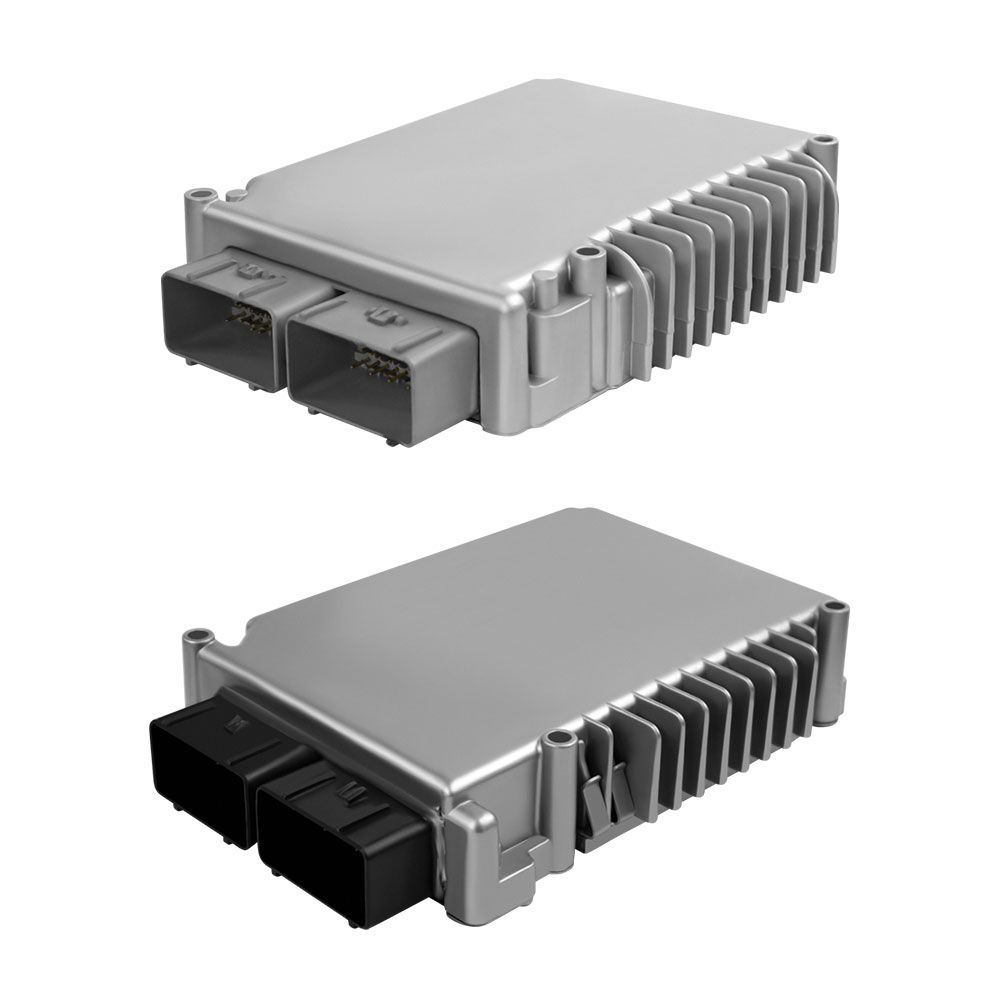
Flagship One stocks a refurbished, VIN-programmed PCM for the 1996 Chrysler Cirrus with a lifetime warranty, free shipping and no core charge. The full Chrysler Cirrus module lineup covers other engine configurations as well.
If your 1996 Chrysler Cirrus shows control‑module related issues, a proper replacement paired with the required relearn will restore reliable operation. Consider the benefits of a VIN‑programmed unit to simplify the process and get back on the road sooner.